
How to Make Your Bathroom Feel Like a Spa
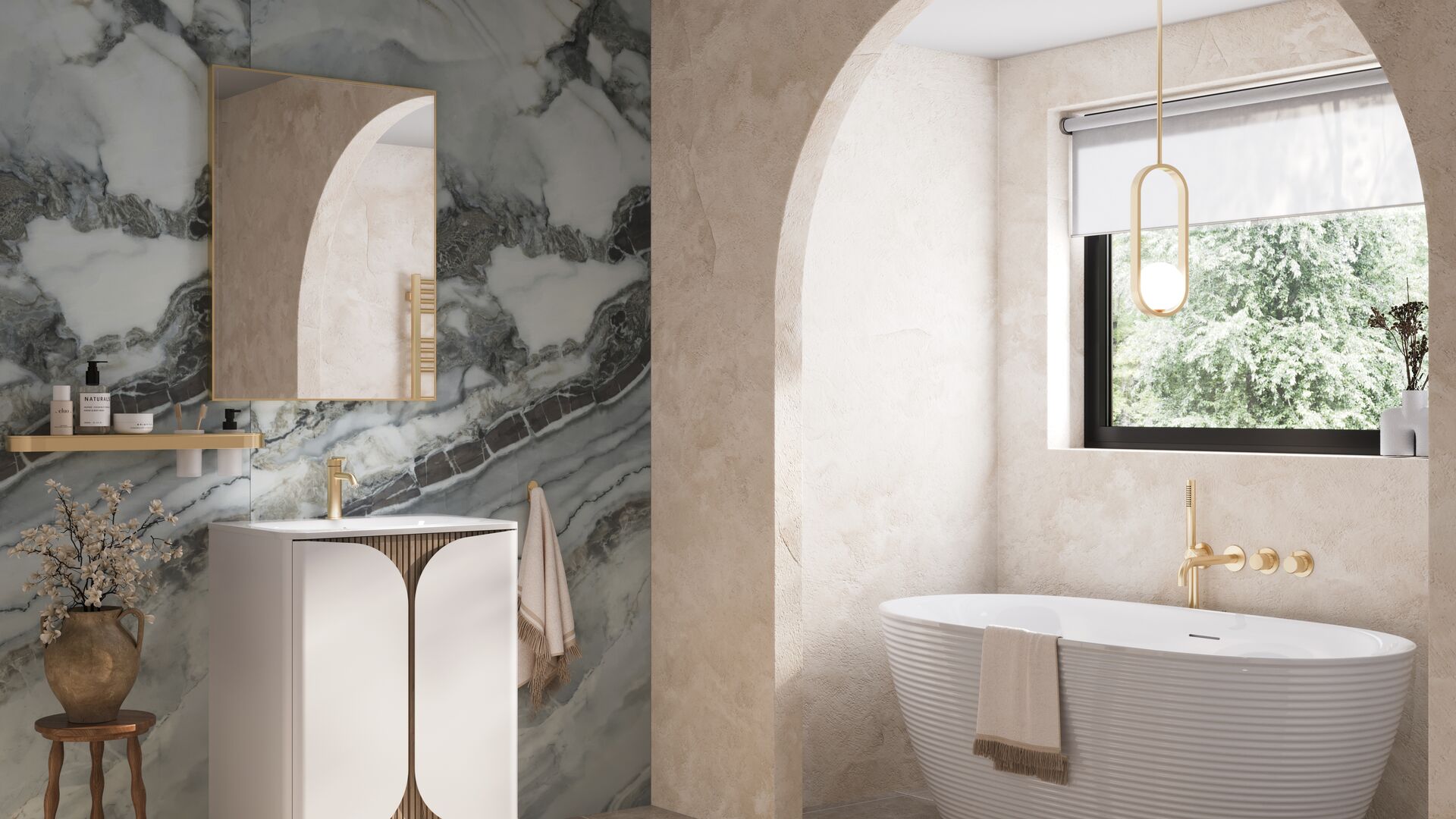
A spa bathroom is designed around physical comfort: warm flooring, a shower with water from several directions, layered dimmable lighting and tactile stone or stone-effect surfaces. It will often have a separate bath and shower. Where the room is too small for both, the quality of the shower matters more.
If you’ve come home from a spa or a good hotel and found that new towels and a candle don’t produce the same feeling, that’s because the important differences were built into the room. A convincing home spa bathroom starts with four decisions: a warm floor, water arriving from more than one direction, lighting that dims properly and surfaces that feel like stone.
Get those right at the design stage and the styling becomes the finishing touch, rather than something asked to rescue the room afterwards. This guide covers what each decision involves and what the add-ons cost.
Quick Navigation
What Makes a Bathroom Feel Like a Spa?
The four decisions that make the greatest difference are underfloor heating, a properly specified shower, dimmable lighting and honed or matte surfaces. You feel all four rather than simply looking at them.
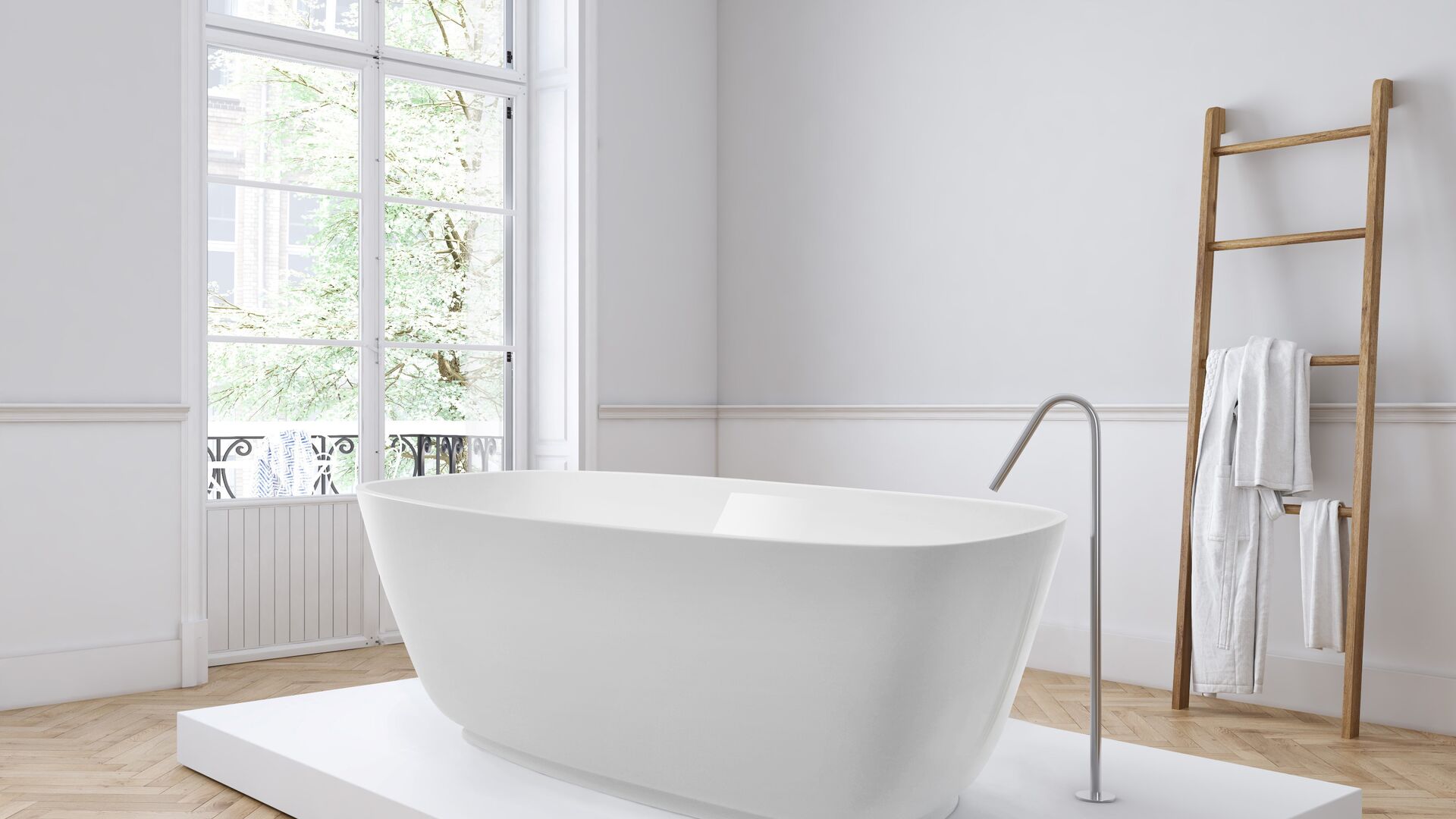
There’s also a fifth decision, which is the layout. Most bathrooms that genuinely have the feeling people are trying to recreate use a freestanding bath and a separate shower. That gives each part of the room enough space to work properly. Putting a screen and shower over the bath compromises both. You don’t get the open showering area you’d associate with a spa, and the screen, controls and shower head interrupt the bath.
If the room can only take one comfortably, we’d normally keep the shower and spend the money there. A generous shower with good thermostatic control will affect your morning far more than a bath squeezed into the remaining floor space. A freestanding bath can still be the right choice if you use it regularly and the room gives it enough space, but it shouldn’t be included simply because it appears in photographs of expensive bathrooms. Our guide to freestanding and built-in baths explains the practical trade-offs.
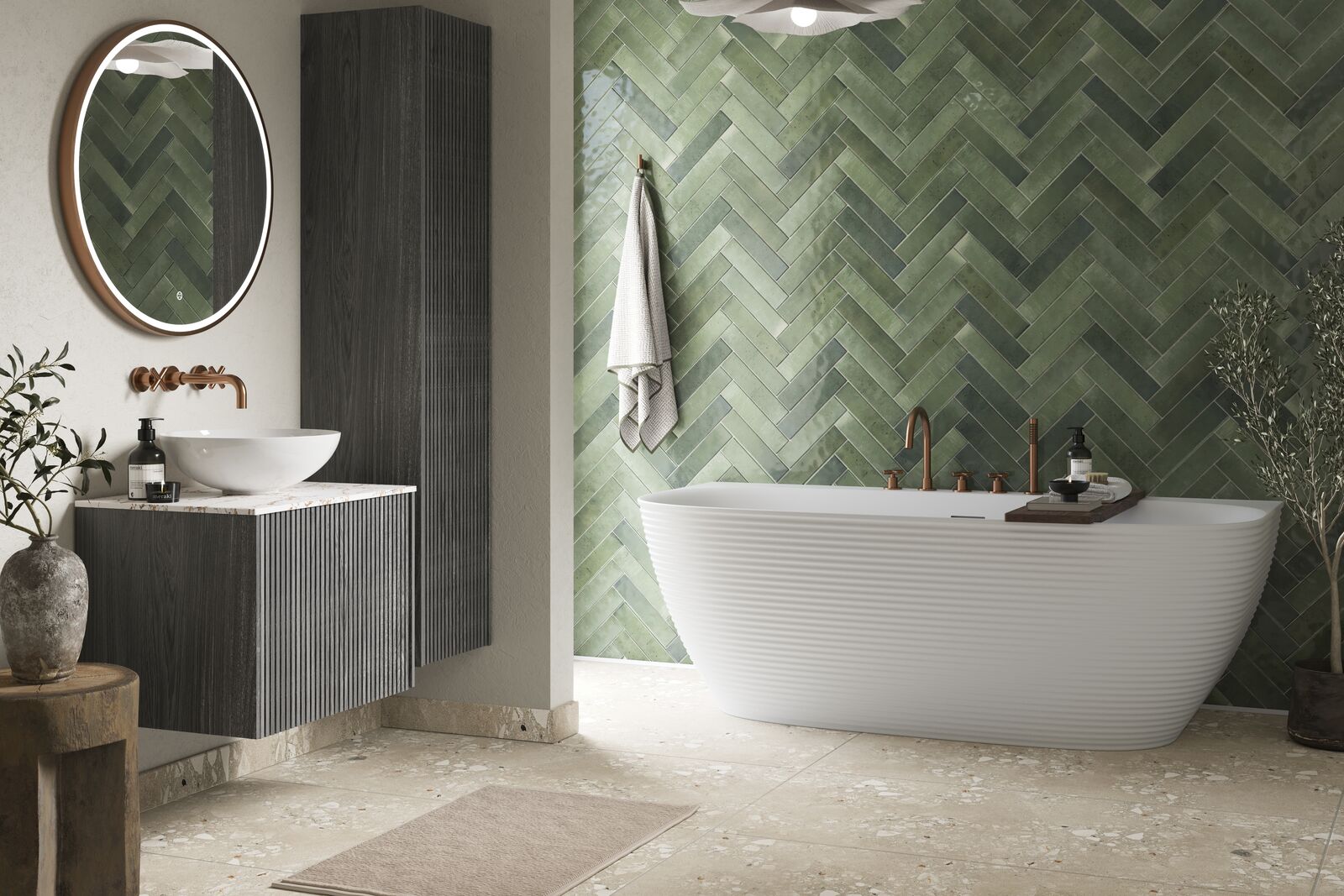
If the room can’t take a separate bath and shower properly, we’d keep the better shower.
Warm the Floor Before Anything Else
Cold tile is often the first thing you notice in a bathroom. You’re barefoot, usually early in the morning, and no amount of expensive brassware changes how the floor feels. Underfloor heating deals with that directly, which is why we’d decide on it before choosing anything decorative.
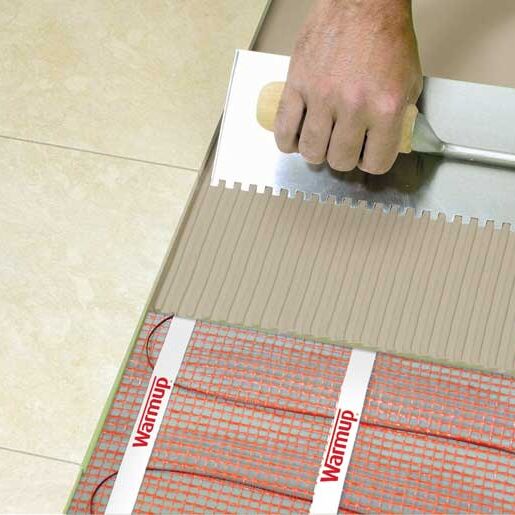
For a retrofit, we’d normally look at an electric mat from Warmup. It adds only a few millimetres to the floor build-up, so it’s generally easier to accommodate when you’re working with an existing room.
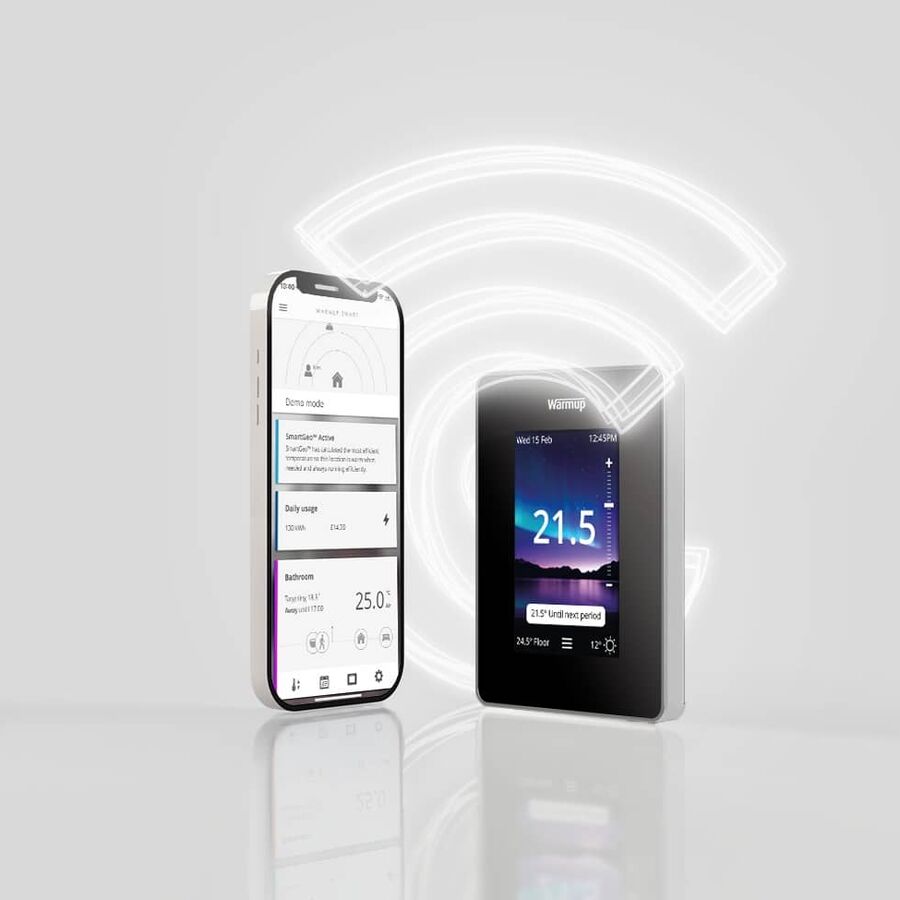
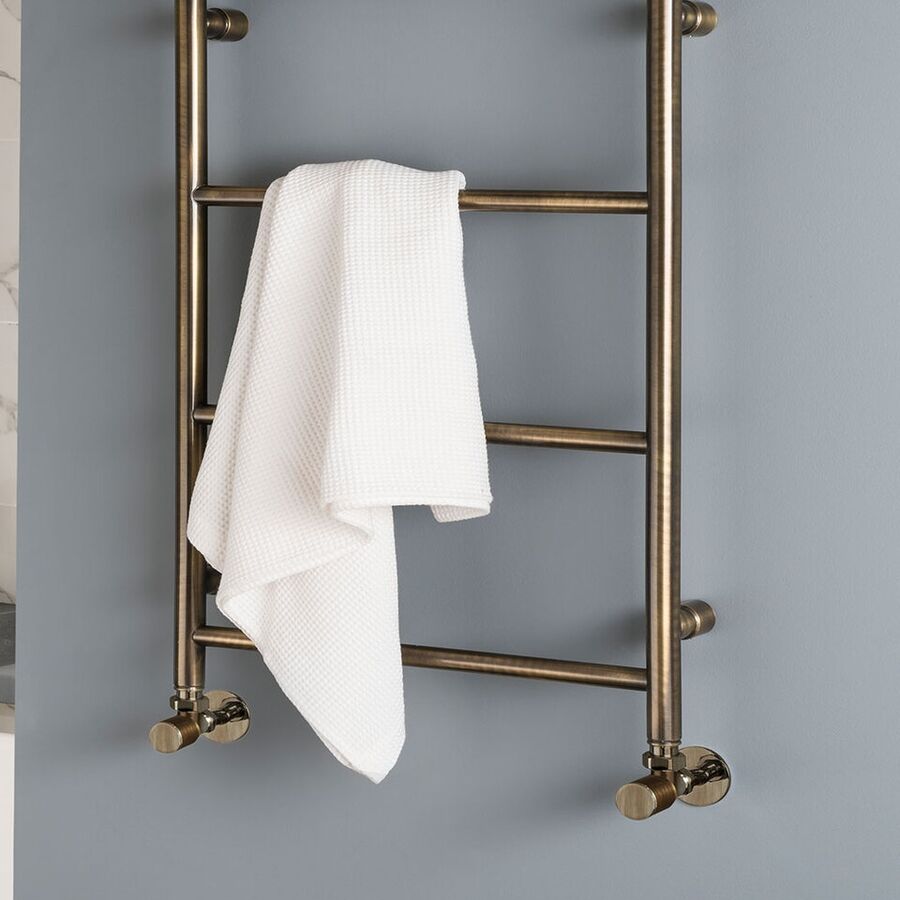
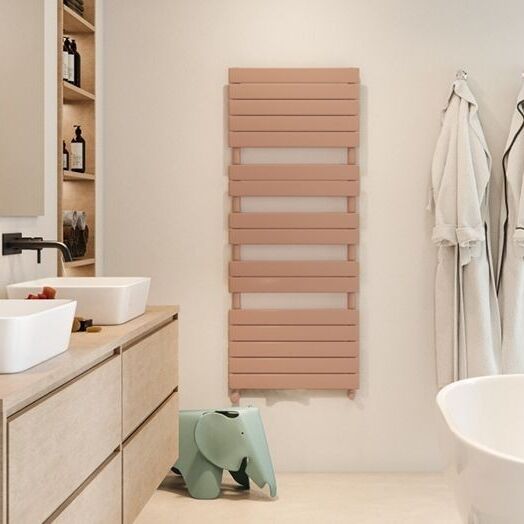
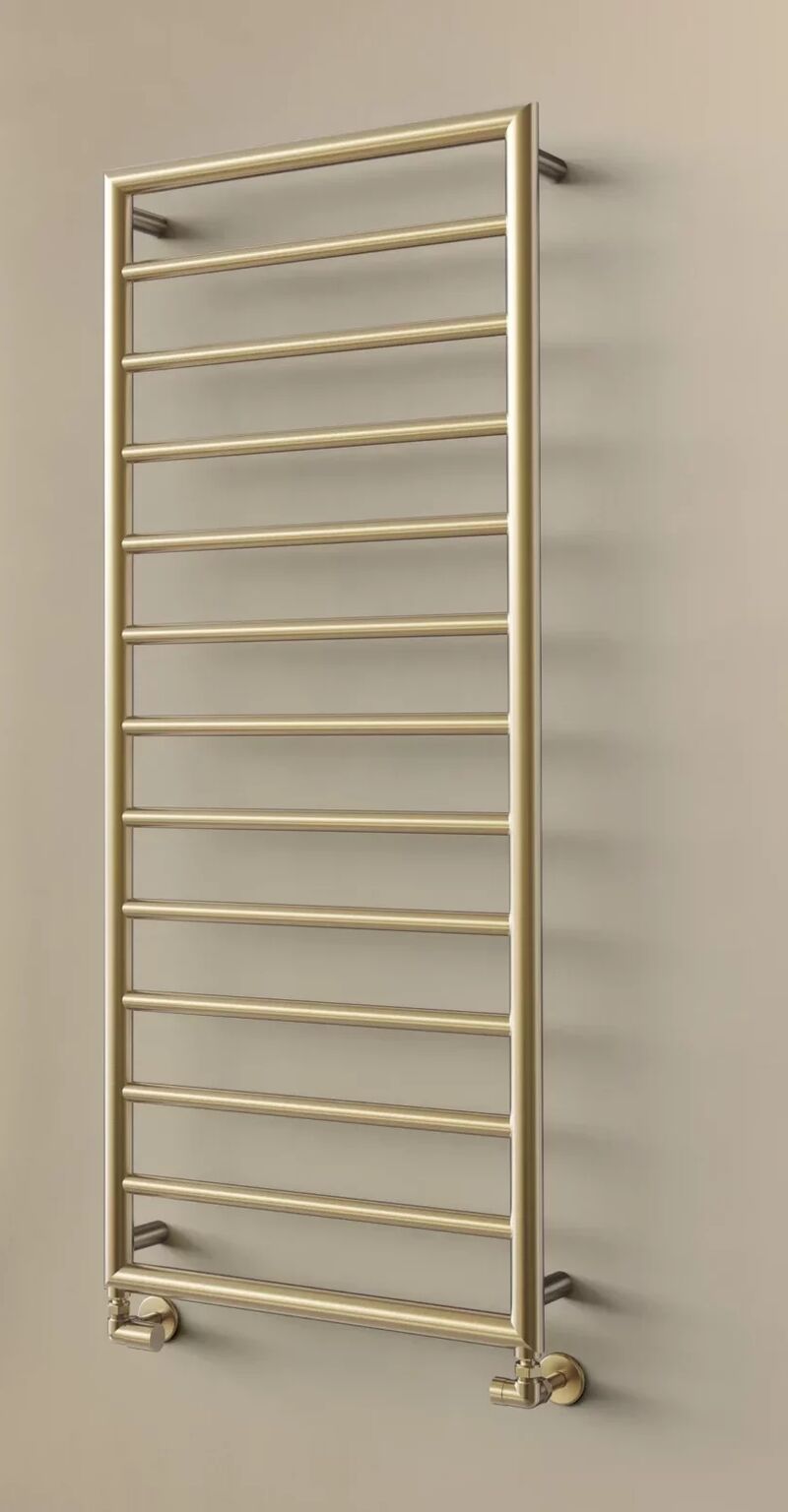
A heated towel rail does a different job. Products such as the Zehnder Roda Spa or Vogue UK heated towel rails warm and dry towels, but they don’t stop the tiled floor feeling cold. We’d specify both where the room and budget allow: underfloor heating for comfort underfoot, then the towel rail for warm towels and the additional heat the room requires.
A wet system makes more sense during a full strip-out where the floor is coming up anyway, because the extra work matters less when the floor construction is already being changed. Whichever system you choose, it needs to be included in the drawings and installation plan, since floor build-up affects thresholds, shower areas and adjoining rooms. Our comparison of wet and electric bathroom underfloor heating goes through the difference in more detail.
A heated towel rail warms your towels. It doesn’t replace a warm floor.
Why Body Jets Beat a Bigger Rainfall Head
A wider rainfall head still puts most of the water over your head and shoulders. Body jets feel different because the water reaches you from several directions at once.
For specific examples, AXOR ShowerComposition combines overhead water with adjustable shoulder showers in selected configurations. Our AXOR ShowerHeaven guide looks at a larger ceiling fitting with several water zones.
That only works properly when every outlet delivers water at the same comfortable temperature, so thermostatic control matters just as much as the number of outlets.
The Elisa Intuition digital thermostatic shower, for example, has a saved-profile feature called ShowerMe, so preferred settings can be stored rather than adjusted from the beginning each time.
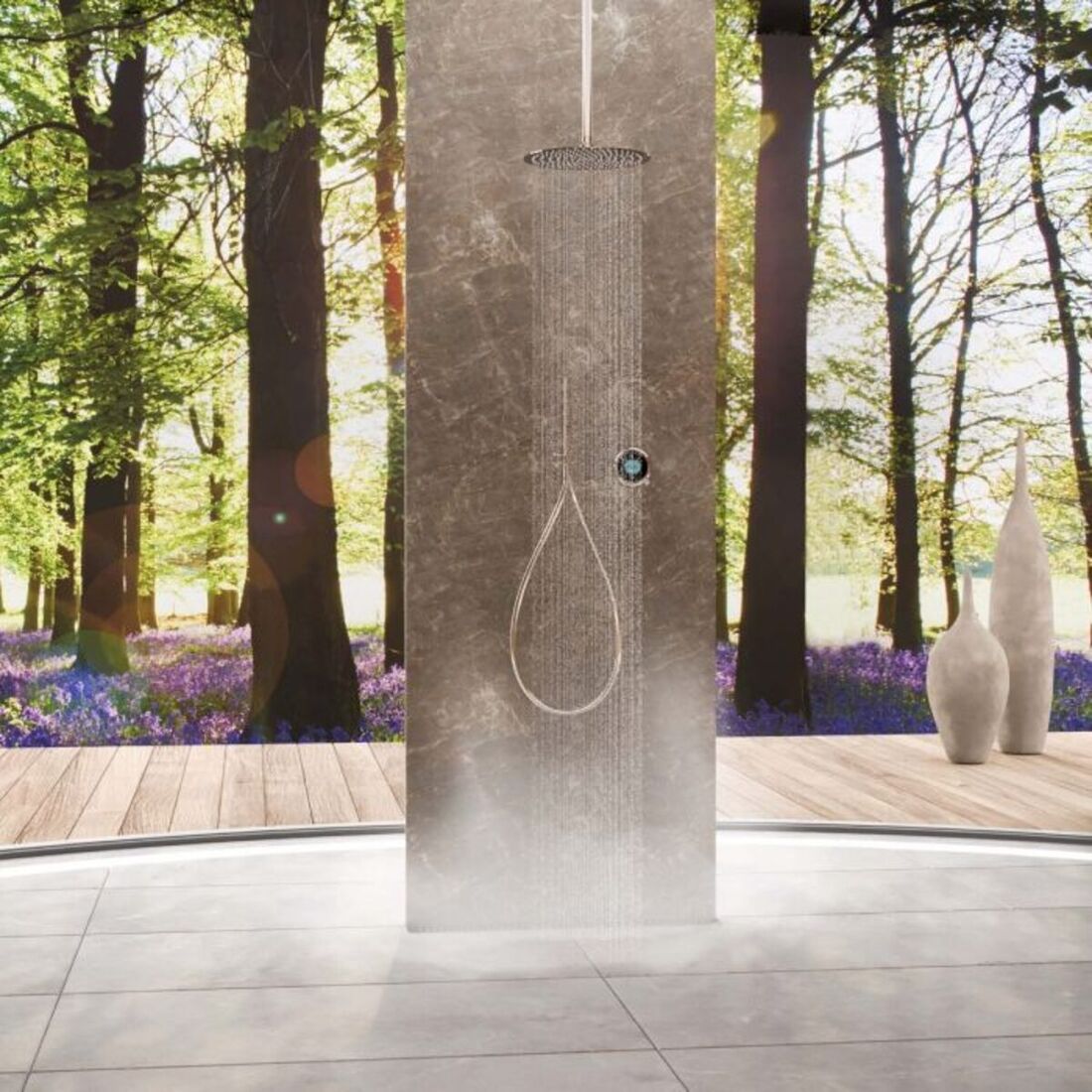
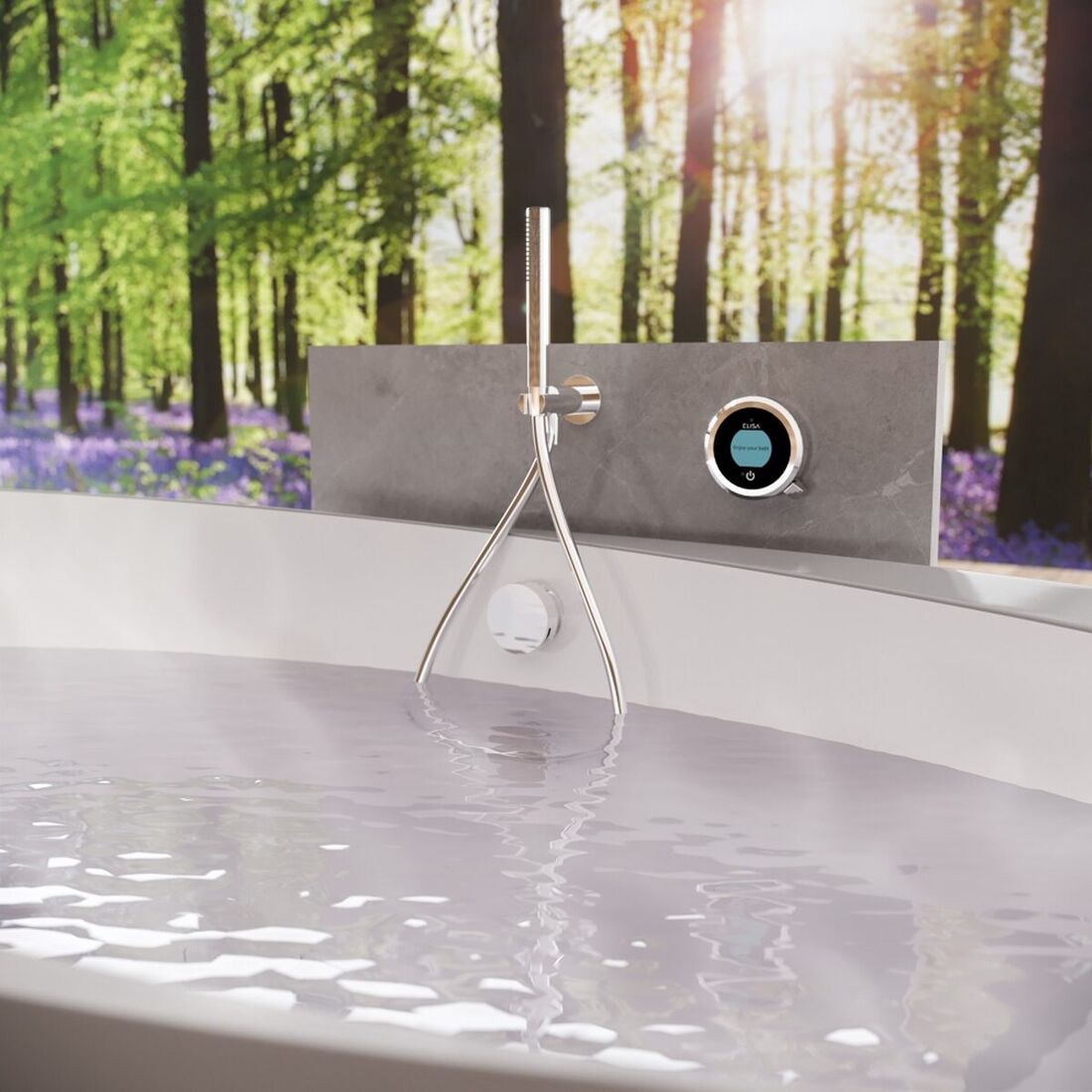
The water supply and drainage also need to support the specification, because adding outlets means asking the system to deliver and remove more water. That’s one reason body jets usually work better in a wet room than in a conventional tray enclosure. The wet area gives us more freedom to position the outlets and contain the water. Concealed body jets have to be decided at the design stage, because their pipework is chased into the wall before tiling.
We’d work out the shower positions before the wall build-up is fixed, then check the water supply, controls and drainage as one system. If you want to go further, our comparison of a steam shower, sauna and wet room explains what a steam enclosure adds.
The number of shower outlets only matters if the water supply and drainage can keep up.
Light It So You Can Turn It Down
Most ordinary bathroom lighting has one setting: bright enough for shaving or applying make-up. That’s useful in the morning, but it can feel harsh on a winter evening.
The answer is to use more than one layer of light and put the appropriate circuits on dimmers, so you still have clear task lighting at the mirror without making it the only way to light the room. Being able to lower the general lighting changes how the bathroom feels far more than adding another decorative fitting.
This needs to be discussed while the bathroom is being designed, because adding dimmers or separating circuits later can mean bringing an electrician back into a finished room. Colour temperature is the other half of the decision: for a luxury bathroom, ask for lighting in the 2700K to 3000K range, which gives a warmer light than the cold white often associated with purely functional bathrooms.
An illuminated mirror can provide much of the useful task lighting on its own, and Origins Living Claris mirrors are backlit and dimmable by touch. HiB illuminated mirrors, including the Alba and Solas ranges, use LEDs around the edge. Most higher-spec illuminated mirrors also have a heated demister pad, which is worth having in a room that fills with steam. Our guide to luxury bathroom lighting design looks at the room as a whole.
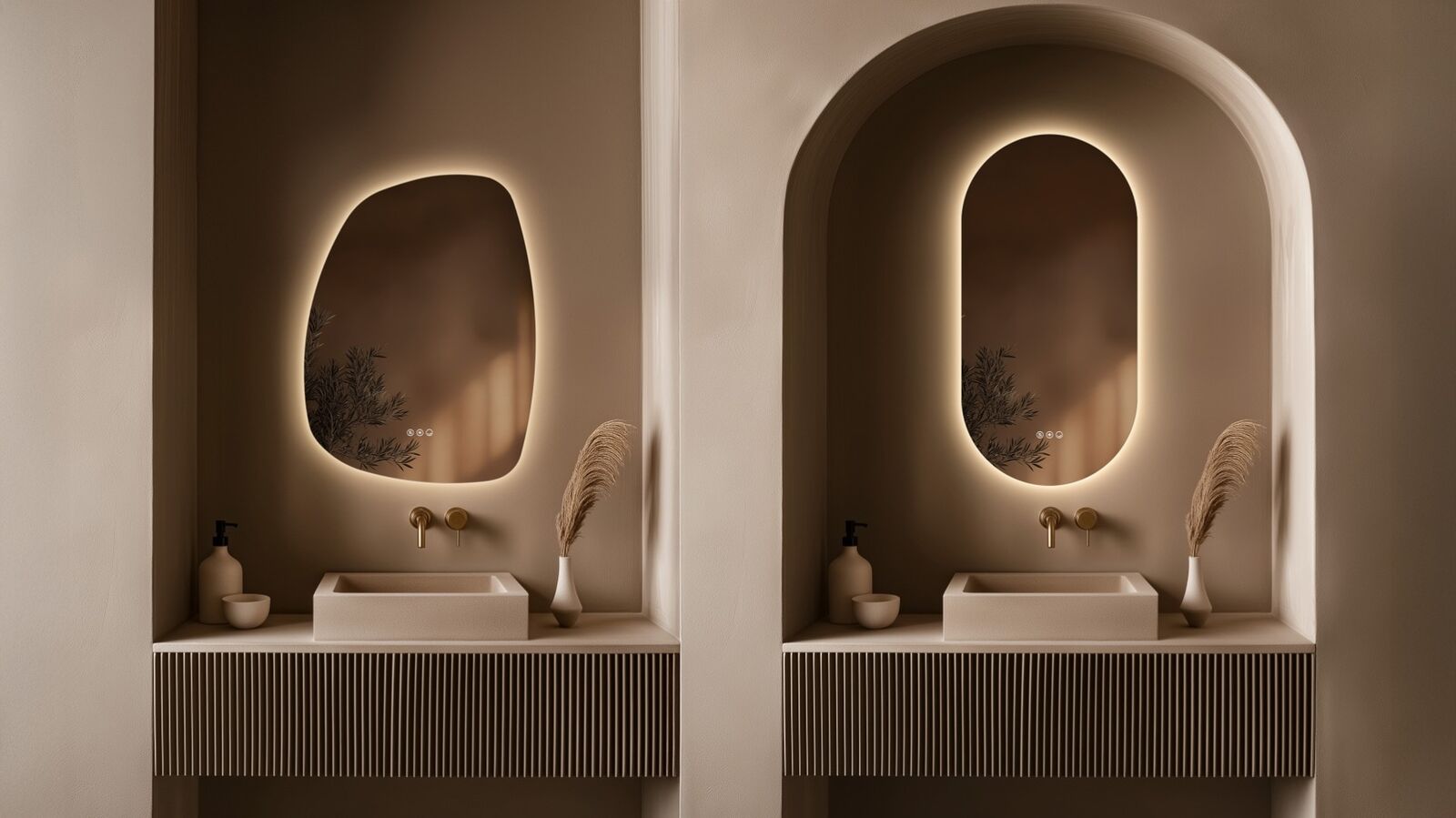
If every light comes on at full brightness together, the room will always feel functional first.
Pick Surfaces That Feel Like Stone
For a spa bathroom, we’d normally choose honed or matte surfaces rather than high gloss. The difference is physical as much as visual: honed limestone feels cool and slightly textured, while polished ceramic feels flat and slick.
Gloss can photograph well, particularly when it catches the light, but across a whole bathroom it can feel cheaper than the sample suggested. It also makes every reflection more obvious.
A quieter finish gives the room more of the character people usually mean when they ask for spa bathroom ideas. For any surface used underfoot in a wet area, ask for the wet PTV to be checked for that specific product.
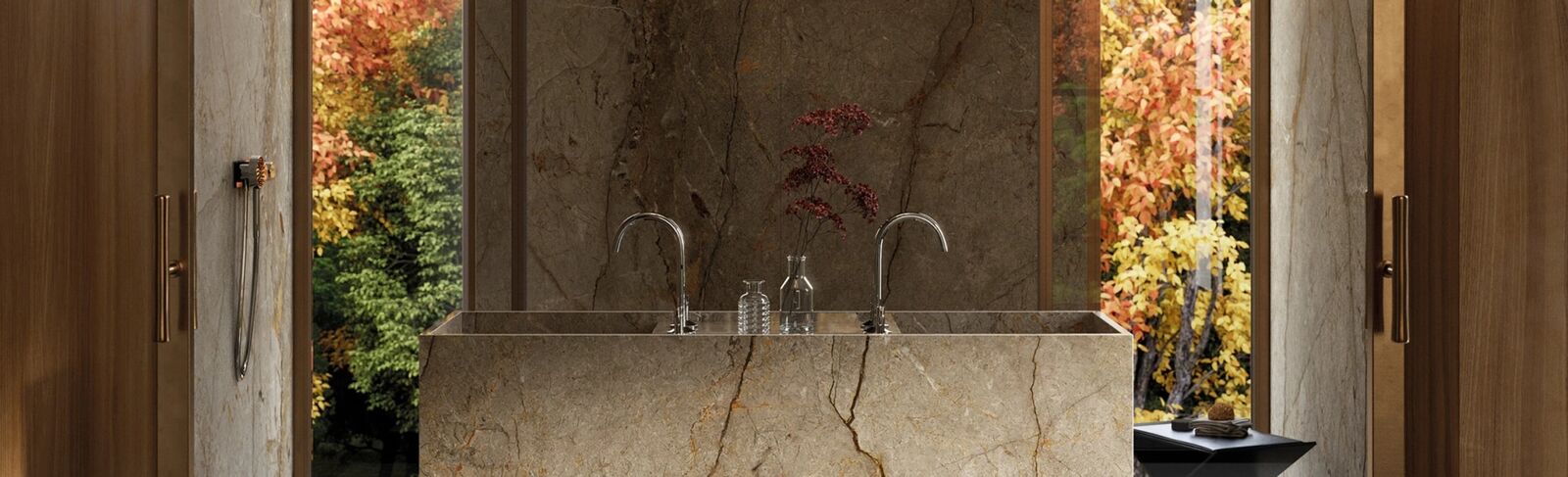
Real stone is worth considering where your hands actually land, such as a vanity top, bath surround or shower niche, and it needs to be chosen with its care requirements understood. Our guide to the cost of marble bathrooms explains the price of natural marble and where it makes sense to use it.
For larger areas, stone-effect porcelain is often the more practical choice. Porcelanosa Xtone gives us a large-format stone appearance without pretending that porcelain is natural stone, and the larger format reduces the number of grout joints, so the walls look cleaner. Porcelain doesn’t need sealing and acid won’t etch it, although the grout still needs looking after.
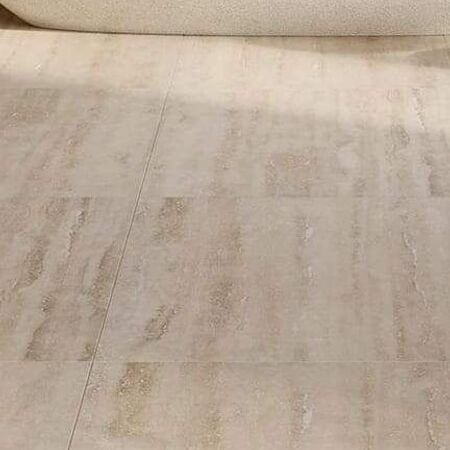
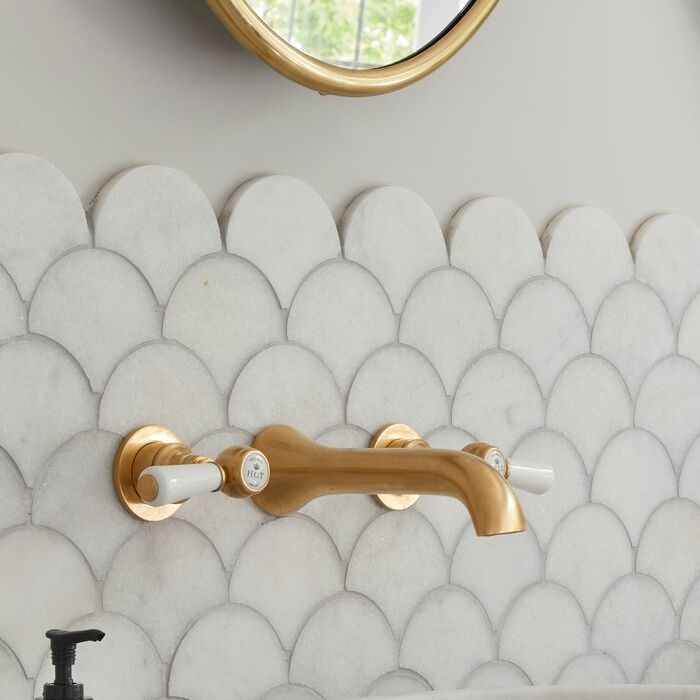
Use real stone where you’ll notice it closely, then let porcelain handle the larger areas.
Price the Spa Add-Ons Before You Commit
These features can move the budget quite quickly, so price them while the room is being designed. The figures below are published market ranges rather than Bowman Bathrooms quotations. They’re useful for early planning, but the final cost will depend on the room, product specification and installation involved.
| Spa upgrade | What it costs in the UK | Where the full detail lives |
|---|---|---|
| Electric underfloor heating, 4–6m² bathroom | £750–£1,600 supplied and installed | Underfloor heating cost guide |
| Wet underfloor heating, single retrofit bathroom | £900–£2,000+ | Same guide |
| Steam shower, entry-level cabin | £1,800–£2,500 installed. Whole market £1,500–£6,000 | Steam shower cost comparison |
| Freestanding bath | £1,500–£2,200 acrylic. £2,400–£3,800 cast stone or composite | Luxury bathroom cost guide |
| Natural marble tile | £92–£330 per m², supply only | Marble bathroom cost guide |
| Rainfall shower with body jets, installed | No reliable published UK figure exists | — |
The variation is important. With underfloor heating, an electric system in a 4–6m² bathroom is a different proposition from a wet system installed during a retrofit, and a steam shower can range from an entry-level cabin to a much more involved installation. The steam figures come from MyJobQuote’s UK steam shower cost guide, updated January 2026; the bath figures follow the BC Designs ranges we specify; the marble figure is Ca’ Pietra UK retail, supply only, checked August 2026.
There’s no figure for the rainfall shower and body jets because none of the UK trade-cost sites we checked in August 2026 publishes a reliable installed price for that specification. We’d rather leave the gap than guess. Bring the room details into the showroom and we can build a real specification around the outlets, controls, water supply and drainage.
Bathroom design is included at Bowman Bathrooms, so you only pay for the products you choose. We specify and order those products, then support the project during the build, while installation can be handled by your own fitter or by one of our approved installers. To price your own room, start with a bathroom design appointment.
Treat all of these as published market ranges rather than Bowman Bathrooms pricing.
Frequently Asked Questions
Common questions about spa bathrooms, underfloor heating and lighting
Still weighing something up? Our design team can answer it in person when you book a showroom visit below.
The next decision is whether your room can comfortably take a separate bath and shower, or whether the budget and floor space should go into making the shower better. Bring your dimensions and a few photographs to our Braintree or Leigh-on-Sea showroom and we’ll work through it with you.
Jonathon Barclay founded Bowman Bathrooms in 2022. It’s an independent bathroom design and supply company that runs showrooms in Braintree and Leigh-on-Sea and specifies projects across Essex.
Related Guides and Inspiration
Steam Shower vs Sauna vs Wet Room
What each one costs to build and run
Wet Room vs Walk-In Shower
Which suits your floor and your room
Luxury Bathroom Lighting Design
Layering, dimming and scene control in detail
Bathroom Underfloor Heating: Wet vs Electric
Install cost, running cost, build-up height
Hotel-Style Bathroom Ideas
Layout, night light, supply and sound: what makes a room work like a hotel