
Shower Tray Sizes: Every Main UK Shape, Size and Height
Shower tray sizes look straightforward until you start comparing listings. You’ve measured the shower alcove at roughly 900 x 800mm and started looking for a tray. One website says the tray is 25mm high, another says 30mm and a third says 31mm, even though they appear to be describing the same product.
That’s where a straightforward purchase becomes unnecessarily difficult. The footprint is rarely the part that catches people out. The tray height and, with a quadrant, the corner radius are more likely to cause trouble. Neither is standardised in the way you might reasonably assume, and a tray described as 900 x 800mm won’t necessarily suit every opening measured at 900 x 800mm.
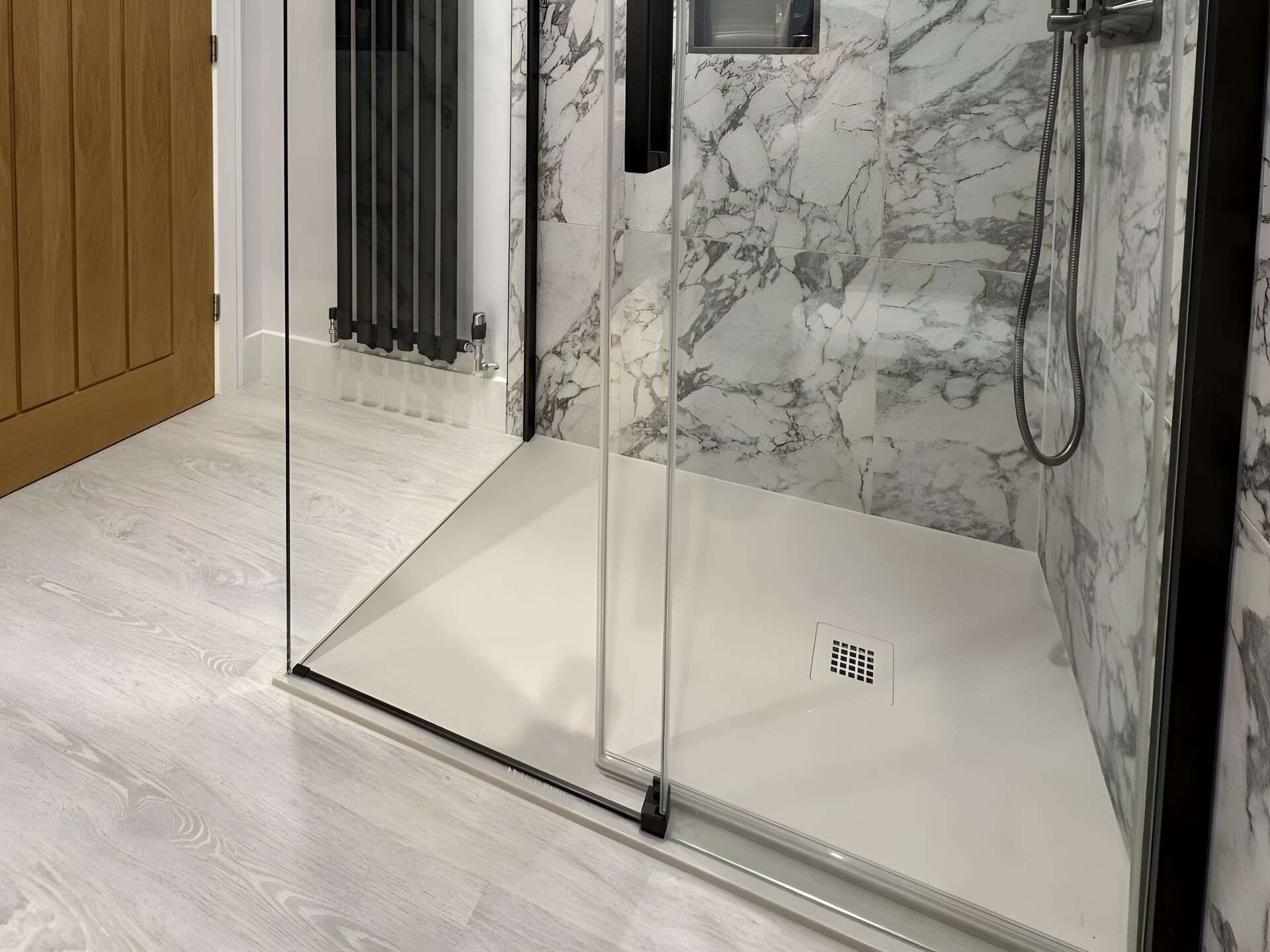
Shower tray sizes are organised by shape: rectangular, square, quadrant, offset quadrant and pentagon. Across those shapes, verified UK stock sizes span roughly 700mm to 2000mm, although the choice narrows sharply with some shapes. Height is decided separately by each manufacturer and range, and verified trays described as low profile span 25mm to 45mm. BS EN 14527 specifies no tray height at all. Quadrant trays use a 550mm corner radius on almost every UK range, but it isn’t guaranteed. Always check the manufacturer’s specification sheet for the exact product and size code.
Quick Navigation
What shower tray sizes are available in the UK?
Shower tray sizes are organised by shape, and the shape you choose decides how many sizes you get to pick from. Rectangular trays offer by far the broadest choice. Square trays give you a smaller but still useful set of options, while quadrant, offset quadrant and pentagon ranges become much more restricted.
The table below uses the contemporary lightweight shower tray product information published by Lakes Showering. It’s a useful single-manufacturer comparison because the range includes all five main shapes.
| Shape | Stock sizes available | Typical size range |
|---|---|---|
| Rectangular | around 35 | 900 x 760mm up to 2000 x 1000mm (widths 700, 760, 800, 900, 1000mm) |
| Square | 5 | 700 x 700mm up to 1000 x 1000mm |
| Quadrant | 3 | 800 x 800mm, 900 x 900mm, 1000 x 1000mm |
| Offset quadrant | 5 | 900 x 760mm up to 1200 x 900mm, each in a left and a right hand |
| Pentagon | 1 | 900 x 900mm only |
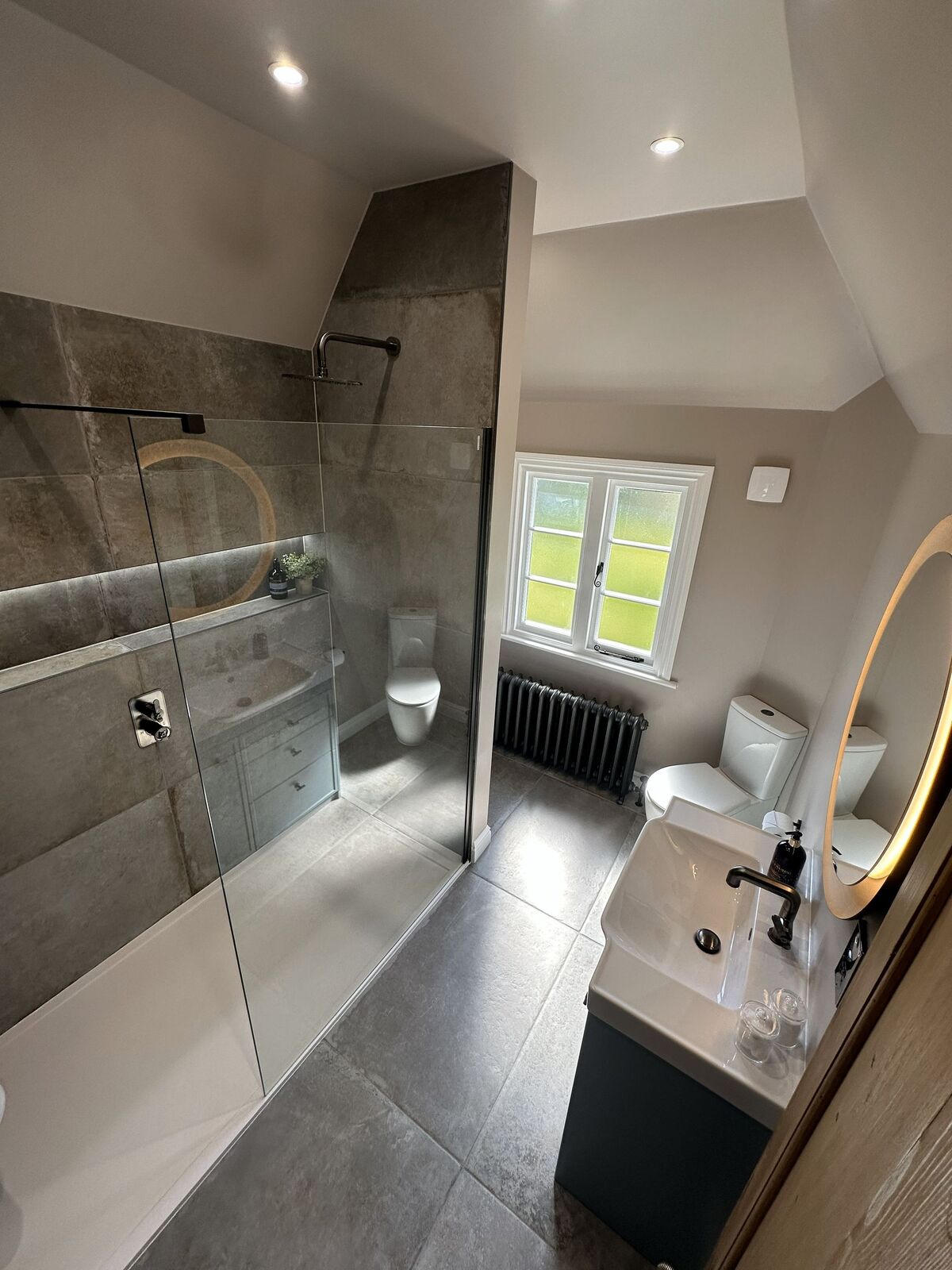
The important point is that the choice collapses as soon as you move away from a rectangle. A rectangular tray buyer has around 35 stock sizes to consider. A square buyer has five, a quadrant buyer has three and a pentagon buyer has exactly one, so if you need a pentagon and the room won’t take 900 x 900mm, Lakes hasn’t got a second size for you. Look wider and you’ll find a handful more pentagon footprints published elsewhere, but even the broadest range is short next to 35 rectangles. That’s the point: pick the shape after you’ve checked what’s made in it.
This matters because people often settle on a shape before checking whether that shape is made in the dimensions their room needs. A pentagon can seem sensible on a plan because the clipped corner opens the route past the enclosure, but that idea only works if one of the handful of footprints made in that shape fits. An offset quadrant gives you more choice, although every size also comes with a handing decision.
Rectangular trays are much more forgiving at the design stage. They cover several widths and a broad run of lengths, so there’s usually more scope to balance showering space against the basin, toilet, door and circulation around the room. That doesn’t mean the biggest tray is always the right one. We simply have more real sizes with which to solve the layout.
The 760 x 760mm tray can look like an oddly specific exception among all the round numbers. It’s the old imperial 30-inch size carried into metric catalogues, which is why 760mm still appears.
So choose the shape with the room around it in mind, then check the sizes made in that shape. A good shower room design should begin with the whole layout, rather than treating the enclosure and tray as isolated products.
Quadrant and offset quadrant sizes: radius, and which hand
Quadrant sizing looks fairly simple. You have three common footprints and one corner radius used by almost everyone. Offset quadrant sizing is where it becomes less straightforward, because you must also establish which hand fits the room.
A standard quadrant has two equal straight sides and a curved front, and Lakes Showering states that its quadrants are designed for a 550mm tray radius. Mira’s Flight Level range uses R550, and Roman’s Haven enclosures use the same radius. Three unrelated manufacturers arriving at the same figure makes 550mm the de facto UK radius, but it still isn’t a guarantee for every product.
The radius trap
An 800 x 800mm tray doesn’t automatically fit an 800 x 800mm enclosure. The two straight edge dimensions can match while the curve does not, so the tray and enclosure must also have the same corner radius. Always check both drawings. Some ranges publish a radius and some don’t, and the ones that do don’t all put it in the same place. Crosswater prints R550 onto the drawing on its data sheets for the 25mm Creo quadrant and the 35mm acrylic quadrant. For the 45mm stone resin quadrant and offset quadrant, the drawing carries no radius at all, and that 550mm figure sits in the trade catalogue of Simpsons instead, its sister brand within Bathroom Brands Group, selling the same product codes. Same radius, three different documents, and the one that carries it for the 45mm range isn’t on Crosswater’s site at all.
That missing figure isn’t something to fill in from another range. Even where 550mm seems likely, the tray and enclosure need to be checked against their own drawings before they’re ordered.
Offset quadrants add a longer straight side, which gives you a larger showering area without turning the tray into a full rectangle. They come in left-hand and right-hand versions, and the two aren’t interchangeable. The difficult part is that the words themselves aren’t used consistently enough to be a safe ordering instruction.
What retailers say
- A common and confidently stated rule is that the hand refers to the side where the door and curve sit when you face the shower.
What the manufacturers publish
- Kudos is the only UK manufacturer in this comparison to publish a written definition. It hands the tray by the corner, not the curve: “if when installed the corner is on the left hand side of the tray/enclosure then this would be classed as being left-handed”.
- Lakes Showering hands its traditional stone resin offset quadrants by the waste corner, using “Left Hand Corner Waste” and “Right Hand Corner Waste”. Its contemporary lightweight offset quadrants place the waste “on centre of radius” on both hands.
- Crosswater and Merlyn don’t publish a written definition at all.
What that means: Corner on the left means curve on the right. The two descriptions are opposites, so a general rule based on the curve can contradict the only manufacturer here that publishes one.
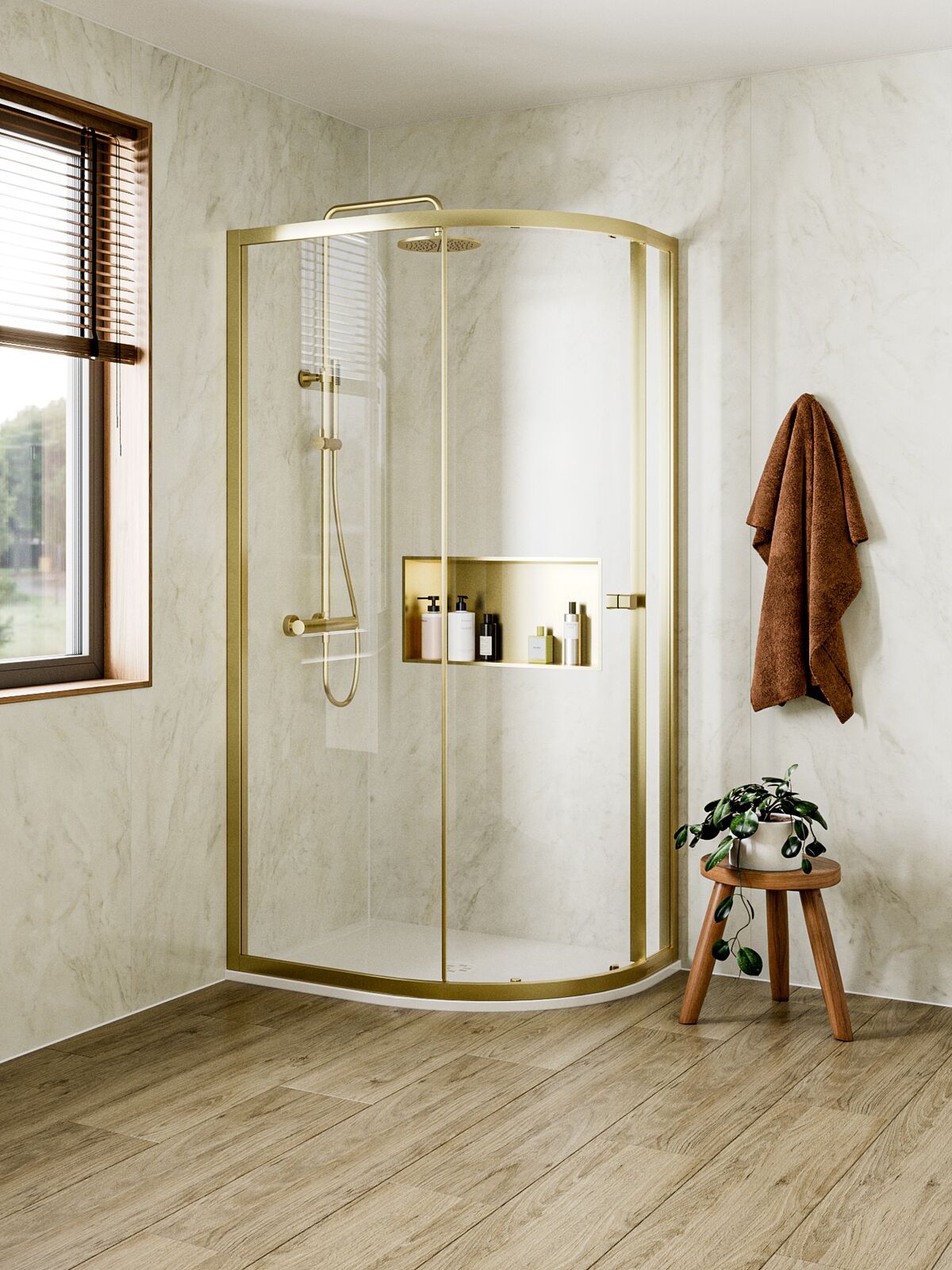
Crosswater’s separate data sheets for the left-hand and right-hand versions of its 800 x 1000mm 45mm offset quadrant tray prove why photographs aren’t enough. Page one of both sheets uses the same photograph, with the curve on the left. Page two is different. The technical drawing is mirrored: on the left-hand sheet, the 1000mm side runs along the top, with the waste 350mm in from the right-hand straight edge and 130mm up from the bottom edge. On the right-hand sheet, the 1000mm side runs along the bottom. The figures are the same, but the drawing is mirrored. You cannot order from the picture.
A left-hand tray and a right-hand tray are mirror images. Turning one around on the floor doesn’t turn it into the other. You would have to flip it over, which plainly isn’t possible with a tray that has a finished top surface and a waste hole. If you order the wrong hand, the waste ends up on the wrong side of the room.
Verdict: order from the drawing, not the words
Measure both walls, then find the line drawing for the exact product code. Match the tray’s two straight edges to the walls, with the long straight edge against the long wall. The words left hand and right hand won’t establish that on their own. It’s also why every tray specified through Bowmans is confirmed against the manufacturer’s drawing in your 3D specification before anything is ordered — the ambiguity never reaches your order form.
Low-profile or standard height: what actually differs
Tray height is decided by each manufacturer, range by range. There is no single industry figure for a low-profile or standard-height shower tray.
“Low profile” is not a defined term. BS EN 14527:2016+A1:2018, Shower trays for domestic purposes, was published on 30 November 2018 and remains current. It specifies the characteristics, test methods and conformity assessment for shower trays, but it specifies no heights and no sizes at all. “Low profile” is a marketing description rather than a standard.
Lakes Showering describes its low-profile stone resin trays as around 45mm high and its standard-height stone resin trays as around 80mm. That is close to double the height within one manufacturer’s catalogue.
Crosswater makes the point even more clearly because most of its range names contain a height. Those names show that height belongs to the particular product range, although one also shows why the data sheet still matters more than the name.
| Crosswater range | Height | Material |
|---|---|---|
| 25mm Creo | 25mm | dolomite / stone resin |
| 25mm Vito | 25mm | dolomite / stone resin |
| 30mm Plus+Ton | 30mm | ceramic |
| 35mm Tray | 35mm, plus or minus 2mm | acrylic capped, steel frame |
| 38mm Textured Slate | 38mm | acrylstone |
| 45mm Tray | the name is nominal, the data sheet states 50mm | ABS / stone resin |
The 45mm Tray is the obvious warning here. Its range name is nominal, but Crosswater’s own data sheet gives the product height as 50mm. If that difference affects a floor level, enclosure or step, 50mm is the figure that matters.
Crosswater sells the 25mm Creo and Vito ranges and the separate 35mm acrylic range side by side, and we supply both. There is no contradiction in selling both as low-profile products. They’re different ranges with different construction and different verified heights, which is simply how Crosswater structures its offer.
You’ll sometimes see it said that Crosswater’s longer trays get taller, with trays from 1500mm upwards listed at 27mm to 29mm. The manufacturer’s data sheet for the 900 x 1700mm Creo states a product height of 25mm. What changes as the tray becomes longer is the flatness tolerance. It widens from plus or minus 2mm at 1200mm to plus or minus 3mm at 1700mm. Height and flatness are separate specifications, but they’re easily conflated in a retailer’s table.
The waste size flips with the height. Low-profile trays commonly take a 90mm waste, while standard-height trays commonly take a 50mm waste, according to Lakes Showering. The familiar claim that UK shower trays use a 90mm waste is only true of the low-profile type. That’s worth establishing before your fitter opens the floor.
The tray itself is covered by BS EN 14527. The waste fitting is covered separately by the EN 274 series. They’re two products governed by two different standards, even though they’re often discussed as if they were one specification.
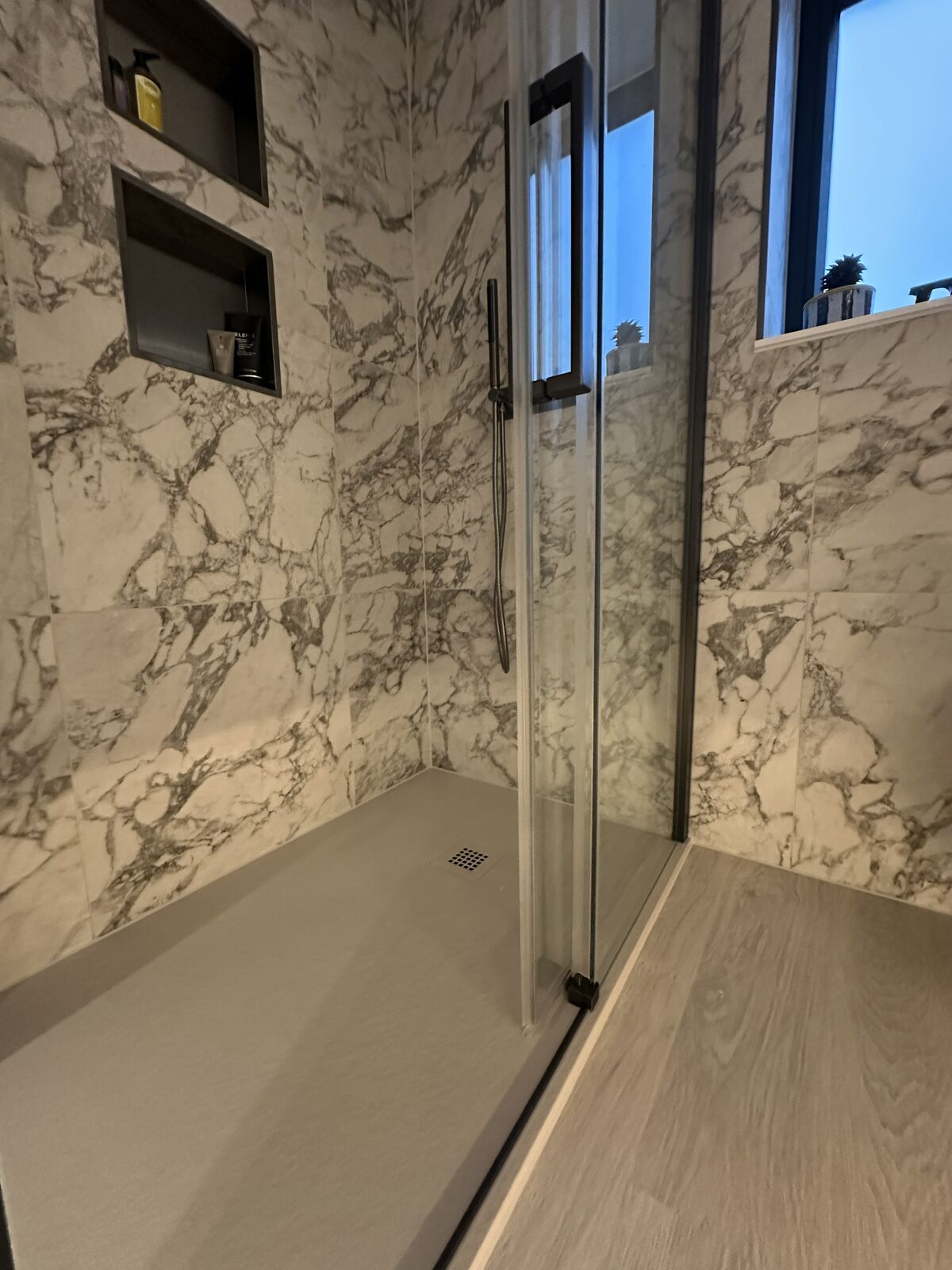
Why does the same tray show three different heights online?
One of those figures is a weight in kilograms misread as a height, and another has been borrowed from a different range’s line drawing. The safest way to read shower tray dimensions is to use the manufacturer’s data sheet for the exact size and product code. The tray we specify most often gives us a particularly useful example because its height changes within one range, and those two unrelated figures have also been mistaken for its height online.
The Giorgio Lux is Tissino’s flagship shower tray range and the tray Bowmans specifies more than any other. Giorgio Lux is the name of the range rather than a separate manufacturer.
It’s made only in square and rectangular shapes. There are 15 sizes, from 900 x 900mm up to 2000 x 900mm, in three widths: 800, 900 and 1000mm. Tissino’s quadrant and offset quadrant trays belong to the separate Giorgio2 range, so information from one shouldn’t be carried across to the other.
Within the Giorgio Lux range, the correct height is 25 to 30mm depending on size. Tissino’s own published data sheets give the following dimensions.
| Tray width | Length and height |
|---|---|
| 800mm | 1000mm: 25mm, 1200mm: 25mm, 1400mm: 28mm, 1600mm: 28mm, 1700mm: 29mm, 1800mm: 29mm, 2000mm: 30mm |
| 900mm | 900mm: 30mm, 1000mm: 25mm, 1200mm: 25mm, 1400mm: 27mm, 1600mm: 29mm, 1800mm: 29mm, 2000mm: 30mm |
| 1000mm | 1200mm: 30mm |
This is why a single range-level figure won’t do. A 1000 x 800mm tray and a 2000 x 800mm tray carry the same name and use the same construction, but one is 25mm high and the other is 30mm. You need the line for the size you’re buying.
The figure widely repeated for Giorgio Lux is 31mm, but no Giorgio Lux size is 31mm high. In Tissino’s 800mm-wide data sheet, the 1200 x 800mm tray is 25mm thick and weighs 31 kilograms, so the weight column has been read across as a height. Separately, the Giorgio2 quadrant line drawing does show 31mm, and that figure has been carried onto Giorgio Lux listings even though Giorgio Lux has no quadrant tray at all.
Tissino’s own Giorgio2 documents don’t agree either. The quadrant data sheet says 27mm and the line drawing says 31mm. That’s exactly how a number gets loose.
That’s how one tray can acquire three different heights online. One may be correct for a particular size, another may be the weight with the unit changed, and a third may have come from a technical drawing for another range.
The general rule is simple. If a number decides whether the tray will fit, take it from the manufacturer’s data sheet for the exact size code. Don’t rely on a retailer’s range-level specification table, and don’t assume the first technical drawing returned in a search belongs to the same range.
Giorgio Lux has a gelcoat surface over a stone resin core and carries a lifetime warranty, so listings that quote ten years are wrong. It’s available in Graphite Slate, Grey Slate, Soft Taupe and White Slate. Those details help confirm that you’re looking at the correct range, but they don’t replace checking the exact size entry.
We specified a Giorgio Lux tray in the Bures CO8 ensuite shower room. It worked as part of that room’s design because the particular shape, size and finish suited the layout. One range won’t fit every project. Even a familiar tray we use regularly still has to be checked size by size.
How to choose the right size, in order
Three things decide the tray, and they decide it in this order: the footprint, the door swing and the position of the existing waste. Establish those before looking through a size chart with your fitter.
Measure the opening, not the tile line
Measure wall to wall at floor level in both directions. Tiles, boarding and walls that aren’t square will all move the finished number, so your fitter needs to consider the opening as it exists.
Decide the door and which way it opens
A hinged shower door needs clear space outside the tray through its full swing. A sliding door doesn’t. That difference can decide the enclosure and tray shape before the available dimensions do.
Find the existing waste
Its position can rule shapes in or out before appearance gets a vote. With an offset quadrant, the waste position also helps determine which handed tray matches the room.
Match the shape, then confirm the radius and hand
Use the line drawing for the exact product code. Don’t work from the range name or product photograph, particularly with an offset quadrant.
Confirm the height for your specific size
Check the actual size entry rather than accepting one height for the whole range. As the Giorgio Lux table shows, a single range can contain several tray heights.
A measured 900 x 800mm opening will often sit between two genuine stock sizes once the walls, boards and finished surfaces are considered. You don’t necessarily need a tray that matches your rough measurement perfectly. The remaining difference is dealt with as part of fitting the selected tray, which is why the final measurement and product drawing should be reviewed with the person installing it.
In the ranges we specify, 700mm is the narrowest width, but 760mm is where a shower starts to feel comfortable. Below that, your elbows find the glass. In a restricted room, the tray still has to work with the toilet, basin and route through the door, which is why small luxury bathroom design depends on more than squeezing in the largest available shower.
If a stock tray is forcing too many compromises, it’s worth asking whether building a wet room instead would suit the room better. That is a different floor and waterproofing decision, not simply another tray shape. Whichever route you take, agree the approach to bathroom tanking with your fitter as part of the room specification.
There’s also a made-to-measure route before you rule a tray out altogether. We supply Laufen’s Marbond trays, a two-layer composite with a mineral casting base under a two-millimetre acrylic surface (Laufen’s own description), rated anti-slip Class C under DIN 51097. The range includes super-flat trays made to measure, so an awkward alcove or a period room without a square corner can have a tray built to its exact opening rather than a stock size forced into it.
Figures in this article are correct as of September 2026 against the manufacturers’ published data sheets. Ranges do get revised, so confirm the exact size code before ordering.
Frequently Asked Questions
Heights, sizes, radius and waste, answered plainly
What’s next
The size and height questions usually settle quite quickly once we know the opening, how the shower door needs to work and where the existing waste sits. Bring rough wall-to-wall dimensions and a note showing the waste position to our Braintree or Leigh-on-Sea showroom. A designer can match them to a real tray range, then identify the product drawing and size code that your fitter needs to confirm before anything is ordered.
Jonathon Barclay founded Bowman Bathrooms in 2022. The business designs and specifies shower trays, enclosures and wet rooms across Essex from two independent showrooms, in Braintree and Leigh-on-Sea.