Bowmans · Inspiration · Design

Designing a small luxury bathroom under 5 square metres

By Jonathon Barclay, Founder 18 min read

Most UK homeowners with a small bathroom assume the brief is ‘simple’ — fewer fittings, fewer decisions, lower spend. The real brief is the opposite. A small bathroom has every constraint a large one has — soil-pipe location, joist run, ventilation, electrical zones, sight-lines — compressed into a smaller envelope where mistakes are harder to absorb. Done well, a 4 sq m ensuite reads as the most resolved room in the house. Done averagely, the same footprint feels cramped, awkward and visibly compromised. The decisions that separate the two are mostly upstream of any product order.

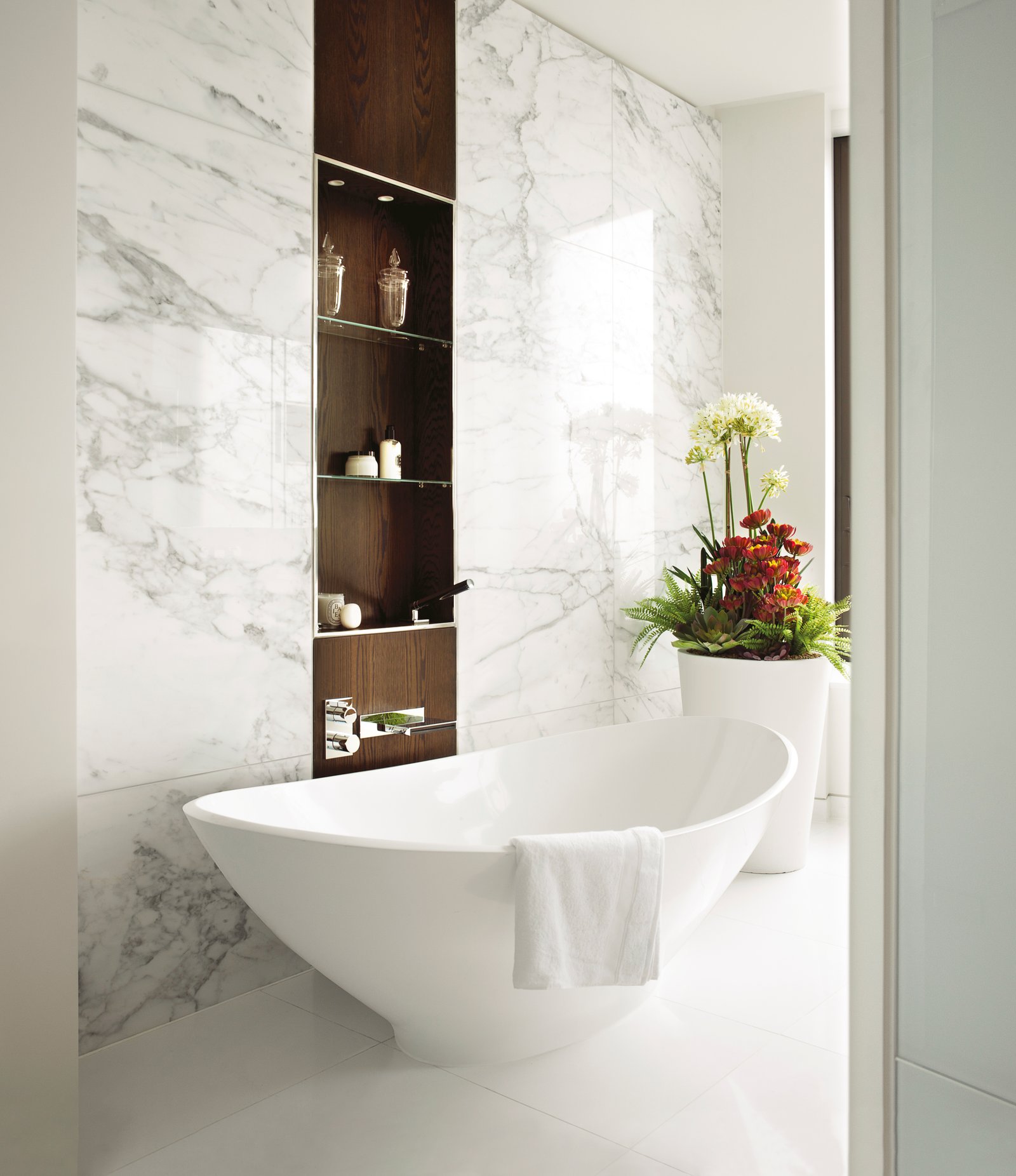
Small luxury bathroom under 5 square metres - BC Designs BAB005 freestanding cast-stone bath specified into a compact ensuite, large-format porcelain wall, restrained brassware and a single feature surface, illustrating the design discipline a small luxury bathroom rewards
BC Designs BAB005 in a compact bathroom — the bath is the single feature, the rest of the room reads quietly. The disciplined small-bathroom move that makes the room feel larger than its plan.

01 · Footprint reality

What under 5 square metres actually means in practice

The label ‘small bathroom’ covers a wide spread of footprints in UK housing stock, and the design problem differs sharply across that range. A 1.8 sq m cloakroom is a different brief from a 4.2 sq m ensuite. Both are ‘small’, but the design moves that work for each are almost mutually exclusive.

For the purposes of this guide we are talking about the 2.4 sq m to 4.9 sq m band, which captures most UK Victorian terrace upstairs bathrooms, most 1990s and 2000s ensuites, and most flat conversions. That band is where a luxury spec is genuinely possible if the layout is right, and is also where the trade-offs sharpen most quickly. Below 2.4 sq m you are designing a cloakroom or a powder room, where luxury comes from material density rather than spatial generosity. Above 5 sq m most layouts can absorb both a bath and a generous walk-in shower without compromise.

Three properties at this scale we see most often in Essex and the home counties:

  • The Victorian terrace upstairs bathroom. Typically 2.4 m by 1.8 m (4.32 sq m), often with a sloped ceiling above a stair void at one end, single-skin party walls on at least one side, original joist depths of 175 – 200 mm and a soil pipe usually surface-mounted up the rear elevation.
  • The 1990s/2000s master ensuite. Typically 1.8 m by 2.0 m (3.6 sq m), with the soil stack inside a boxed-in corner, electrics often non-compliant with current BS 7671 zoning, and a tray-and-screen shower most owners want to upgrade.
  • The flat-conversion second bathroom. Typically 1.6 m by 2.4 m (3.84 sq m), usually a converted utility cupboard or part of a former kitchen, with awkward existing services and a structural wall that cannot be moved.

What unites all three: there is little spare floor, the existing services dictate the soil-pipe and waste runs, and any clearance compromise (a bath wedged 800 mm from a wall, a vanity oversized by 100 mm, a WC pan 750 mm from the centre line of the room) reads as visibly compromised. Large bathrooms can absorb 50–100 mm clearance errors. Small ones cannot.

02 · The misconception

Small is not simple — the most expensive misconception in UK bathroom design

The single most expensive belief homeowners arrive with is that a small bathroom is a simpler project than a large one. The numbers say the opposite. Small bathrooms have the same regulatory burden, the same plumbing complexity, the same electrical zoning calculations and the same waterproofing requirements as a 10 sq m principal suite — compressed into a footprint where every dimension is constrained.

What ‘small but not simple’ actually means in practice:

  • BS 7671 Amendment 3:2024 zones still apply in full. A 3.6 sq m ensuite has the same Zone 0, 1 and 2 calculations as a 12 sq m bathroom. The IPX rating on every fitting, the 30 mA RCD on every circuit, the lighting selection at zone boundaries — identical. The only difference is that in a small bathroom the zones are closer together, so a single fitting placement error pushes more of the room out of compliance.
  • Approved Document G water-efficiency targets apply identically. 125 L per person per day target, 48°C maximum bath-fill outlet temperature, the lot. A small bathroom does not get a relaxed standard.
  • Joist deflection ratings under freestanding baths are identical. A 1500 mm freestanding bath weighs 350–500 kg filled. Whether the room is 4 sq m or 12 sq m, the joists carrying it need to be deflection-rated for the load and properly braced. Small Victorian bathrooms with original 175 mm joists frequently fail this calculation and need joist sistering or replacement before the bath can be installed.
  • Soil-pipe relocation is more common in small bathrooms, not less. Because the existing pipe was installed for a different layout (typically a tray-shower-and-bath configuration from the 1980s or 1990s), a new walk-in shower or wet-room layout often forces a relocation. The cost is the same as in a large bathroom, but the budget absorbs it less easily.
  • Sloped ceilings hit small bathrooms harder. Loft conversions and Victorian extensions often produce small bathrooms where part of the ceiling slopes below 1.9 m headroom. That ceiling line dictates where a shower can sit, where a basin tap can stand, and how the lighting plan resolves. A large bathroom can route around a slope. A small one rarely can.

The compounding effect is what catches homeowners out. In a 10 sq m bathroom, a 100 mm clearance error or a fitting outside its specified zone can be solved by sliding something across. In a 4 sq m bathroom, that same error forces a rework of half the layout. The result: small-bathroom rework costs are disproportionately high relative to project size, because the rework cascade is wider.

This is why the framing of ‘small means simple’ produces the most expensive bathroom rebuilds we are asked to quote against. The original installer treated the project as a quick refit, the design layer was thin or absent, and the regulatory and clearance compromises only became visible once the room was tiled and plumbed. The fix is a strip-out and start again at full cost. Avoiding that outcome is mostly a design-phase problem, not a build-phase one.

03 · The priority decision

Bath OR walk-in shower — the priority decision (rarely both)

The single hardest decision in a small luxury bathroom is which one piece of sanitaryware gets the spatial generosity. In a 10 sq m bathroom you can have a 1700 mm freestanding bath and a 1200 mm walk-in shower without either feeling cramped. Under 5 sq m, attempting both almost always produces a shower under 800 mm wide and a bath wedged against a wall — two compromised pieces in the room rather than one resolved one.

Three honest framings to make this decision.

Framing one: how do you actually use a bathroom?

The most useful starting question is also the simplest. In the last six months, how many times did you take a long bath versus how many times did you take a shower? The answer for most UK households is heavily skewed to showers — typically 5–10 showers per bath, often higher in households without young children. If your usage pattern is shower-heavy, the small bathroom should be designed around a generous walk-in shower of 900–1000 mm in width, with the bath either omitted or replaced by a 1500 mm shower-bath in another bathroom.

The exception is families with children under eight, where bath usage is genuinely high and a bath is non-negotiable. In a small family bathroom under 5 sq m, the right answer is usually a 1500 or 1600 mm shower-bath with a fixed glass screen — not a freestanding bath. The shower-bath gives both functions a usable footprint; a freestanding bath in the same space sacrifices the shower zone to give the bath a wedged-against-wall reading.

Framing two: what does a freestanding bath actually need?

BC Designs and most other freestanding-bath manufacturers ask for at least 1100 mm of clear distance from the bath to the nearest wall or fixture for the bath to read as freestanding rather than wedged. That clearance is not arbitrary — below it the bath visually merges into the wall, which negates the entire reason for choosing a freestanding bath over a built-in. Below 800 mm clearance the bath looks like an installation mistake.

In a 4 sq m room with a WC, basin and walk-in shower already specified, the 1100 mm clearance is rarely available. What you typically get is a 700–900 mm clearance to the nearest wall and a 600–700 mm clearance to the basin or shower. The bath ends up reading as compromised in a room with luxury spec everywhere else — the most visible failure mode in a small luxury bathroom.

The honest call: if your room is under 5 sq m and you genuinely want a freestanding bath, the trade-off is omitting either the shower or making the shower 700 mm wide (which is below the comfortable threshold). Most clients who think they want a freestanding bath in a small room change their minds when shown a 3D layout of what 700 mm of bath clearance actually looks like.

Framing three: what does the property need for resale?

UK property listings consistently show that buyers searching for family homes filter for at least one bath somewhere on the property. If your small bathroom is the only bathroom in a single-bathroom home, removing the bath entirely is the most-cited resale regret on UK property forums. In that scenario the right call is a 1500 mm shower-bath rather than a walk-in shower, regardless of personal usage preference. Resale is the constraint, not the design.

If the small bathroom is an ensuite to a master bedroom and the family bathroom on the same floor has a bath, the ensuite is free to be a generous walk-in shower with no bath. That is the configuration most master ensuites under 5 sq m end up with, and it is the right answer in 9 cases out of 10. Our companion guide on the freestanding bath vs built-in trade-off covers the bath-only decision in more detail.

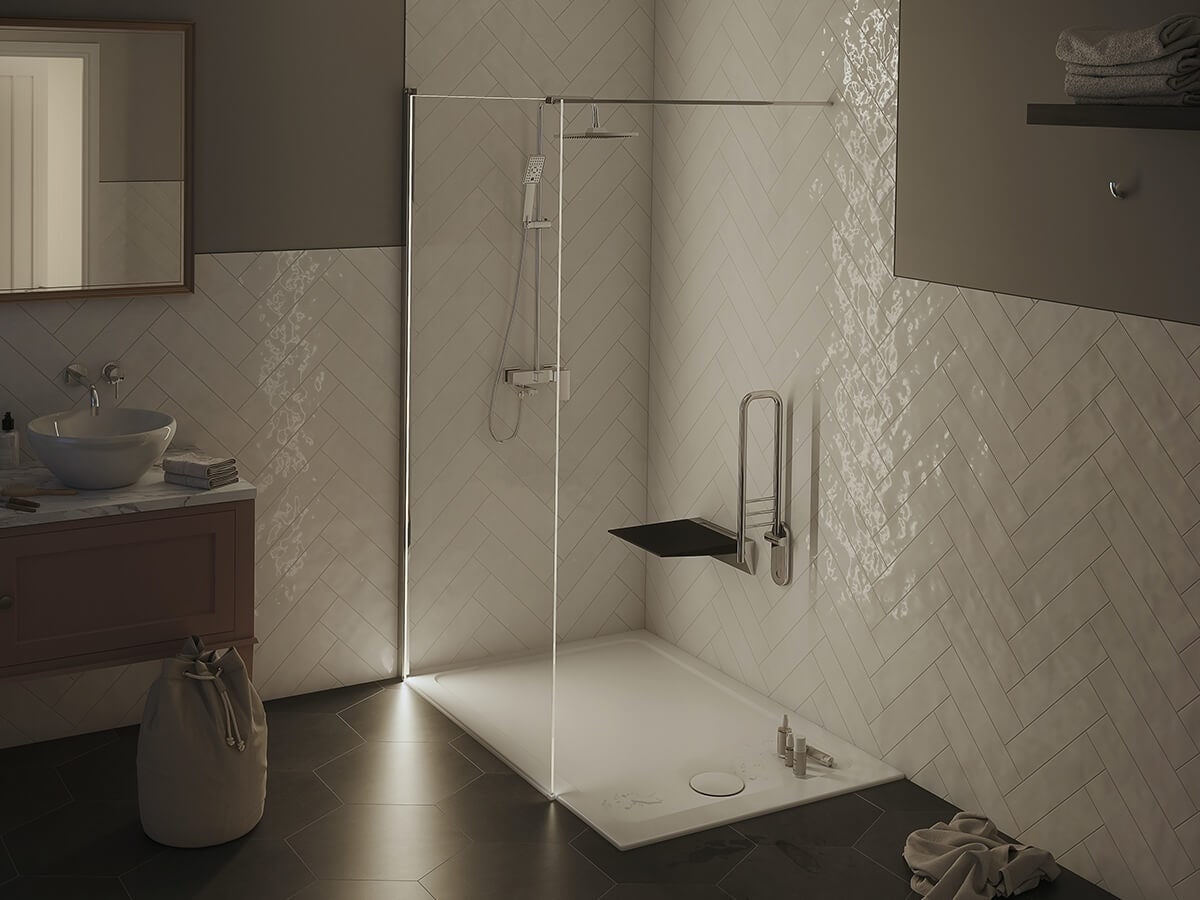
Walk-in shower in a small luxury bathroom - Lakes Cannes frameless walk-in enclosure with low-profile tray, the configuration most small UK ensuites under 5 square metres benefit from when the freestanding-bath clearance is not achievable
Lakes Cannes walk-in — the 900–1000 mm-wide frameless enclosure that most small luxury bathrooms benefit from when the bath-or-shower decision favours showering.

04 · The moves that pay off

Space tricks that actually work in a small UK bathroom

Some of the small-bathroom moves repeated across UK design blogs are genuinely useful. Others are received-wisdom that sounds plausible and produces compromised rooms. This section names the ones that work consistently in our showroom-led projects, and flags the ones that do not.

Wall-hung WC with concealed cistern

The single highest-impact move in a small bathroom. A wall-hung WC sits on a Geberit Duofix or equivalent steel frame inside the wall cavity, with the cistern hidden behind a tiled or boxed partition wall. The pan floats 250–300 mm clear of the floor. Three benefits compound: visually the floor reads continuously beneath the pan (the room feels larger), spatially the pan sits 50–100 mm closer to the wall than a floor-mounted equivalent, and the concealed cistern frees the wall above for joinery, mirror or storage that a visible cistern would block.

The cost: a wall-hung WC frame and concealed cistern adds £400–£700 over a floor-mounted alternative, plus an extra half-day on the install for the framing and tiling around the cistern. In a small luxury bathroom this is one of the highest-return spends in the project.

Slim wall-mount basin (rather than vanity)

A wall-mount basin without a vanity reclaims the floor below the basin (visually larger room) and sits 100–150 mm shallower in plan than even a slim 500 mm vanity. In a 1.8 m wall, a wall-mount basin can give back the difference between a cramped circulation zone and a comfortable one. Catalano, Roca and Duravit all make compact wall-mount basins designed specifically for bathrooms under 5 sq m.

The trade-off is storage. A wall-mount basin gives back floor space but takes away the under-basin storage a vanity would provide. The replacement is a tall narrow joinery cabinet on an adjacent wall, or a shallow mirror cabinet above the basin (HIB and Roper Rhodes make 700 mm-tall mirror cabinets that integrate demist and 2700K LED edge-lighting). For most ensuites the storage trade-off is worth taking; for a single family bathroom it is not.

Large-format tile, large-format format

Counter-intuitive to most homeowners, but consistent across UK and US tile-trade publications: large-format tile (600 × 600 mm or 600 × 1200 mm minimum, sometimes 800 × 1600 mm on a feature wall) makes a small bathroom feel larger than mosaic or small-format tile. The reason is grout-line density. A small bathroom feels visually busy when there are too many lines breaking the surface; large-format tile with thin grout joints reduces visible lines without changing the room dimensions.

Mosaic and small-format tile work in a small luxury bathroom only as a single feature surface — behind the basin, inside a niche, on the floor of a vanity recess — not as the room finish. We covered the tile-only decision in our best tiles for small bathrooms guide.

Frameless glass and full-height glass

A frameless glass shower screen reads quieter than an aluminium-framed equivalent. Full-height glass (extending to the ceiling rather than stopping 200 mm below) makes the showering zone feel like part of the room rather than a defined enclosure. Both moves are standard in luxury bathrooms above 6 sq m and disproportionately useful below 5 sq m.

The trade-off is cleaning. Full-height frameless glass shows water spotting and limescale more visibly than smaller framed alternatives. In hard-water areas (most of Essex including Braintree, Chelmsford and Colchester) a daily squeegee or a EasyClean-coated glass treatment is realistic maintenance. The visual benefit usually justifies it for clients who plan the room properly.

What does NOT work (despite what Pinterest says)

Three small-bathroom moves frequently recommended online that do not consistently produce the promised result:

  • Painting the room a single colour to ‘blur the boundaries’. Sometimes works in a guest cloakroom; rarely works in a working bathroom where wet-zone tile, joinery and dry-zone wall create natural material breaks. The result is usually a flat-feeling room rather than a larger-feeling one.
  • Floor-to-ceiling mirrors. Briefly fashionable in 2010s Pinterest content; the practical result is mirrors that fog persistently, show water spotting from the basin, and reflect bathroom interiors at unflattering angles. A single well-positioned mirror or a mirror cabinet outperforms wall-coverage mirror in almost every small-bathroom case.
  • Corner basins to ‘save space’. Corner basins look efficient in plan and read awkwardly in person. The brassware mounting is usually compromised, the splash zone hits two walls instead of one, and the 90-degree corner produces difficult-to-clean grout joints. A slim wall-mount basin on a flat wall is almost always the better small-bathroom move.

05 · The product layer

Sanitaryware: where compact wins, where it does not

Most premium sanitaryware brands now produce a compact range explicitly aimed at the sub-5-sq-m market. Catalano, Duravit, Villeroy & Boch, Roca and Laufen all have wall-hung pans, slim wall-mount basins and short-projection vanity units engineered for small footprints. Compact does not mean cheap or compromised — the ceramic quality, glaze and thickness sit at the same standard as the brand’s full-size ranges. What you give up is interior bowl volume on the basin and pan projection from the wall, neither of which most homeowners notice in daily use.

Where compact sanitaryware wins

  • Wall-hung WCs with 480–520 mm projection versus the standard 540–600 mm. The 50–100 mm reclaim makes the difference between a tight WC space and a workable one. Catalano Zero and Duravit ME by Starck are the standard luxury picks.
  • Slim wall-mount basins with 380–450 mm depth versus the standard 500–600 mm. In a 1.8 m wall this gives back enough circulation depth to walk past the basin without turning sideways.
  • Compact vanity units with 500–600 mm width rather than the standard 700–800 mm. The smaller drawer count is rarely missed in an ensuite where the storage demand is low.
  • Wall-mount taps that sit on the wall above the basin, freeing the rim of the basin for the user’s hands. In a 380 mm-deep basin this is the difference between a usable basin and a fiddly one.

Where compact does not work

  • Compact ‘short’ baths under 1500 mm. A 1400 mm bath is not a usable bath for an adult — it forces a knees-bent posture and drains slowly because the gradient is shallower over the shorter run. If a small bathroom needs a bath, a 1500 or 1600 mm length is the genuine minimum. Below that, omit the bath rather than fit a compromised one.
  • Vessel basins above compact vanities. A vessel basin sitting on top of a 500 mm vanity adds 100–140 mm of visual height and forward projection — which makes a small room feel busier and the vanity feel deeper than it is. Inset basins beat vessels almost universally in small bathrooms, despite vessels being the more design-led move on social media.
  • Compact shower trays under 800 mm wide. A 760 mm shower tray is the genuine minimum for a comfortable shower; below that the elbow-clearance is wrong and the showering experience reads as compromised. If your room cannot give the shower 800 mm of width, the design has prioritised the wrong piece — usually the bath.

The discipline that produces a small luxury bathroom rather than a small compromised bathroom: each piece of sanitaryware is the smallest version that still works fully for its function, not the smallest version available. Compact wall-hung WC because the saved 80 mm matters and the function is unchanged. Standard 1500 mm bath rather than a 1400 mm because the function changes at the boundary. Compact vanity because storage demand is low; full-size shower tray because the function does not compress.

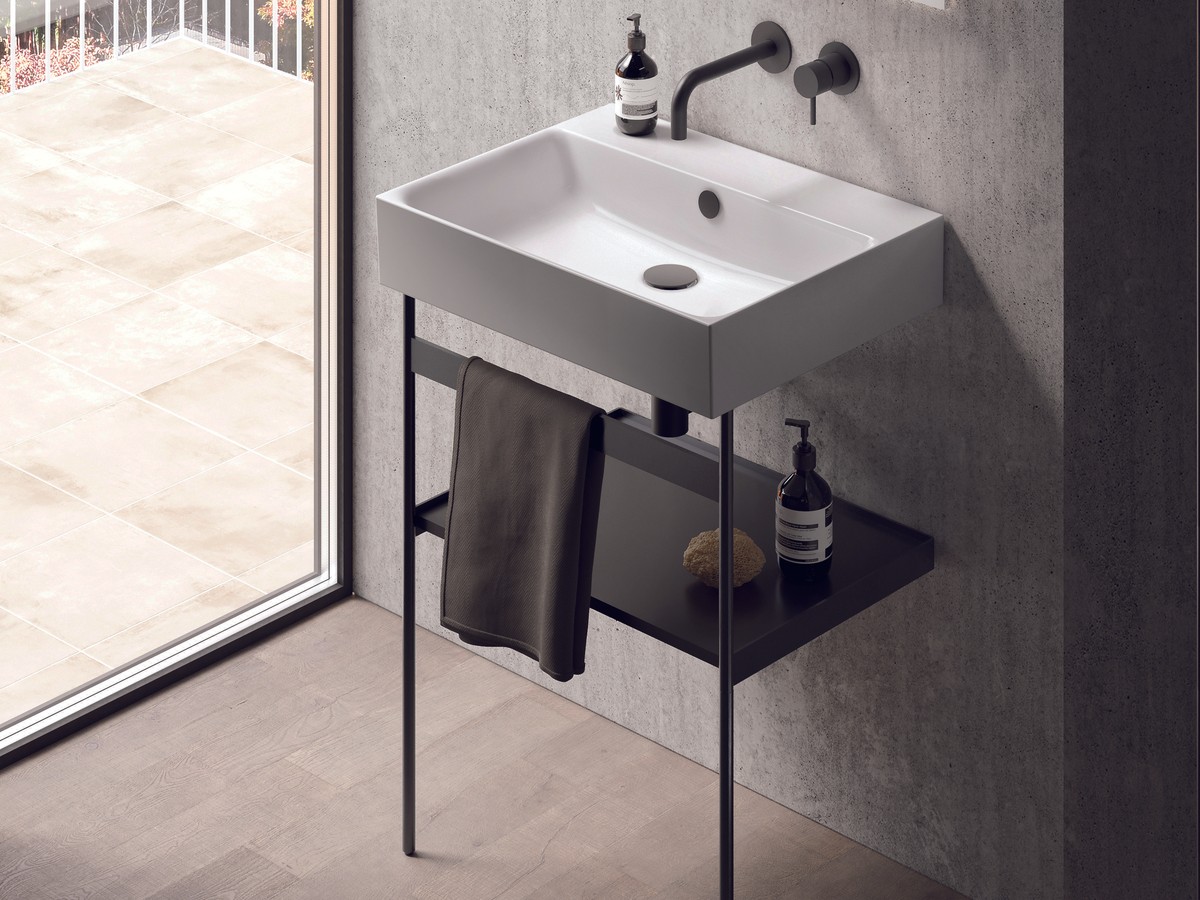
Compact luxury sanitaryware for a small UK bathroom - Catalano premium ceramic basin and wall-hung WC specified into a sub-5 square metre luxury scheme, the brand-tier compact spec that holds the luxury reading in a small footprint
Catalano premium-tier compact sanitaryware — the wall-hung WC and slim basin combination that holds the luxury reading on a small footprint without visibly compromising any single piece.

06 · The mistakes that bite hardest

Spec mistakes that bite harder in small bathrooms

The five spec errors we see repeatedly on small-bathroom projects coming through our showrooms or being quoted against ours. None of them are exotic; they are standard ways small luxury bathrooms get to a compromised result, and they are all preventable with the right design layer up front.

Mistake one

Oversized vanity in a tight wall

A 700 mm vanity in a 1.8 m wall is the single most common small-bathroom error. Specifying a 500 or 600 mm vanity instead reclaims 100–200 mm of circulation, which in a small ensuite is the difference between a comfortable room and a cramped one. The drawer count loss is rarely missed in daily use.

Mistake two

Freestanding bath with under 1100 mm clearance

BC Designs and most freestanding-bath manufacturers ask for 1100 mm clear distance for the bath to read as freestanding. In a small bathroom this clearance is rarely available, and the bath ends up looking wedged. The fix is not buying a smaller bath — it is choosing a built-in bath or omitting the bath entirely.

Mistake three

No soil-pipe survey before the layout is locked

If the existing soil pipe sits in the wrong place for the new layout, relocation costs £800–£2,500 depending on whether it stays inside the same room or extends a horizontal run. The cost matters more in a small bathroom because the budget absorbs it less easily. Survey first, lock layout second — not the other way around.

Mistake four

BS 7671 zone errors at the basin

In a small bathroom the basin sits closer to the shower than in a large one, which often pushes the mirror, the demister and the shaver socket into Zone 1 or Zone 2. Fittings that were Zone 3-rated under older guidance (Zone 3 has been removed in current editions) now need IPX4 minimum. Catch this in design, not on site.

Mistake five

Standard intermittent extract on a small bathroom with a daily shower

A 15 L/s intermittent extract fan is the bare minimum under Approved Document F — and in a small enclosed bathroom with a long daily shower it routinely fails to clear the steam load. The result: persistent condensation on mirrors, slow grout drying, mould risk on perimeter sealants. The upgrade is an inline 8 L/s continuous extract ducted to a soffit vent, often paired with a humidity-sensing trigger. £200–£400 on the install; saves grout-failure rework in year three.

Four of those five mistakes are catchable in the design phase before any product is ordered. Only the extract-fan upgrade is a genuinely operational install decision. That ratio — four out of five preventable upstream — is the strongest functional argument for a design layer in a small luxury bathroom rather than a quick supply-and-fit by a generalist installer.

Our companion guide on bathroom layout mistakes that cost thousands to fix covers the broader-bathroom equivalents in detail; almost every mistake in that guide is amplified by smaller floor area.

07 · The palette

Tile, light and material: the small-bathroom palette

Material decisions interact more aggressively in a small bathroom than in a large one. A 5 sq m room reads as a single material composition; a 12 sq m room reads as multiple zones with their own material logic. The discipline that produces a small luxury bathroom rather than a busy-feeling one is restraint — one feature surface, one feature material, one feature element, and a quietly resolved background that lets each one read.

Tile size and grout

Larger than most homeowners initially want. The default we specify on small luxury bathrooms is 600 × 1200 mm porcelain for floors and primary walls, with grout colour matched to the tile body rather than contrasted. The grout-line density on a 600 × 1200 mm tile is roughly a quarter of what you get on a 200 × 200 mm tile across the same wall area — which is exactly why the larger tile reads quieter in a small room.

Where mosaic and small-format tile do work in a small luxury bathroom: a single feature surface. A book-matched marble mosaic behind the basin (Ca’ Pietra East Java is the spec we reach for most often), a niche tiled in zellige, a vanity recess floor in a contrasting small-format pattern. One feature, not three. Anything more than one and the room reads busy.

Natural stone and the small-bathroom calculus

Natural stone — limestone, travertine, marble — is the material that most reliably reads as luxury in a small bathroom, because the surface is doing the work that scale would do in a larger room. A book-matched limestone slab on a feature wall is structurally simple in a small bathroom (the surface area is small enough to source from a single block) and visually does a disproportionate amount of work for the spend. We covered the tile-only decision in our bathroom tiles buyer’s guide.

The maintenance trade-off: natural stone needs sealing on install and periodic re-sealing every 2–5 years depending on the stone type. In a small bathroom this maintenance window is the same as in a large bathroom, but the cost-per-sq-m is the only relevant figure to consider against the visual return.

Light: the most under-specified element in small bathrooms

Most small bathrooms are lit by a single ceiling downlight on a single switch, which is the lowest-impact lighting choice possible. A small luxury bathroom benefits more than a large one from a layered lighting scheme — ambient downlighting at 2700K warm-white, task lighting at the mirror (HIB or Roper Rhodes backlit LED at 3000K with a CRI 90 rating), an accent surface-grazer on the feature wall or shower, and a low-level night-mode LED at 1800K. All on dimmable circuits, all on a single scene-controlled switch.

The cost differential of a layered scheme over a single downlight on a small bathroom is £400–£800. The visual return is disproportionate — the room reads as designed rather than serviced. We covered the lighting-only decision in our luxury bathroom lighting design guide.

Small luxury bathroom material palette - Ca Pietra Cote Bourgogne French limestone in a luxury bathroom scheme, large-format honed surface that reads quieter than mosaic and does the visual work in a small footprint without scale to support it
Ca’ Pietra Cote Bourgogne limestone — large-format honed natural stone is the material that does the most work in a small luxury bathroom, because the surface carries the room’s visual weight where scale cannot.

08 · The honest pricing

Cost reality: small does not mean cheap

The single most counter-intuitive piece of small-bathroom buying advice we give: the cost-per-square-metre is the same or higher than a larger luxury bathroom, not lower. A 4 sq m luxury ensuite typically lands £12,000–£22,000 fully fitted in 2026. That is £3,000–£5,500 per square metre, against £2,500–£4,000 per square metre on a 10 sq m principal suite at the same spec tier. Smaller absorbs less, so the per-sq-m figure climbs.

Why the per-sq-m figure climbs:

  • The brassware is the same. A Crosswater MPRO thermostatic shower set or an Axor One basin tap costs the same in a 4 sq m room as in a 10 sq m room.
  • The sanitaryware is the same. Catalano premium ceramic, BC Designs cast-stone bath, Geberit Duofix concealed cistern frame — same products, same prices.
  • The tile cost-per-sq-m is the same, but the small-bathroom waste percentage is sometimes higher because of corner cuts and feature-wall layouts in a tight footprint.
  • The labour day-rate is the same. A small bathroom takes 7–12 working days on site for a luxury install; a 10 sq m takes 12–18 days. The per-day rate is identical.
  • The fixed costs — design, project management, supplier coordination, snagging — absorb across less area. A £1,500 fixed-cost element on a small bathroom is £375 per sq m; on a large one it is £150 per sq m.

The honest implication: budgeting a small luxury bathroom as ‘half a regular bathroom’ produces under-funded projects that get value-engineered into compromise during specification. The right framing is ‘same per-sq-m as luxury, smaller area’ — which lands you in a realistic budget range from the start.

What sits at each end of the £12,000–£22,000 band:

  • £12,000–£15,000 — a well-resolved small luxury ensuite with one feature element (typically a walk-in shower or a slim freestanding bath in a flush-fitted setting), Catalano-tier sanitaryware, Crosswater MPRO brassware, large-format porcelain throughout, frameless glass, layered LED scheme, designer-led layout. No bath plus walk-in shower combination at this band — one or the other.
  • £15,000–£18,000 — same baseline plus an upgrade element: book-matched stone feature wall, BC Designs cast-stone bath in a flush-fitted plinth, Hansgrohe Axor brassware tier, custom joinery vanity. The room reads decisively luxury rather than merely well-made.
  • £18,000–£22,000 — specification-led upgrade: digital shower controls, multi-zone underfloor heating, full-height frameless glass, mirror cabinet with HIB integrated lighting and demist, premium stone floor with vein-matching across the walk-in zone, and a coherent design coordinated across every surface. This is the band where small bathrooms cross over into ‘jewel box’ specification.

Where the spend lands inside that band depends on which trade-offs you make on bath-versus-shower, which finish-tier you pick on brassware, and how custom the joinery is. We covered the cost decision in detail in our luxury bathroom cost UK guide — the principles in that guide apply identically to small bathrooms, with the per-sq-m correction noted above.

09 · The design layer

Why a small bathroom needs a designer more, not less

The instinct most homeowners arrive with: a small bathroom is a small project, so a fitter alone is enough. The reality: small bathrooms are the configuration where the design layer earns its place most consistently, because the cost of the upstream errors named in section 6 is disproportionate to project size.

Four trigger conditions where a designer pays for themselves on a small bathroom (almost without exception):

  • Your soil pipe is in the wrong place for your preferred layout. A designer’s 3D layout review answers the relocation cost question before any product is ordered. The same answer found on site mid-build is the one that costs £800–£2,500 to fix.
  • Your bathroom has a sloped ceiling, single-skin party wall, or period property constraints. Loft conversions, Victorian terraces and 1930s extensions all impose layout constraints that small-bathroom installers without design support work around rather than design through. The result: the room ends up resolved against the constraints rather than around them.
  • Your spec mixes brands that need finish coordination. Crosswater MPRO chrome plus an HIB integrated mirror cabinet plus a Catalano basin plus a BC Designs bath all need their finish detail coordinated. A small bathroom has nowhere to absorb a clash; the eye sees every surface at once.
  • You want to see the room before you commit. A 3D visual of a small bathroom answers the questions a 2D plan cannot — sight-lines, what you see when you walk in, where the basin tap meets the mirror cabinet, whether the bath clearance reads. That visual is genuinely the difference between confident commitment and post-install regret.

Almost every small luxury bathroom project we see ticks at least two of those four conditions; many tick three or four. By contrast, a 7 sq m rectangular bathroom in a modern build with the soil pipe already in the right place often ticks none. The honest framing: a designer is more clearly worth the fee on a small project, not less. Our companion guide on is a bathroom designer worth it covers the broader trigger conditions.

The single-point-of-accountability model — one team owning the design, the spec, the supply and the install — is the most reliable way to prevent small-bathroom failure modes. The designer signs off the layout, the soil-pipe survey, the BS 7671 zoning and the clearance drawings before anything is ordered. The same team owns the install, so when the fitter hits a question on site, the designer answers it rather than the homeowner googling at 7pm. That coordination is what small luxury bathrooms genuinely need.

Bowman runs free design appointments at our Braintree (Springwood Industrial Estate, CM7 2YN) and Leigh-on-Sea showrooms. The design service is not added margin in product pricing — we benchmark our brassware, sanitaryware and tile against the major UK online retailers (Drench, Victorian Plumbing, the supplier-direct sites) on every brand we sell. The design layer is added value the business absorbs, not a margin uplift folded into your basket. Your fitter or ours; we work either way. Our companion guide on luxury bathroom planning checklist covers the 14 ordered steps from brief to handover.

10 · The layouts in practice

Three worked layouts under 5 square metres

Indicative layouts based on the three property types named in Section 1 — the Victorian terrace upstairs bathroom, the 1990s master ensuite, and the flat-conversion second bathroom. Each works to a different priority and reaches a different cost band. Real projects vary; the principles do not.

Element Victorian terrace 4.32 sq m 1990s ensuite 3.6 sq m Flat conversion 3.84 sq m
Priority Family-friendly, bath required for resale Master ensuite, walk-in shower Showering-only second bathroom
Bath 1500 mm shower-bath, fixed glass screen None — family bathroom on same floor None
Shower Over-bath, thermostatic Crosswater MPRO 1000 mm walk-in, frameless screen, flush tray 900 mm walk-in, low-profile tray
WC Wall-hung Catalano Zero, concealed cistern Wall-hung Catalano Zero, concealed cistern Wall-hung short-projection, concealed cistern
Basin 600 mm vanity, inset basin, drawers Slim wall-mount basin, no vanity 500 mm vanity, inset basin, drawer
Tile 600 × 1200 mm porcelain, single feature niche in zellige Large-format limestone-effect porcelain, book-matched feature wall 600 × 600 mm porcelain, plaster-effect on dry walls
Lighting Layered LED, mirror cabinet with HIB demist, dimmable Layered LED, accent on feature wall, dimmable Layered LED, mirror with backlit edge, dimmable
Indicative spend £14,000–£17,000 £13,000–£16,000 £12,000–£14,500

Indicative spend ranges based on Bowman 2026 supplier pricing for fully-fitted small luxury bathrooms in Essex. Site conditions, soil-pipe relocation needs, and joist-strengthening requirements can shift figures.

Three rooms, three priorities, one design discipline. None of the three layouts above is unusual; they are exactly the configurations small luxury bathrooms reach when the design layer is applied properly. The differentiator is not the brief, it is whether the layout has been resolved against the constraints before product is ordered.

Frequently asked questions

Everything UK homeowners ask about small luxury bathrooms under 5 square metres in 2026.

There is no fixed lower limit, but below about 2.4 sq m the trade-offs sharpen quickly — a freestanding bath stops fitting with the 1100 mm clearance most manufacturers ask for, and a true walk-in shower starts crowding the basin. Most successful UK small-luxury ensuites sit between 3 and 5 sq m. Below that, the right answer is usually a generous walk-in shower with a wall-hung WC and a slim wall-mount basin, finished as well as the master bathroom. Cloakrooms and powder rooms below 1.8 sq m are a separate brief — luxury there comes from material density (book-matched stone, hand-painted tile, sculptural basin) rather than spatial generosity.
Sometimes — but rarely well. BC Designs and most other freestanding-bath manufacturers ask for at least 1100 mm of clear distance from the bath to the nearest wall or fixture so the bath reads as freestanding rather than wedged. In a 4 sq m room with a WC, basin and shower already specified, the 1100 mm clearance often forces compromises elsewhere. The honest answer in most ensuites under 5 sq m is to choose a bath OR a generous walk-in shower, not both. Where a small bath is genuinely required (resale concerns on a single-bathroom home, family with young children) a 1500 mm shower-bath in a luxury finish is usually the right call rather than a freestanding bath squeezed against a wall.
Larger than most homeowners initially want — typically 600 × 600 mm or 600 × 1200 mm porcelain or natural stone, sometimes scaling to 800 × 1600 mm or larger on the floor of an open ensuite. The reason is grout-line density: a small bathroom feels visually busy when there are too many lines breaking the surface, and large-format tile reduces those lines without changing the room size. Mosaic and small-format tile work in a luxury small bathroom only as a single feature surface — a niche, a feature wall behind a basin — not as the whole room. Our companion guide on best tiles for small bathrooms covers the tile-only decision in more detail.
Often more than larger ones, not less. A small bathroom has every constraint a large one has — soil-pipe location, joist run, ventilation, electrical zones, sight-lines — compressed into a smaller envelope where mistakes are harder to absorb. Sloped ceilings (loft conversions), single-skin party walls (terraces), Victorian joist depths and awkward existing soil-pipe positions all hit small bathrooms harder than large ones. The misconception that small means simple is the most expensive one we see. If your room is under 5 sq m, has a sloped ceiling, sits in a period property, or needs the soil pipe relocated, a designer pays for themselves on the layout decisions alone.
Specifying fittings that look right in the showroom but break the clearances when they hit the room. The classic version is an oversized 700 mm vanity in a 1.8 m wall when a 600 mm vanity would have left circulation space. Close runners-up: a freestanding bath without 1100 mm clearance (reads wedged), a towel rail that lands over the radiator-valve access, a wall-mount WC with a concealed cistern that pushes the room 200 mm shorter than the plan showed, and a basin so large the tap reach falls short of the bowl. All five of these are catchable in a 3D layout review before any product is ordered — which is exactly what the design phase is for.
Inset wins more often than not in small bathrooms. A vessel basin sitting on top of a vanity adds 100–140 mm of visual height and forward projection, which makes a small room feel busier and the vanity feel deeper than it is. An inset or under-mount basin keeps the worktop line clean, leaves more usable surface around the bowl, and reads quieter. Vessel basins work in small bathrooms when the rest of the room is restrained — large-format quiet tile, simple brassware, no other sculptural moves — and the basin is the deliberate one feature. Most small luxury bathrooms benefit from one feature element only; if the bath or shower is doing that work, the basin should not also.
Roughly the same per-square-metre as a larger luxury bathroom, sometimes slightly more. A small luxury ensuite under 5 sq m typically lands £12,000–£22,000 fully fitted in 2026 — the lower end is driven by lower product count (one shower not two, no separate bath), the upper end by the same brassware, sanitaryware, tile and joinery costs being spread across less floor area. Small bathrooms often cost more per square metre, not less, because the spec quality stays luxury-tier while the cost-absorbing room area shrinks. Our companion guide on UK luxury bathroom cost in 2026 breaks the spend down by tier with worked examples.
If the existing soil pipe sits in the wrong place for your new layout, relocating it is one of the larger hidden costs in a small bathroom build — typically £800–£2,500 depending on whether the relocation stays inside the same room (cheaper, joist-level boxing-in) or has to extend a horizontal run further than 6 metres (more expensive, fall-gradient compliance under BS EN 12056-2 dictates pipe diameter and route). The cost matters more in a small bathroom because a small budget absorbs it less easily. The single most useful early-design question is therefore: where is the existing soil-pipe stack, and does our preferred layout keep the WC within 1.5 metres of it without extending the horizontal run? If yes, relocation is straightforward. If no, the cost goes up before any product is ordered.
Small luxury bathroom brassware - Crosswater MPRO compact basin tap and shower set in chrome, the brand-tier finish that holds the luxury reading on a small footprint without scale to support it
Crosswater MPRO compact brassware — the spec layer that sits on top of every small luxury bathroom. Standard tier across all three worked layouts above.

What is next

Working out how to design a small bathroom that does not feel small?

We design small luxury bathrooms to the same standard, in the same showrooms, with the same designers as our principal-suite projects — and the discipline matters more on a small footprint, not less. The first appointment is free, takes about an hour, and works out which configuration suits your room, your spend and your property. We benchmark our product pricing against the major UK online retailers (Drench, Victorian Plumbing, the supplier-direct sites) on every brand we sell — so the £12,000–£22,000 small-bathroom band is a structural cost, not a margin uplift.

We run our design service from showrooms in Braintree (Springwood Industrial Estate, CM7 2YN) and Leigh-on-Sea. There is no design fee, no margin uplift on products to fund design, and no obligation to buy. Your fitter or ours; we work either way.

Companion guides: is a bathroom designer worth it? · how much does a luxury bathroom cost in the UK in 2026? · best tiles for small bathrooms · bathroom layout mistakes · luxury bathroom planning checklist

Visit Our Showrooms Free brochures Price estimator