
Herringbone vs Chevron Tiles What’s the Difference? (UK Guide 2026)
Herringbone tiles are ordinary rectangles laid at 90° angles, so the zigzag they make is broken rather than continuous. Chevron tiles are cut at an angle in the factory, which is why their ends meet to form one unbroken V. That’s the whole difference, and it drives everything else: tile shape, line continuity, how precisely the tiler has to work, how much you waste and what the labour costs.
Side by side on a mood board they look like the same idea, but in a real bathroom the geometry and the execution give you noticeably different results.
The two patterns aren’t interchangeable, so this guide compares them in plain UK renovation terms: which one suits your layout, your budget and the look you’re after.
Want the wider view first? The Tile Layout Ideas Guide runs through every pattern on the market, and the Herringbone Tiles Guide goes deeper on setting out, tile size and waste.
Quick Navigation
Quick Comparison: Herringbone vs Chevron
| Feature | Herringbone | Chevron |
|---|---|---|
| Tile Shape | Rectangular (90° ends) | Angled-cut ends forming V |
| Visual Line | Broken zigzag | Continuous sharp V |
| Installation Difficulty | High | Very High |
| Waste Percentage | 15–22% | 18–25% |
| Labour Uplift vs Grid | +20–30% | +30–40% |
| Forgiveness Level | Moderately forgiving | Low tolerance for error |
| Best Use in Bathrooms | Feature walls, showers | Statement floors, symmetrical rooms |
Per-m² UK prices for both layouts sit in the Bathroom Tiling Cost Guide, which is the number worth checking before you commit to either.
At a Glance
Herringbone
- ▶ Design Feel: Textural and layered, classic with a modern edge
- ▶ Budget Impact: A moderate uplift over a straight grid
- ▶ Installation Risk: Drift shows, but it stays manageable
- ▶ Best For: Compact rooms and single feature walls
Chevron
- ▶ Design Feel: Sharp and directional, unmistakably contemporary
- ▶ Budget Impact: A higher uplift again, on tiles and on labour
- ▶ Installation Risk: Any drift is obvious straight away
- ▶ Best For: Balanced rooms where the fixtures sit on axis
The Structural Difference Explained
Herringbone
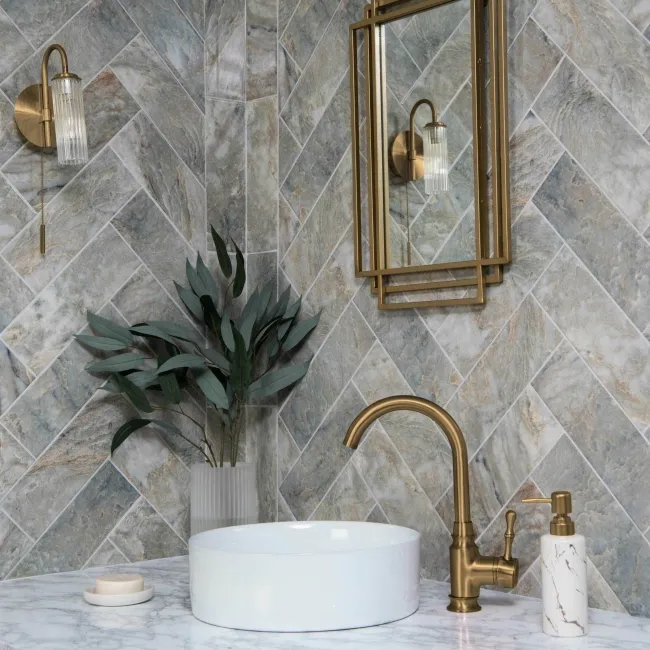
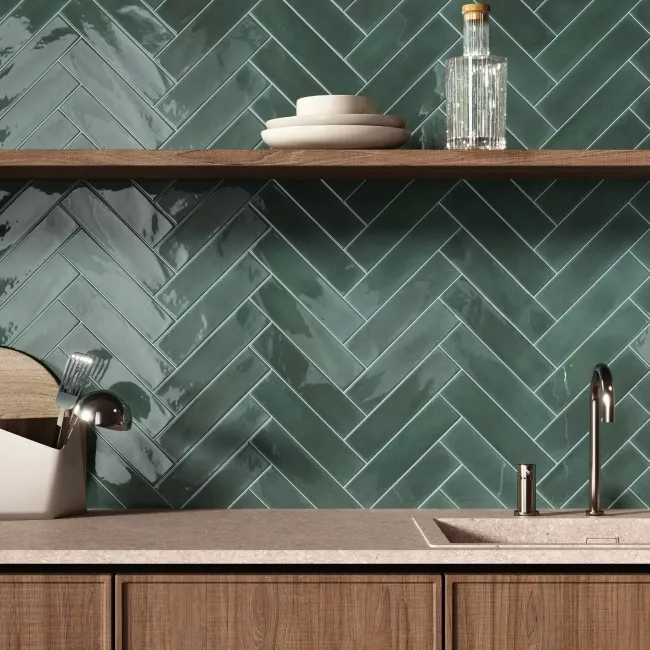
Herringbone uses standard rectangular tiles, set at right angles to each other. Every tile overlaps the end of the one before it at 90°, so the zigzag you end up with is staggered rather than clean and continuous.
Those offset joints are what give it the softer, more textured look, and they’re also why a small drift in the setting out doesn’t leap straight out at you.
Visual Character
- Rhythmic
- Textural
- Classic-modern
Chevron
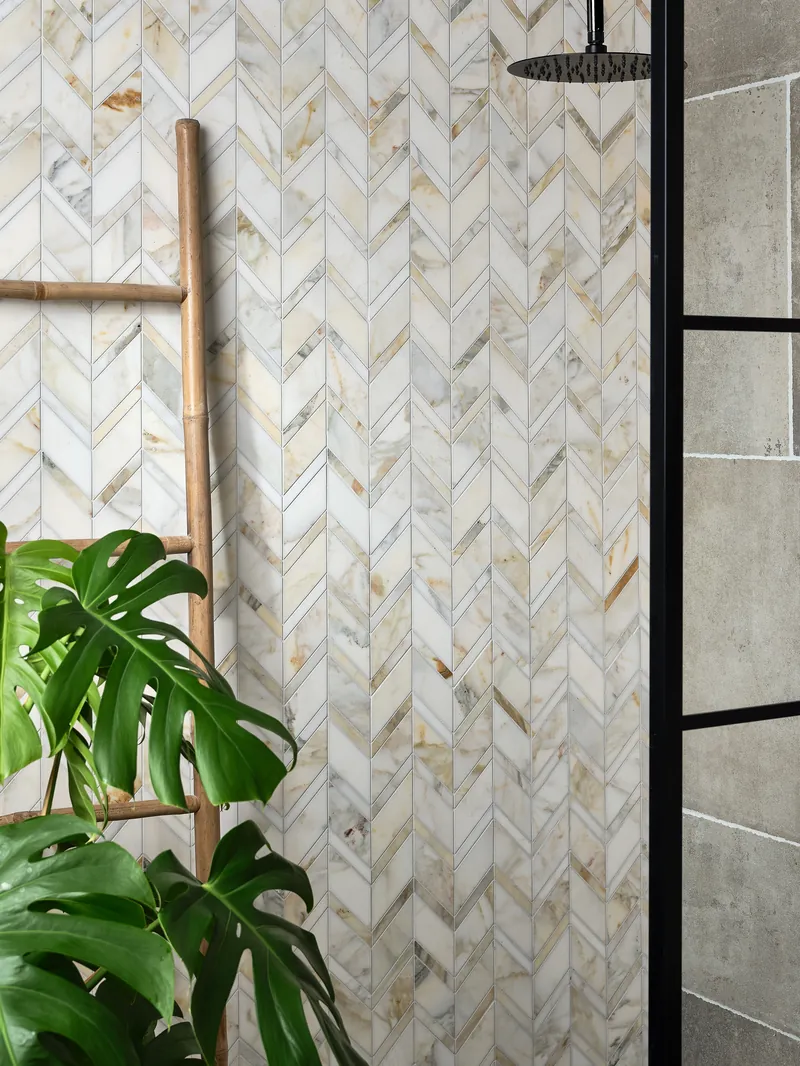
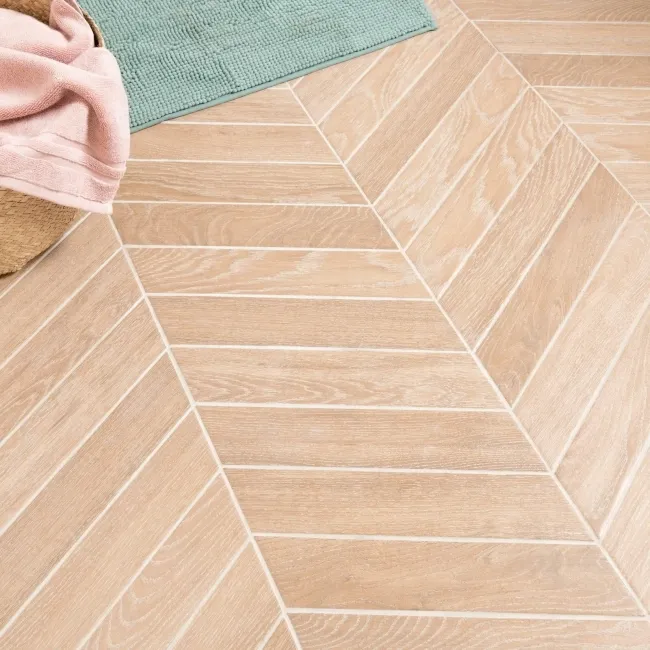
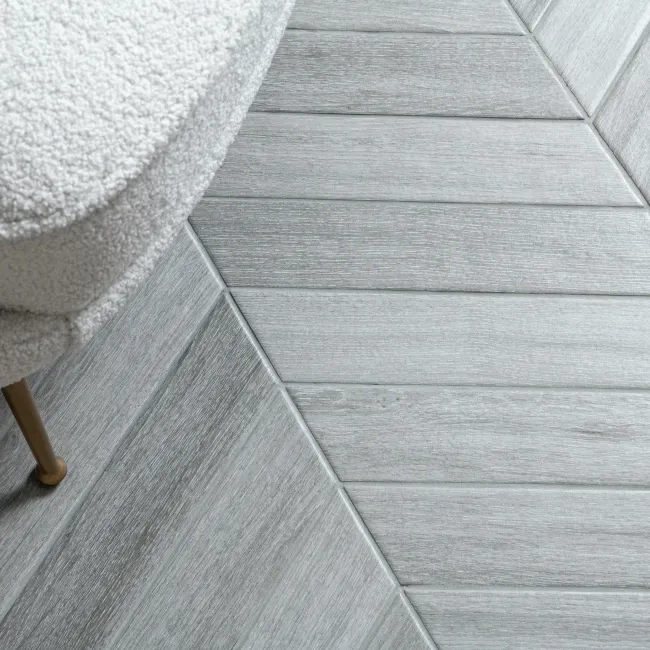
Chevron tiles arrive with their ends already cut on an angle, commonly 45°. Lay them properly and those ends meet exactly, so the V runs on unbroken across the whole surface.
It comes across sharper than herringbone and far more directional, which is exactly why it needs a room with the symmetry to carry it.
Visual Character
- Graphic
- Clean
- Strongly geometric
If herringbone is the one you keep coming back to, the Herringbone Tiles Guide covers tile size, orientation and waste planning in proper detail.
Installation Complexity & Cost Differences
Is Chevron More Expensive Than Herringbone?
In most UK bathroom projects chevron works out dearer than herringbone, and it comes down to four things:
- • The tiles themselves cost more to make, because of those angled cuts
- • A bigger slice of every box ends up in the skip
- • Alignment has to be spot on across the whole surface
- • Each m² simply takes longer to lay than a straight grid
Material Waste
Chevron throws more away because the perimeter cuts are angled, the alignment has to be exact, and the offcuts rarely fit anywhere else in the room.
Labour Uplift vs Straight Grid
Both are a big step up from a straight grid, and chevron takes longer again per m² because it leaves the tiler no tolerance for drift at all.
Herringbone Requires
- ✓ An accurate centre-line, set out before the first tile
- ✓ Spacing that stays consistent all the way across
- ✓ Careful cutting wherever the pattern meets an edge
Chevron Requires
- ✓ A properly flat substrate underneath
- ✓ Centre-line symmetry that doesn’t drift by a hair
- ✓ Zero tolerance for drift, wall by wall
- ✓ More time on site for every square metre
For the wider cost picture, the Bathroom Tiling Cost Guide sets out the going rates, and the Tile Quantities & Waste Guide shows you how to order without running short.
Which Pattern Works Better in Bathrooms?
Which Is Better for Small Bathrooms?
In a compact room we’d usually steer you towards herringbone, because the broken zigzag takes the edge off the pattern and forgives a little more in the setting out.
Chevron in the same room, run across several surfaces, can tip over into overpowering.
Recommendation
Herringbone on one feature wall. Save chevron for rooms whose proportions are already balanced.
Which Works in Symmetrical Bathrooms?
Chevron is at its best where the vanity is centred, the bath sits on axis and the architectural lines already agree with each other. It leans hard on that symmetry, and without it the pattern stops looking intentional.
Chevron Zone
A symmetrical room with centred fixtures is where chevron’s directional quality really pays off.
Best Pattern for Feature Walls
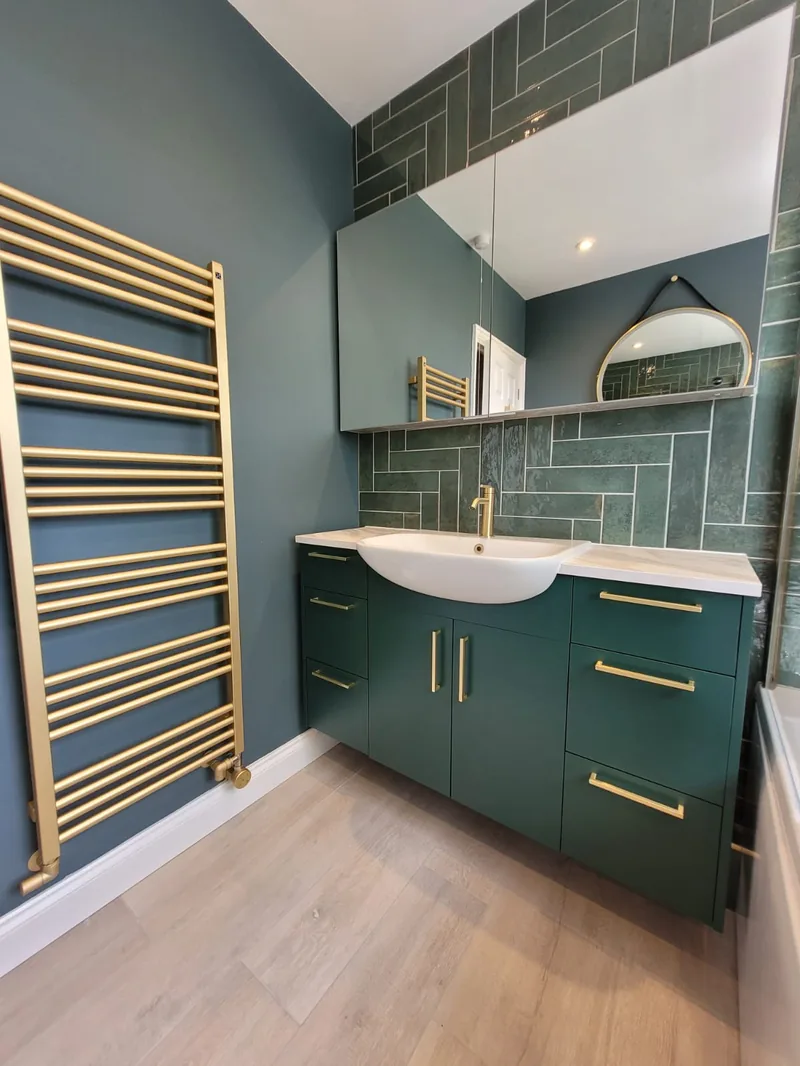
Herringbone works particularly well behind a vanity, inside a shower enclosure or across a recessed niche, because it adds movement without asking the room to be geometrically perfect.
Best Pattern for Floors & Wetrooms
A chevron floor can look superb, but it wants the drain in the right place, the falls planned properly and a flat substrate before anyone opens a box.
Herringbone floors forgive a lot more.
Tile Size Considerations
Herringbone
Works well with:
- • Standard 100×200mm subway tiles
- • Chunkier 60×20 plank formats too
- • Narrow porcelain formats of almost any length
It’s the more flexible of the two across sizes.
Chevron
Requires:
- • Tiles manufactured specifically for chevron, and nothing else
- • Angles that stay consistent from box to box
- • Dimensions that hold across the whole order
Standard rectangular tiles cannot replicate true chevron geometry.
Before you place the order, run your tile size through the Tile Quantities & Waste Guide so the waste allowance is built in rather than discovered halfway through.
Grout Considerations
Does Grout Colour Change the Look of Herringbone or Chevron?
Yes, and by more than most people expect: grout tone changes how loud either pattern comes across once it’s up on the wall.
Matching Grout
- ✓ The geometry goes quieter and more architectural
- ✓ The overall effect softens right down
- ✓ It tends to date more slowly
Contrasting Grout
- ✓ It puts the geometry front and centre
- ✓ There’s a lot more going on visually
- ✓ It’s less forgiving in a compact room
Designer note: In the luxury bathrooms we design, matching grout usually gives the more refined result, whether the pattern is herringbone or chevron.
Common Mistakes
Starting to tile before anyone has set a centre-line
Putting chevron into a room that isn’t symmetrical
Trying either pattern on walls that aren’t flat
Running a patterned layout across every surface in the room
Combining two directional patterns in one small bathroom
Restraint is what buys you longevity.
Decision Framework
Choose Herringbone If
- ✓ Your bathroom is compact, or the walls aren’t square
- ✓ You want the texture without the hard geometry
- ✓ You’d rather the installation forgave a small error
Choose Chevron If
- ✓ The room is symmetrical, wall to wall
- ✓ You want the sharper, more contemporary look
- ✓ You’re happy to pay for the extra precision and labour
Final Thoughts
Choosing between herringbone and chevron has less to do with trend than with proportion, symmetry and how well the job is executed. Plan it properly and the pattern lifts the room instead of shouting over it.
Both reward precision. The right call comes down to your room geometry, what you’re willing to spend and how much visual activity you actually want to live with every morning.
If you want the full set of options in one place, the Tile Layout Ideas Guide covers them all, and the Herringbone Tiles Guide takes herringbone apart in detail.
Related Guides You May Find Useful
Tile Layout Ideas Guide
All 10 layout patterns side by side, with the waste, cost and spatial effect of each one.
Herringbone Tiles Guide
How herringbone gets set out on site, from orientation and tile size to the waste maths.
Bathroom Tiling Cost Guide
What UK bathroom tiling costs once you split it by layout, tile size and labour.
Tile Quantities & Waste Guide
Working out how many tiles to order, and how much waste to allow, layout by layout.
What Is Bathroom Tanking?
The waterproofing that has to go in behind any tiled bathroom or wetroom.
Best Tiles for Small Bathrooms
Picking tile size, colour and layout so a compact UK bathroom stops feeling compact.
Frequently Asked Questions
Common questions about herringbone vs chevron tile patterns
Have a question we haven’t covered? Get in touch — we’re happy to help.
Planning a Renovation?
Herringbone or chevron, the decision gets a lot easier once you’re standing in front of both at full size. That’s what a showroom visit with our design team is for.
We’ll plan the setting out with you, so the pattern works with the room instead of fighting it.