
Bowmans · Inspiration · Design
Why We Like Stacey Solomon’s Orange Bathroom
By Jonathon Barclay · · 9 min read
The part we like isn’t simply that the bathroom is orange. It’s that the original coloured suite was treated as the starting point for the room rather than something awkward that had to be hidden or replaced.
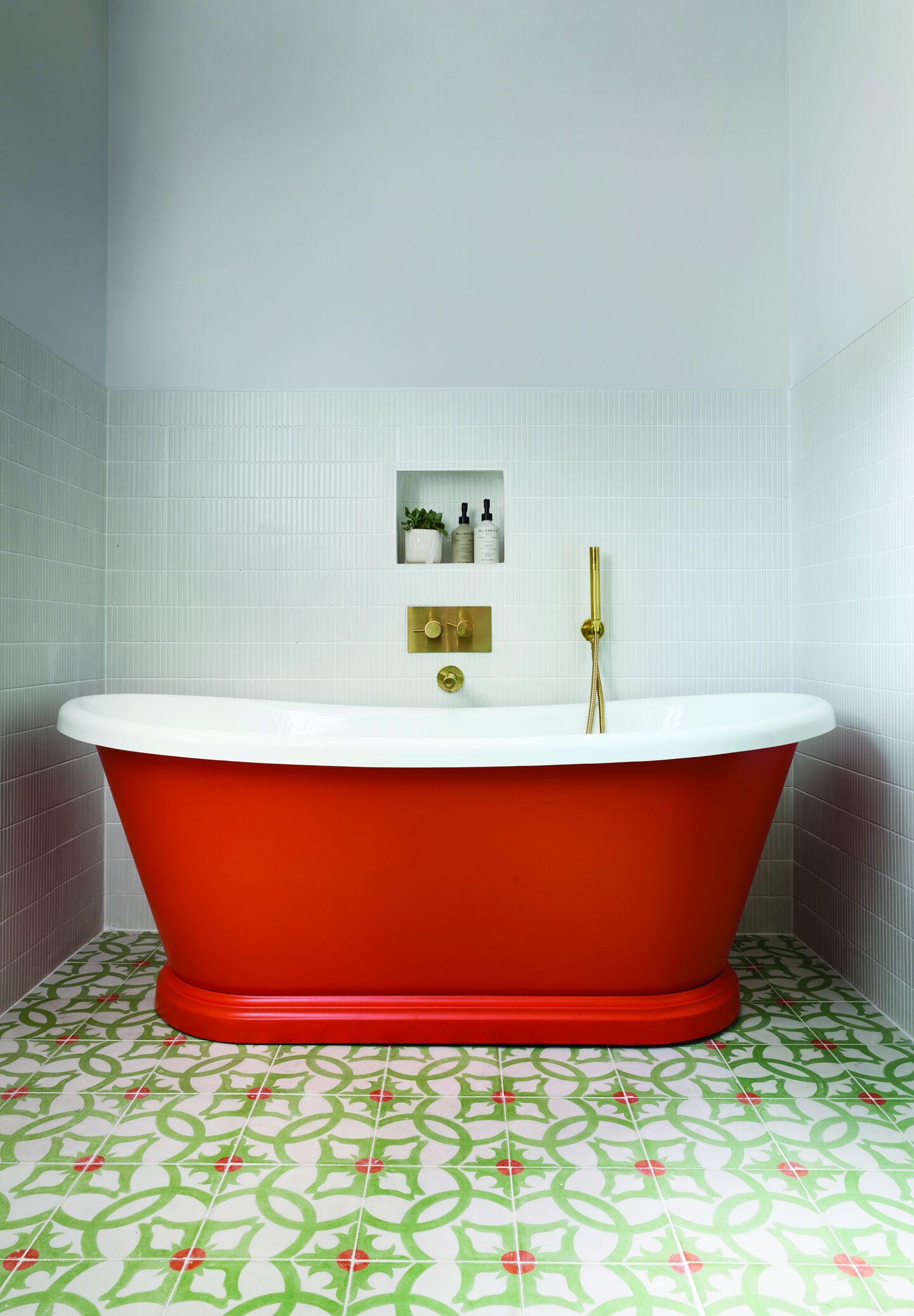
An October 2026 report on Stacey Solomon’s completed bathroom says the original orange toilet, basin and bath were retained, with orange and white vertical stripes, brushed-bronze taps and modern shower fittings added around them.
Our interest is in the design decision: when can an existing coloured suite become the best part of a new bathroom, and when is keeping it more trouble than it’s worth?
Quick Navigation
Why the orange bathroom works
The orange suite works because it has been made part of a clear colour scheme.
If you keep a strong-coloured bath, basin or toilet but surround it with unrelated finishes, it can look as though the renovation stopped halfway through. Repeat the colour elsewhere and it starts to look deliberate. In this case, the orange and white stripes give the sanitaryware something to belong to, while the warm metal fittings sit more comfortably with orange than a cooler finish might.
White matters just as much as the orange. It gives the eye somewhere to rest and stops every surface competing for attention. We would take the same approach in a client’s room: choose one dominant colour, support it with a quieter background and be careful about introducing any further pattern.
The room also avoids pretending that character has to come from expensive new products. A considered bathroom can begin with something already there, provided it’s worth keeping and the rest of the specification is designed around it properly.
Should you keep an existing coloured bathroom suite?
Keep it if you genuinely like it, its condition is sound and it can work with the new layout.
The colour alone shouldn’t decide the question. Before retaining an older bath, basin or toilet, we’d want the fitter or another suitable professional to check its condition, the connections, access for future repairs and whether replacement parts are available where they may be needed.
We can’t make any judgement about the plumbing or condition of Stacey Solomon’s bathroom from photographs or reporting. The same applies to any house you’re considering buying or renovating. A suite can look excellent and still need closer inspection before you build a new room around it.
Don’t order tiles, taps or furniture around an existing coloured suite until its condition and compatibility have been checked. If one item later has to be replaced, finding a convincing colour match may be difficult.
There’s also the layout to consider. Keeping the suite makes sense only if the bath, basin and toilet are in sensible positions or can be incorporated without compromising the room. Retaining an orange bath isn’t a good decision if it leaves you with an uncomfortable route through the bathroom or a shower that’s too restricted for everyday use.
Our guide to bathroom layout mistakes covers the wider problems worth resolving before products are ordered.
When we would replace it
We would replace an existing coloured suite if its condition is doubtful, the layout needs a substantial change or the colour is something you’re trying to tolerate rather than something you actually want.
There’s no merit in preserving an awkward bathroom simply because the fittings are unusual. Character is useful only when the room still works.
The complete suite can also become a constraint. If the bath is worth keeping but the basin doesn’t provide enough usable space, it may be better to retain one strong piece and replace the rest. A coloured bath can carry the idea on its own, particularly when the toilet, basin and furniture are kept quieter.
This is often the more flexible way to use colour. You still get a room with personality, but you’re not dependent on every piece of sanitaryware matching perfectly.
Our view
Keep the suite when you like it, it passes a proper condition check and the layout works. If one of those points fails, retain the strongest piece or replace the suite rather than forcing the whole design around it.
How to use orange in a new luxury bathroom
You don’t need an original coloured suite to take something useful from this room. The important decision is how much orange you want to commit to.
A complete coloured suite is the boldest option. The bath, basin and toilet all become part of the room’s identity, so the surrounding materials need to be controlled. We would avoid adding several other strong colours or competing patterned surfaces.
A coloured bath gives you much of the same effect with less commitment. It can become the main feature while the basin, toilet and larger wall areas remain quieter. We’d normally start here for someone who loves the idea of a coloured bathroom but doesn’t want every fitting to carry the colour.
Paint and textiles are the easiest way to test the idea. They can still give the room a clear orange direction, but they’re more straightforward to change than sanitaryware. That works well if you’re unsure whether you’ll want the same strength of colour in several years.
| Approach | What makes it appealing | Main decision |
|---|---|---|
| Keep an existing coloured suite | Preserves a distinctive feature already in the room | Is the suite sound, usable and suitable for the layout? |
| Specify a new coloured bath | Creates one clear focal point without making every fitting match | Is the bath the right place for the room’s strongest colour? |
| Use orange paint and textiles | Lets you introduce the colour with less permanent commitment | Will the effect feel substantial enough without coloured sanitaryware? |
In a smaller bathroom, we’d be particularly careful about how many elements are being asked to stand out. Our guide to small luxury bathroom design explains why choosing one primary feature often works better than trying to fit several competing ideas into the same room.
Pairing orange with white and warm metal
White is the most useful partner here because it gives orange enough contrast without introducing another colour that needs explaining.
That doesn’t mean every white will work in exactly the same way. We would compare the orange, white surface and metal finish together before ordering anything. A white tile, painted sample and ceramic basin can look different beside the same orange, particularly once they’re moved out of showroom lighting and into the actual room.
Warm metal is a sensible direction because it sits comfortably with orange. But we wouldn’t choose it from a photograph alone. Put the finish beside the orange sample, the white surface and any timber or stone you plan to use.
It’s also worth deciding where the metal will repeat. The basin tap, bath filler and shower fittings are the obvious places. Smaller details can follow where suitable, but there’s no need to force every hinge, handle and accessory into one finish if the right product isn’t available.
The orange should remain the main feature. The metal is there to support it, not compete with it.
Making stripes work in a bathroom
Stripes need to be set out against the actual walls, corners and openings before anyone starts decorating or tiling.
The width may look right on an uninterrupted sample but awkward once it meets a window, doorway, shower area or boxed-in section. You need to know where each colour begins and ends, whether a narrow strip will be left in a corner and what happens behind the basin and toilet.
We would draw the stripe positions onto each relevant wall elevation. That lets you adjust the spacing before work begins rather than discovering halfway around the room that the pattern lands badly against an opening.
Keep the other pattern quiet. Strong stripes, patterned flooring, decorative furniture and heavily marked surfaces can all work individually, but putting them together gives the eye too many places to go. If the walls are doing the work, we’d normally let the floor and larger pieces of furniture stay calmer.
The practical question matters too. Decide whether the stripes are being created with the chosen wall finish, then check that the proposed construction is suitable for each part of the bathroom. Don’t assume an effect seen in a photograph has been made in a particular material.
A sensible sampling and ordering sequence
1. Decide what you’re keeping
Have the existing suite and its connections checked before building the scheme around it. Confirm which pieces will remain and whether the layout is staying as it is.
2. Choose the primary orange element
This might be the complete suite, one coloured bath or the wall treatment. Pick one main feature rather than allowing every orange item you like to enter the same room.
3. Compare the supporting finishes
Put the orange beside the proposed white, metal finish and any other main surface. Look at them together in the room where possible, because the available light affects how the colours sit next to one another.
4. Draw the room before setting out the pattern
Place the sanitaryware, furniture, openings and shower area first. Then work out how the stripes or colour blocks meet them.
5. Confirm compatibility before ordering
Check that the taps, wastes and other required fittings work with the sanitaryware being retained or specified. An attractive finish isn’t useful if the products can’t be fitted together properly.
6. Keep the remaining specification restrained
Once the orange and pattern are doing enough, let them. The room doesn’t need another feature simply because there’s an empty surface available.
What we would take from this bathroom
We would take the confidence to make an unusual colour intentional, rather than copying every visible detail.
For one room, that might mean retaining an entire coloured suite. For another, it could mean using an orange bath with white sanitaryware and warm metal fittings. And for someone who likes the palette but not the permanence, paint and textiles may be the better decision.
The next step is to decide how committed you are to the colour and whether the existing suite is genuinely worth designing around. Bring photographs, room measurements and any information you have about the current fittings to a showroom appointment. The team at Braintree or Leigh-on-Sea can help you develop the design and supply the bathroom, whether you’re planning the whole room with Bowmans or buying supply-only for your own fitter.