Bowmans · Inspiration · Design

Choosing bathroom tiles: a 2026 buyer’s guide for luxury renovations

By Jonathon Barclay, Founder 20 min read

Tiles are the single biggest product line in most luxury bathrooms, and the one homeowners most often get wrong. Not because they pick ugly tiles — they don’t — but because they pick the right look in the wrong material, the wrong format, the wrong slip rating, the wrong grout colour, or the wrong lead time. This guide is the version of the conversation we have with clients in the showroom, written down so you can have most of it before you book the first appointment.

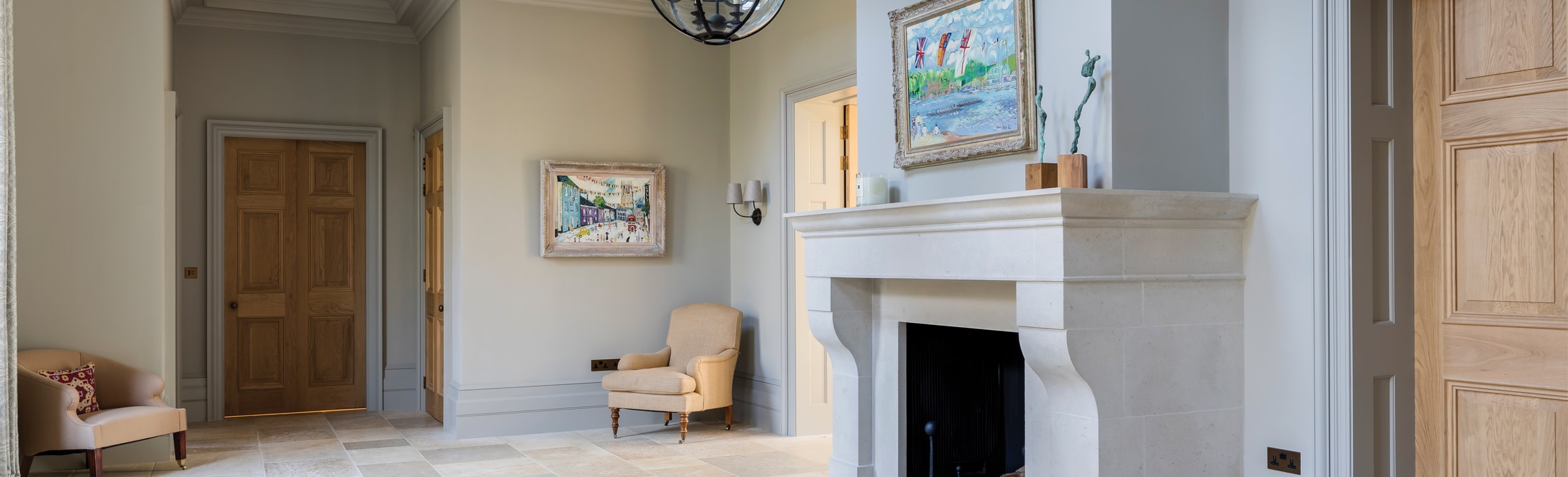
Luxury bathroom tile scheme — Ca Pietra Cote Bourgogne French limestone in a soft warm cream, large-format floor and wall, paired with a freestanding bath, brushed brass brassware and a fluted oak vanity — designer-grade tile specification
Cote Bourgogne French limestone from Ca’ Pietra · large-format wall and floor in a warm cream limestone · designer-grade tile specification.

01 · Material

Porcelain vs natural stone vs marble vs ceramic

Almost every tile decision in a UK luxury bathroom comes down to one of four materials: porcelain, ceramic, natural stone, or marble. The look you want narrows the choice; the maintenance reality and the budget close it. The four behave differently in a wet room, age differently over a decade, and price differently per square metre — and most of the regrets we get asked about could have been avoided if the homeowner had understood the material conversation before falling for the visual.

Porcelain is the workhorse of the modern luxury bathroom. Fired denser than ceramic at temperatures around 1,200°C, with water absorption under 0.5% (per BS EN 14411 Group BIa, the European tile standard), it is the only tile genuinely happy under direct water exposure indefinitely. It comes in stone-effect, marble-effect, concrete-effect, terrazzo-effect and wood-effect ranges that have closed the visual gap with the natural materials they imitate — on a luxury scheme today, a high-quality porcelain stone-effect from Porcelanosa or Ca’ Pietra is genuinely hard to tell from honed limestone at arm’s length. The trade-off is that the closer porcelain gets to looking like real stone, the harder the ranges are to source — we lean on the designer-grade brands precisely because their porcelain catalogues match the depth of veining you want from real stone.

Ceramic is porcelain’s less-fired sibling. Water absorption is higher (3–10% typical for BIIa wall tiles per BS EN 14411), so ceramic is wall-only in a wet bathroom, never floor. It is lighter, easier for a tiler to cut, and runs a bit cheaper per square metre. The case for ceramic in a luxury bathroom is hand-decorated, hand-glazed, or zellige tile — the pieces that earn their place because no porcelain factory can replicate the irregular glaze pool of a hand-thrown Moroccan zellige or the hand-painted figuration of a heritage range. Ceramic for the back wall behind a freestanding bath, where the tile is the moment; porcelain for the floor, where the tile is the substrate.

Natural stone — limestone, travertine, slate, marble — is the option that separates a designer-grade bathroom from a catalogue one. It is a real geological material; no two pieces are identical; the colour develops over decades. It is also more demanding: limestone and travertine need impregnating sealer at install and a top-up roughly every six to twelve months, marble is sensitive to acidic cleaners (anything citrus-based etches the surface), and slate sheds slightly during the first six months of use as the surface settles. In a hard-water area like much of Essex, natural stone wants a softener on the cold supply to the wet zone — otherwise the limescale cycle that we cover in the bathroom designer guide applies to your tile as well as your tap. Done with that maintenance regime in mind, stone is the most beautiful surface in the bathroom inventory; done without it, stone is the most regretted.

Marble is a natural stone we treat as its own category because the spec conversation is different. Marble in a bathroom is the visual statement; you do not use it as a default substrate, you use it where you want the eye to land. The right marble bathroom is restrained — one feature wall, one shower floor, one vanity-top run — not marble everywhere. The wrong marble bathroom uses cheaper marble that was not cut for the application; you can spot it in a year, when the veining has dulled and the surface has lost its lustre. We specify marble through Ca’ Pietra and the natural-stone houses for a reason: their slabs are cut for the application and dye-lot-coordinated across a single project, which the trade-counter equivalents are not.

Ca Pietra Athens Amazon tile in a soft sea-green glaze, cool aqua tone — example of a hand-glazed ceramic feature tile that earns its place where porcelain cannot replicate the glaze depth
Athens Amazon from Ca’ Pietra · hand-glazed ceramic in a soft sea-green · the irregular glaze depth porcelain cannot replicate.
“The right marble bathroom is restrained — one feature wall, one shower floor, one vanity-top run — not marble everywhere.”

02 · Format

Tile format: large-format vs metro vs mosaic

Format is the second-biggest decision after material, and the one that most affects how a finished bathroom feels in the room. A 1500×750 mm large-format porcelain reads completely differently to a 75×150 mm metro, even when the colour and finish are identical. The format choice is what separates a calm, modern luxury scheme from a busy traditional one — and where it goes wrong, the result is busy where the brief was calm, or sparse where the brief had warmth.

Large-format — anything 600×600 mm and up — is the dominant move on contemporary luxury bathrooms in 2026. The visual logic is simple: fewer grout lines means a calmer, more expensive-feeling surface. Porcelain slab products at 1200×600 mm, 1500×750 mm and the genuine slab format at 3000×1500 mm or larger are now mainstream from the major designer-grade tile suppliers. Large-format also reads bigger than it is — a small ensuite floor in 600×600 mm porcelain looks larger than the same room in 300×300 mm, because the eye reads grout lines as visual interruptions and counts them. The trade-off is installation: large-format needs a perfectly flat substrate, full bed adhesive (no spot-fixing), and an experienced tiler. We see fitter day rate go up roughly 20–40% over a standard 300×600 mm spec on a large-format job, and the material wastage allowance goes up too — we cover the wastage maths in our tile quantities and waste guide.

Metro — the rectangular 75×150 mm or 100×200 mm shape that has dominated UK bathrooms since the 2000s — is the go-to for traditional, period-property and heritage schemes. It carries the visual reference to Victorian and Edwardian municipal bathrooms; it suits panelled rooms, freestanding baths with claw feet, and brassware in chrome or polished nickel. The 2026 evolution is the longer, narrower metro — 50×200 mm, 65×260 mm — which gives the period reference without the dollhouse scale of the original 75×150 mm. Metro is also where layout decisions matter most; a brick bond, a herringbone or a stack-bond produce visibly different results on the same tile, and we have covered that decision in detail in our tile layout ideas guide.

Mosaic is the third format, and the most underused on luxury bathrooms outside the designer-led showroom world. Used right, mosaic is the texture moment that lifts a scheme — a marble mosaic feature wall, a penny-round shower floor, a fish-scale border behind a vanity. Used wrong, mosaic is busy, dated and impossible to keep clean. The rule we apply: mosaic for the moment, not the room. A 25 mm penny-round porcelain mosaic on a level-access shower floor solves the slip-rating problem with the grout-line density (more grout lines means more grip) and looks intentional doing it; a 25 mm marble mosaic on every wall in a small ensuite reads as a Pinterest accident.

Ca Pietra East Java marble mosaic — small-format marble mosaic for shower floors and feature walls, where the grout-line density adds slip resistance and visual texture in equal measure
East Java marble mosaic from Ca’ Pietra · small-format mosaic where grout-line density does double duty as slip resistance and texture.

The honest test for any format choice: stand in the showroom in front of the sample at the size you would use it. Do not look at a 100×100 mm sample and imagine a 600×600 mm tile; a designer-led showroom should have full-tile and full-pattern displays specifically so you can read the format at the size you are committing to. Pinterest and online retailer photography systematically under-represent grout lines because the photographer has cropped the frame to the tile face, not the room.

03 · Finish

Tile finish: matt vs gloss, honed vs polished

Finish is the third axis after material and format, and where most of the maintenance reality of the bathroom lives. The same tile in matt and in gloss behaves completely differently in a hard-water area, photographs differently, and ages differently over a decade. The finish you pick should match the use case — not the photo on the supplier’s website, which is always the most flattering finish under controlled studio lighting.

Matt finish on porcelain or ceramic gives a soft, low-glare surface that hides water spotting. It is the safest choice in a hard-water area for this reason: limescale residue still forms, but it does not catch the light the way it does on a polished surface. Matt is the right call for floors almost universally, and for walls in a contemporary or quiet-luxury scheme. The trade-off is that matt is harder to clean — the texture that hides water spots also catches grime — so a matt tile in a heavily used family bathroom needs a slightly more attentive cleaning regime than the same tile in a guest ensuite.

Gloss finish gives the high-shine, light-reflective surface that makes small bathrooms feel bigger and dark schemes feel less heavy. It cleans easily — a wipe with a damp microfibre takes care of most of it — but it shows water spotting visibly in hard-water areas, and that water spotting becomes limescale within a few weeks if the tile is not dried after use. Gloss for a guest cloakroom, a small ensuite, a feature wall behind the basin where light bounce is the design intent. Gloss for the floor of a wetroom — almost never; the slip rating drops and the maintenance reality bites.

Honed is the natural-stone equivalent of matt — the stone is ground flat and given a soft, low-sheen finish. Honed limestone, honed marble and honed travertine are the standard luxury-bathroom specs because they hide water spotting, hide minor imperfections in the stone, and do not fight the light the way a polished stone does. Honed is the finish you want on stone floors and stone wall surfaces in any scheme that is not deliberately period-formal.

Polished is the high-gloss stone finish — a polished marble feature wall, a polished travertine vanity top, a polished granite shower bench. Reserved for moments where the visual impact justifies the maintenance regime; polished marble in particular is etched permanently by anything acidic (citrus juice, vinegar-based cleaners, even some shampoos), so it is a finish for surfaces that will not get splashed with the wrong thing. We almost never specify polished stone on a floor in a UK bathroom; the slip rating drops to R9 or below, and the upkeep makes it a regret within two years.

Ca Pietra Hollywood Blue Linara — soft mid-blue ceramic with subtle textured finish, an example of a hand-decorated wall tile where the gentle irregularity reads as crafted rather than catalogue
Hollywood Blue Linara from Ca’ Pietra · soft mid-blue ceramic in a hand-decorated finish · an example of finish-as-design-decision.

04 · Slip rating

Floor slip rating: R10, R11 or R12?

Slip rating is the spec line most homeowners do not know exists, and the one that causes the most retroactive heartache when it is missed. A wet shower floor in a tile rated R9 is genuinely slippery; the same room in R11 is genuinely safe. The difference between specifying R10 in a wet zone and R11 is small at the order stage and large in real-world use. We treat slip rating the way we treat IP rating on light fittings: it is non-negotiable in the wet zones, and it is one of the first questions we ask on any tile spec.

The standard you will see quoted on UK tile spec sheets is the German DIN 51130 wet-shod ramp test, which produces R-ratings from R9 to R13 based on the angle at which a wet, oiled walker starts to slip on the surface. R9 holds out to roughly 6°; R10 to 10°; R11 to 19°; R12 to 27°; R13 above 35°. For a domestic bathroom: R9 is fine for a dry hallway and not a bathroom, R10 is the minimum for a standard bathroom floor outside the wet zone, R11 is what we specify in the wet zone of a level-access shower or a wetroom, and R12 is reserved for genuinely steep or commercial settings. R13 you will not need in a domestic spec.

There is a second slip-rating scale you may encounter on UK product specs: the Pendulum Test Value (PTV), measured per BS 7976. PTV is the figure the UK Health and Safety Executive prefers for commercial and public-sector floor slip-resistance assessment. For domestic bathrooms the trade tends to default to the German R-rating because it is what the European tile factories print on their data sheets; on a private residential project, R-rating is the figure your designer and your tiler will both be working from. If you see only PTV quoted, R10 corresponds roughly to PTV 36 and above (low slip risk), R11 to PTV 50 and above (very low slip risk), R12 to PTV 65 and above (extremely low slip risk).

For a level-access shower — the wet zone where slip risk is real — we specify R11 minimum on the shower floor itself, with the surrounding floor at R10. The most reliable way to hit R11 in a luxury scheme is a small-format porcelain mosaic, where the grout-line density adds slip resistance independently of the tile face; a 25 mm penny-round porcelain mosaic does this beautifully and reads as a deliberate design choice, not a compromise. The alternative is a textured large-format porcelain rated R11 from the factory — the major designer-grade tile suppliers all offer R11-rated stone-effect ranges specifically for this application, and they read as flat from arm’s length but provide grip underfoot. Riven slate in its natural finish often clears R11 without any treatment, which is why Ca Pietra Metropolitan Slate is so commonly specified for level-access shower zones.

The mistake that becomes a regret: specifying a polished marble floor in a wetroom because it photographs beautifully on the showroom display. R-rating drops to R9 or below, the floor is genuinely slippery when wet, and the homeowner spends the next decade nervous of the shower. Honed marble at R10 is fine in a dry zone; for the wet zone of a level-access shower, push to R11 or split the floor into a marble dry zone and a mosaic wet zone where the slip rating is solved by the format.

UK bathroom slip rating — what we specify, where

Zone R-rating (DIN 51130) Typical specification
Dry zone (vanity, WC, dry side) R10 minimum Honed natural stone, matt or honed porcelain, large-format slabs
Level-access shower floor R11 minimum Small-format porcelain mosaic, riven slate, textured R11-rated stone-effect porcelain
Wetroom (whole-floor wet) R11 throughout R11 across the whole floor; R12 only if the gradient or the shower head position warrants it
Steam room / sauna pre-zone R12 Heavily textured porcelain; full mosaic the safer default

Source: DIN 51130 wet-shod ramp test (the standard German tile-slip benchmark used by European tile factories); UK domestic-bathroom designer-led practice 2026.

Ca Pietra Metropolitan Slate in a riven natural finish — the textured surface clears R11 underfoot, suitable for wet-zone shower floors and wetrooms in luxury bathrooms
Metropolitan Slate from Ca’ Pietra in a riven natural finish · texture does the slip-rating work; visual restraint preserved.
“Black grout looks magazine-perfect for six months. Then the limescale lines start showing.”

05 · Grout

Grout colour discipline (and the hard-water trick)

Grout is the line item most homeowners forget on the spec sheet and the first thing the eye notices when something looks tired. Get the grout colour right and a £40-per-square-metre tile reads like a £100 tile; get it wrong and the £100 tile reads like a tired Travelodge. The colour decision is also the biggest hard-water lever in the bathroom. In Essex and across most of the South-East, where mains water runs at over 250 mg/l of dissolved calcium carbonate (genuinely hard water by Drinking Water Inspectorate definitions), the grout you pick is the difference between a bathroom that ages well and one that needs a deep-clean every three months.

The mid-grey or sand-tone rule. In any hard-water area, mid-grey or sand-tone grout masks both dirt and limescale residue. The off-white limescale film that builds up on grout in hard water is roughly the same tonal value as mid-grey or warm sand — it disappears into the grout colour rather than contrasting against it. Pure white grout shows the limescale faintly within months and obviously within a year; black grout shows the white limescale lines obviously within weeks. Mid-grey and sand-tone are the only two grout colours we specify by default for floor and wet-zone tile in hard-water postcodes, and we make a point of putting them on the spec sheet at the same time as the tile, not as an afterthought when the tiler asks at the start of week three.

The dark-grout exception. Where the tile itself is dark — emerald green metro, navy zellige, charcoal porcelain — the grout has to read as a continuous tonal field with the tile, which means dark grey (not black) grout. Dark grey still shows some limescale film in a hard-water area, but the contrast is much lower than black grout against the same tile. The genuine black grout call is reserved for areas with soft water (much of the North and West of the UK) where limescale build-up is not the dominant ageing factor.

The white-grout exception. White grout is fine in soft-water areas, fine in dry-zone wall tile, and fine in any feature where the grout-to-tile contrast is part of the design intent (a black-and-white penny-round mosaic on a guest cloakroom floor, for example). White grout in a wet zone in a hard-water area is the configuration to avoid; you will be cleaning it every week.

The softener-as-grout-protector trick. A whole-house water softener (typically £1,200–£2,000 installed) eliminates limescale build-up on tile, grout, brassware, and inside the cylinder. On a luxury bathroom project where natural stone, polished brassware, and dark grout are part of the design intent, a softener pays for itself in three to five years through reduced replacement and re-grouting. We recommend it on roughly 70% of the luxury bathroom projects we specify in Essex; the homeowners who decline regret it within two years if any of the dark-grout, polished-brass, or natural-stone choices were made.

Bowman’s designers settle the grout colour at the same showroom appointment where we settle the tile, so the spec sheet that goes to your fitter has the grout RAL or supplier code on it, not just “mid-grey”. The fitter is then ordering a known product, not interpreting an instruction.

06 · Marble

Book-matching marble — the slab move that lifts a scheme

Book-matching is the marble specification that separates a designer-grade bathroom from a catalogue one. It is the slab move worth knowing about even if you do not end up specifying it — because once you have seen it done well, you can read which marble bathrooms are designer-led at a glance.

The technique: two slabs of marble are cut from the same block, the second slab cut as the mirror image of the first. When the two slabs are opened like the pages of a book and laid side-by-side, the veining on each slab continues across the centreline as a perfect mirror. Used as a feature wall behind a freestanding bath, behind a vanity, or in a walk-in shower, the result is a single visual moment that reads as natural and inevitable rather than tiled and assembled. Done well, it is the single most photographed feature in a luxury bathroom.

The cost premium over standard marble is more modest than most homeowners assume. The slabs themselves cost roughly the same as standard slabs of the same stone — you are paying for the cut sequence, not extra material. The premium sits in the installation labour: the layout has to be drawn before any cut is made, the slabs have to be sequenced from the block at the supplier’s yard, and the tiler has to set out the centreline first and work outward. Total premium over a non-matched marble feature wall in our experience: typically £600–£1,800 on a luxury bathroom feature, depending on slab size and stone choice. The visual impact is disproportionate to the cost.

Where book-matching works: a feature wall behind a freestanding bath; the back wall of a walk-in shower; the splash wall behind a wall-hung vanity; the tall wall in a small ensuite where one moment carries the room. The common factor is a single, planar surface with a clear centreline.

Where book-matching does not work: a wall with a window, a wall with a recessed niche, a wall that wraps a corner, or a wall where the feature is interrupted by brassware or shelving. The technique relies on visual continuity across the centreline; anything that breaks the centreline breaks the effect.

The ranges to ask about are the marbles where the veining is dramatic enough to make book-matching worth the labour. Calacatta Viola, Calacatta Borghini, Verde Alpi, Rosso Levanto, and the dramatic veined marbles in the Ca’ Pietra natural-stone catalogue are all worth specifying for this. The plainer marbles — Carrara, plain Calacatta — are still beautiful but the book-matching premium is hard to justify; the centreline reads as subtle rather than dramatic.

The lead time for a book-matched marble feature wall is the longest in the tile category — roughly eight to twelve weeks from order, because the slabs have to be sequenced from a specific block at the supplier’s yard and shipped together. Order before strip-out begins, and order with confidence in the stone choice; you cannot reasonably swap mid-project the way you might with a standard porcelain.

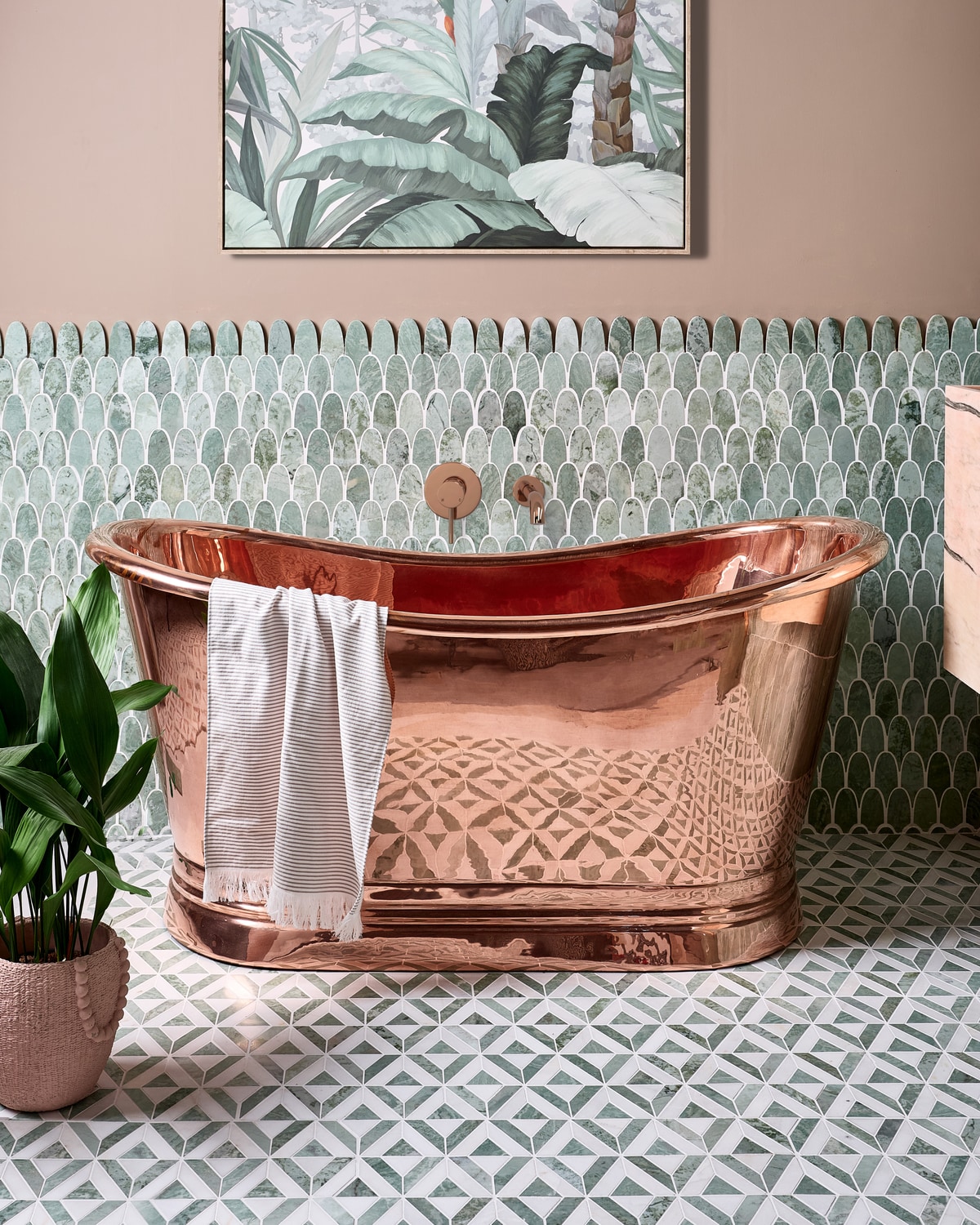
Ca Pietra Long Island marble in a scallop format — sculptural marble shape that reads as a feature even at smaller scale; the kind of marble moment that lifts a scheme without requiring a full feature wall
Long Island marble scallop from Ca’ Pietra · sculptural marble at smaller format · a feature moment without a full slab wall.

07 · Lead time

Lead times — why special tiles need 6–10 weeks

The single most expensive miscalculation on a luxury bathroom project is starting the strip-out before the tiles are confirmed in stock. Tile lead time is the gating factor for when your fitter can start, not the other way round — and the lead times on designer-grade and natural stone ranges are consistently longer than homeowners expect. The order-before-strip-out rule applies to every product line in a luxury bathroom, but tiles are the line item that catches people most often.

Mainstream porcelain from the major trade-counter and online suppliers ships in one to three weeks. This is the inventory-held, full-pallet-quantities-in-the-warehouse end of the catalogue — standard sizes, standard colours, factory-stock SKUs. Mainstream porcelain is the option for a like-for-like swap or a renovation on a tight programme.

Designer-grade porcelain from Porcelanosa, Ca’ Pietra, and the boutique European tile suppliers typically runs three to six weeks for confirmed-stock ranges, longer for special-order. The premium ranges are made-to-order in smaller batches; the supplier holds enough for sample boards and confirmed projects, not enough for walk-in retail. Plan accordingly.

Natural stone — limestone, travertine, slate, marble — is six to ten weeks typical, longer for book-matched slabs (eight to twelve weeks) and special cuts. The stone has to come from the quarry, be dressed at the supplier’s yard, and shipped on a dedicated pallet because of weight. Stone projects are also where dye-lot consistency matters most: ordering early lets the supplier sequence the slabs from a single block, which is why the natural-stone catalogues are quietly conservative about lead-time promises.

Hand-decorated and zellige ceramic — eight to fourteen weeks. Each tile is hand-thrown or hand-painted; the kiln runs are smaller; the irregular finish that justifies the premium also justifies the wait. We tell clients on hand-decorated tile projects that the design is locked at the appointment that orders the tile; you cannot reasonably revise on a fortnight’s notice.

Mosaic ranges sit between mainstream porcelain and natural stone: three to six weeks typical, longer for stone mosaic where the chips are cut from real material. Mosaic on a level-access shower floor is something to specify early because the tile drives the floor build-up.

The rule we tell clients on day one of any luxury bathroom project: the tile order goes in before the fitter is booked. Get the tile confirmed in stock, get the lead time confirmed by the supplier in writing, and book the fitter to start one week after the latest expected delivery. Strip-out happens on the same day as the tile arrival, not before. This sequencing is unsexy but it is what protects a project from the most common preventable failure mode in a UK luxury bathroom — an empty stripped room with the fitter on day rate, waiting for tiles that are still in transit from a supplier in Italy.

Ca Pietra Palazzo Oro range in brick-bond layout — warm gold-toned tile in a brick-bond pattern, an example of the boutique-supplier ranges with longer lead times that need ordering before strip-out begins
Palazzo Oro from Ca’ Pietra in a brick-bond layout · designer-grade ranges that need ordering before the fitter is booked.

08 · Brand

The Ca’ Pietra ranges worth knowing

Ca’ Pietra is the British natural-stone and ceramic tile house we recommend more often than any other supplier on luxury bathroom projects. Family-run, headquartered in Bristol, with a catalogue that runs from genuine French limestone slabs through hand-glazed ceramic to large-format porcelain, Ca’ Pietra occupies the precise intersection of designer-grade material quality and consistently sensible lead times. The ranges below are the ones we specify most often, and the names worth knowing when you are reading a designer’s spec sheet or asking a showroom what they have in stock.

Cote Bourgogne French limestone — the warm-cream French limestone we specify for floor and wall when the brief calls for natural stone in a quiet, classical scheme. Honed finish, large-format options to 600×900 mm, R10 standard. Sealed at install, top-up sealer at six-to-twelve-month intervals.

Athens Amazon — a hand-glazed ceramic in a soft sea-green that reads as a hand-decorated wall tile. The irregular glaze depth is what porcelain factories cannot replicate; a feature wall in Athens Amazon behind a freestanding bath is the textbook case for using ceramic where you would otherwise default to porcelain.

East Java marble mosaic — a small-format marble mosaic ideal for level-access shower floors and feature walls. The grout-line density gives R11 underfoot in the shower zone; the marble itself reads as a single material moment rather than a tiled surface. We pair East Java mosaic on the shower floor with a complementary large-format porcelain wall tile on most luxury wet-zone schemes.

Hollywood Blue Linara — soft mid-blue ceramic in a hand-decorated finish, a feature tile that suits panelled and traditional bathrooms where the colour is part of the design intent. The hand-decorated finish reads as crafted rather than catalogue, which is the Linara range’s point.

Long Island marble scallop — sculptural marble cut into a scallop shape, used as a feature wall or a behind-vanity moment. The shape carries the visual interest, which means the marble itself can be a quieter Carrara or honed Calacatta and still read as designer-grade.

Metropolitan slate — riven natural slate in dark slate-grey, the texture providing R11 slip rating without any treatment. We specify Metropolitan slate on level-access shower zones and wetroom floors where the brief is contemporary or minimal; the material does the work of slip rating, slip resistance, and visual restraint simultaneously.

Palazzo Oro — warm gold-toned tile typically laid in a brick-bond pattern, designed for a feature wall or a focal point above a vanity. The tone shifts under different lighting, which is why we always recommend signing off the spec under both daylight and evening LED before committing.

The full Ca’ Pietra catalogue runs to several hundred ranges across natural stone, porcelain, ceramic and concrete; the names above are the ones we lean on most for luxury bathrooms. The full Ca’ Pietra range page on the Bowman site has the broader catalogue, and the showroom holds full-tile and full-pattern samples of all the named ranges so you can read the format and finish at the size you would actually specify.

Pricing on Ca’ Pietra ranges varies enormously by category — the porcelain stone-effect ranges sit at £40–£90 per square metre, the natural stone £80–£200 per square metre, and the hand-decorated and book-matched marble lines can clear £300 per square metre. Bowman benchmarks pricing across the Ca’ Pietra catalogue against the major UK online retailers (Drench, Tile Mountain, Walls and Floors, the supplier-direct sites) on every quote, which we will come back to in section nine.

09 · Pricing

How tiles are priced — and where Bowman benchmarks

Tile pricing is the single biggest line item on most luxury bathroom budgets, which makes it the single biggest place a buyer can either save money or get quietly overcharged. The market splits cleanly into three tiers, with very different pricing logic at each.

Online retailers — Tile Mountain, Walls and Floors, Drench, Victorian Plumbing, the supplier-direct sites — sell mainstream porcelain and ceramic at the lowest list prices in the UK. They run inventory at scale, ship in a few days, and earn margin on volume rather than service. The trade-off is that what you see is what you get: you place the order, the tile arrives, and any compatibility issue (wrong dye lot, the wrong wastage allowance, the wrong slip rating for your application) is your problem to fix. For a like-for-like swap on a standard rectangular bathroom, online is genuinely the right answer.

Margin-funded designer-led showrooms — the most common UK luxury showroom model — carry the same brands as the online retailers plus the boutique designer-grade ranges that online retailers do not stock. List prices on the overlapping ranges sit a bit above the online retailers because the showroom is funding the free design service through the tile margin. This is the industry-standard model, it produces excellent design, and it is genuinely fine if you understand that the design is being paid for through product mark-up.

Online-priced designer-led showrooms — rarer, and where Bowman sits. We benchmark our tile pricing against the major UK online retailers on every quote we issue. The free design service, the slip-rating verification, the lead-time coordination, the dye-lot sequencing, and the spec-sheet documentation are added value the business absorbs — not a hidden cost folded into list prices. A buyer at Bowman pays roughly the same on tile as buying the same brands online, and gets the design service on top.

The buyer’s-guide test we encourage on every showroom — not just ours: ask any showroom directly how their tile pricing compares to Tile Mountain or Drench on the same product. If the answer is specific (“we are within 5% on porcelain and within 10% on the boutique stone ranges”), the showroom is being honest about its model. If the answer is vague (“our tiles are higher quality”, “the comparison is not like-for-like”, “you get what you pay for”), the showroom is funding its design service through margin and would rather you did not ask. Both models can be honest; the dishonest version is the one that pretends the design is free without acknowledging where the cost actually lands.

Want to see where your specific tile spec lands across a whole bathroom budget? Our interactive product price guide lets you build a brief — sanitaryware, brassware, tile, vanity, finish-level — and returns a real-time investment range. No data capture, no sales call, no email required.

Porcelanosa large-format porcelain slab — concrete-effect 1500x750 mm porcelain in a contemporary luxury bathroom, the format that delivers calm, expensive-feeling surfaces without the maintenance regime of natural stone
Porcelanosa large-format porcelain slab · the contemporary alternative to stone; benchmarked on price against the major online retailers.

10 · Pitfalls

Tile mistakes a designer prevents

Most tile regrets are not aesthetic; they are spec-and-context regrets where the look was right and the spec was wrong for the application. The five below are the ones we see repeatedly on UK home renovation forums, and the ones a designer-led showroom catches in the first appointment.

01

Polished marble floor in a wetroom

Polished marble looks beautiful on the showroom display under controlled lighting. R-rating drops to R9 or below; in a level-access shower or wetroom the floor is genuinely slippery when wet. The fix mid-project is a re-tile on the wet zone with R11-rated material; the fix post-handover is the same job at twice the cost and a stripped-and-re-laid bath. (Slip-rating misjudgement is one of the recurring bathroom layout mistakes that cost thousands to fix.)

A designer specifies honed marble in the dry zone, R11 mosaic or textured porcelain in the wet zone — or a softer stone like limestone with a textured riven finish.

02

Black grout in a hard-water postcode

Black grout looks magazine-perfect on day one. By month six in a hard-water area, the white limescale lines are visibly worse than the original would have been on grey grout. Fix: rake out and re-grout in mid-grey or sand-tone — messy, expensive, avoidable.

A designer specifies mid-grey or sand-tone grout for any hard-water postcode at the same time as the tile.

03

Pale floor tiles in a family bathroom

Light-grey or pale-cream floor tiles stain visibly from anything that gets walked across them — hair-dye drips, bath-oil splashes, the occasional dropped foundation pad. A recurring Mumsnet complaint. Fix mid-project: re-spec the floor tile in mid-grey or warm taupe; fix post-handover: live with it.

A designer specifies a mid-tone or sand-tone floor in any family bathroom — or directs the pale-floor scheme into a guest ensuite where stain risk is lower.

04

Textured tile face in a hard-water area

Heavily textured tile faces — structured porcelain, deeply glazed ceramic, raised-pattern feature tile — trap limescale residue in the texture. Within twelve months in a hard-water postcode, the texture reads as grimy rather than crafted. Fix: limescale acid-wash treatment (which etches some glazes), or re-tile.

A designer either places textured tile above splash height, swaps to a smooth-faced tile in the wet zone, or pairs the textured spec with a whole-house water softener.

05

Wrong wastage allowance on a special-cut layout

Standard wastage on a straight-bond layout is roughly 10%. Herringbone runs 15%; chevron 20%; book-matched marble 25% or more. Order on a 10% allowance for a 20%-wastage layout and you are short on tile two-thirds of the way through the install — and the supplier’s next batch will not be a dye-lot match. Fix: re-order, wait, hope; or compromise the layout.

A designer specifies the wastage allowance against the chosen layout before the order goes in. We have covered the wastage maths in our tile quantities and waste guide.

None of these are exotic problems. All five are common enough that we have written about most of them across the inspiration cluster — tile layout ideas, the herringbone vs chevron comparison, the best tiles for small bathrooms guide. The pattern across all five is that the homeowner picked the right look in the wrong material or the wrong context, and the designer’s job is to align look with context before the order goes in.

11 · Budget

Tiles as a share of the bathroom budget

For most luxury bathrooms in 2026, tiles run somewhere between 15% and 25% of the total project cost — making them the single biggest product-line spend. The exact share depends on the spec, the format, and how much natural stone is involved.

On a £15,000 entry-luxury bathroom, tiles typically sit at £2,000–£3,500 of the total. Mainstream porcelain on floor and walls (£40–£70 per square metre supplied), a mid-grey or sand-tone grout, and a single feature wall in a more characterful porcelain or hand-decorated ceramic.

On a £25,000 standard luxury bathroom, tiles run £4,500–£7,000. Designer-grade porcelain on the floor (£70–£100 per square metre), a feature wall in marble-effect porcelain or hand-decorated ceramic, and a mosaic moment on a level-access shower floor or behind the basin.

On a £40,000+ bespoke principal suite, tiles can clear £8,000–£15,000. Genuine natural stone on floor and walls, a book-matched marble feature wall, hand-decorated ceramic on a feature surface, and a small-format marble mosaic on a level-access shower zone — all dye-lot-coordinated across the project.

The full breakdown of where the money goes across each tier is in our UK luxury bathroom cost guide, including line-by-line specs at £15k, £25k and £40k+. The tile share is consistent at 15–25% across all three tiers, which is why getting the tile spec right is one of the highest-leverage decisions on a luxury bathroom budget.

The honest upshot: in a luxury bathroom, the tile is roughly a fifth of the project, and it is the line item where designer-led showrooms add the most measurable value — slip rating verified, grout colour locked, lead times sequenced, dye-lot coordinated, layout wastage calculated. The cost of getting any one of those wrong is typically more than the design fee on a margin-funded showroom would have been; at Bowman the design itself is included alongside online-benchmarked product prices, which is the case we make for booking the appointment.

Frequently asked questions

The questions UK luxury bathroom buyers ask before specifying tile.

For most UK bathroom floors the answer is a rectified large-format porcelain tile in a matt or honed finish, with a DIN 51130 slip rating of R10 minimum and R11 in the wet zone of a level-access shower. Porcelain is dense (water absorption under 0.5%), durable, and dimensionally stable enough for underfloor heating, which is why we specify it on roughly nine out of ten projects. Natural stone (limestone, travertine, marble) is the alternative when the brief is genuinely period or genuinely premium — beautiful, but it needs sealing on a six-to-twelve-month cycle and a softener if your water is hard.
R-ratings (DIN 51130, the German wet-shod slip-resistance standard most UK suppliers cite) run from R9 to R13. For a domestic bathroom: R10 is the minimum for a standard floor outside the wet zone, R11 is what we specify in the wet zone of a level-access shower or a wetroom, and R12 is reserved for genuinely steep or commercial settings. R9 is fine for a dry hallway, not a bathroom. Note that R-rating is one of two scales — Pendulum Test Value (PTV) is the UK Health and Safety Executive's preferred metric for commercial work; for domestic bathrooms, R-rating is the trade-side figure you'll see on tile spec sheets.
Mid-grey or sand-tone, almost always. Pure white grout shows every speck of grime; black grout looks magazine-perfect for six months and then accumulates visible white limescale lines that are worse than the original would have been on grey. The mid-grey-to-sand band masks both dirt and limescale, which means the grout still reads clean a year after install. A designer specifies the grout colour at the same time as the tile, not after; most homeowners get this decision wrong because grout is the last thing on the spec sheet and the first thing the eye notices when something looks tired.
Mainstream porcelain ranges from major suppliers (Porcelanosa, the larger trade-counter brands) typically arrive in one-to-three weeks. Natural stone, hand-decorated tiles, and special-finish ranges from Ca' Pietra and similar boutique suppliers run six-to-ten weeks, sometimes longer for book-matched marble slabs that have to be cut from a specific block. Hand-painted or made-to-order ceramic — eight-to-fourteen weeks. The rule on any luxury bathroom: order tiles before strip-out begins, because the tile lead time is what determines when your fitter can start, not the other way round.
Yes, materially harder. Large-format porcelain (anything 600x600 mm and above, with 1200x600 mm and 1500x750 mm now mainstream and slabs of 3000x1500 mm available) needs a perfectly flat substrate, full bed adhesive (no spot-fixing), and a tiler who has done it before — fitter day rate goes up roughly 20–40% over a standard 300x600 spec. The reward is fewer grout lines, a calmer visual, and easier maintenance. We recommend large-format on most luxury schemes; we don't recommend it where the substrate is suspect or the fitter hasn't done it before.
Book-matching is when two slabs cut from the same block are opened like the pages of a book so the veining mirrors across a centre line — typically used as a feature wall behind a freestanding bath or in a walk-in shower. The slabs themselves cost roughly the same as standard slabs of the same stone (you're paying for the cut sequence, not extra material), but installation is 30–60% more because the layout has to be drawn before any cut is made. Total premium over a non-matched marble feature wall: typically £600–£1,800 on a luxury bathroom feature, depending on slab size and stone choice. The visual impact is disproportionate to the cost.
Most are — they fund the free design service through tile margin, so list prices sit a touch above the major online retailers. Bowman doesn't operate that way. We benchmark our tile prices against the major UK online retailers — Drench, Tile Mountain, Walls and Floors, the supplier-direct sites — so you don't pay a premium to use a designer-led showroom. The free design service, the spec checking, the slip-rating verification, and the lead-time coordination across your tile, brassware and sanitaryware orders are added value on top of like-for-like pricing — not a hidden cost. Always ask any showroom directly: 'How does your tile pricing compare to the major online retailers?' If the answer is vague, the design isn't really free.
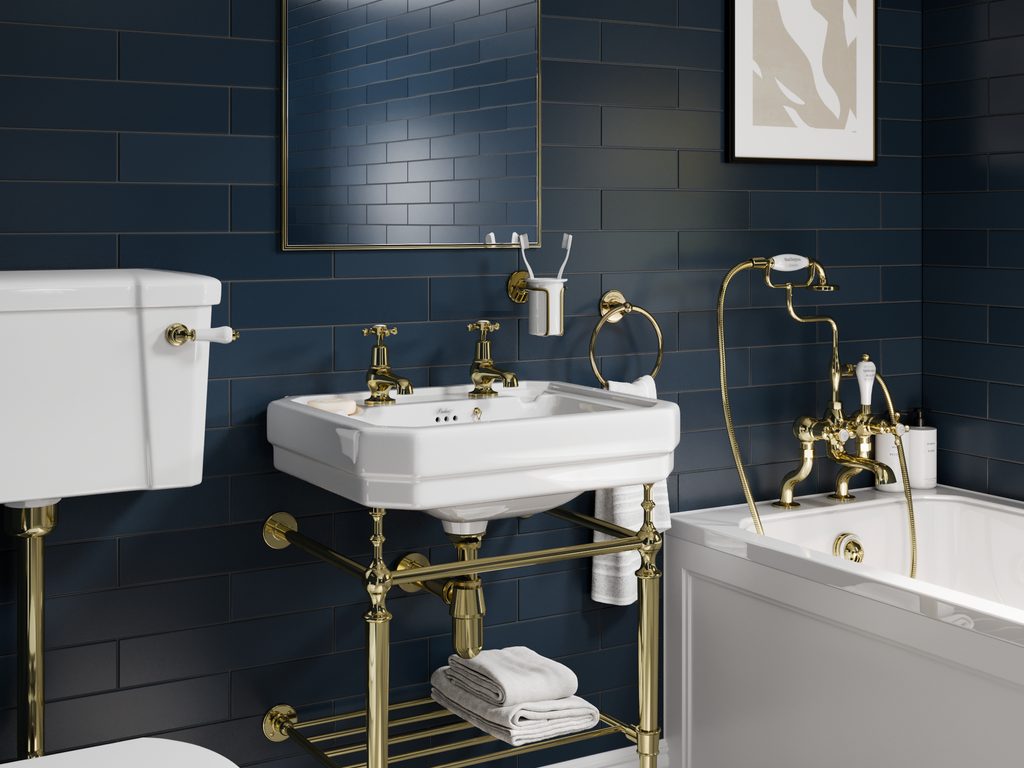
Burlington Cameo Collection traditional luxury bathroom — navy metro tile wall, polished brass console basin with twin pillar taps, gold-trim mirror, brass framed bath shower mixer — tile and brassware coordinated as a single specification
Burlington Cameo Collection · navy metro tile and brass brassware coordinated as a single specification · tile is the substrate that makes the rest of the scheme work.

What’s next

See the tile ranges in person

The honest test for any tile spec is reading the format, the finish and the colour at the size you would use them, under both daylight and evening LED. Our Braintree and Leigh-on-Sea showrooms hold full-tile and full-pattern displays of the Ca’ Pietra ranges named in this guide, plus the wider Porcelanosa, Burlington and supporting natural-stone catalogues. The design appointment is free; the tile pricing is benchmarked against the major UK online retailers; the spec sheet that goes to your fitter is locked before any order is placed.

If you would rather start by exploring one supplier in depth, the Ca’ Pietra range page is a useful next step — it covers the broader catalogue beyond the ranges named here. For the full design-service explanation, our is a bathroom designer worth it guide covers the four trigger conditions where a designer earns the fee and the three scenarios where one does not.

Visit Our Showrooms Free brochures Price estimator