01 · Preparation
What to bring (and what not to worry about)
You don’t need to arrive with a finished brief. The best appointments we run are usually with clients who turn up with rough information and a willingness to think out loud. Five things make the 90 minutes more useful though, and if you only bring two of them, bring the measurements and the photos. (Want to do that pre-appointment thinking yourself first? Our 14-step planning checklist walks through it.)
Rough room measurements. Length, width, ceiling height. Sketched on the back of an envelope is fine. After the appointment we email you our step-by-step measuring guide, and you take the full set of sizes in your own time before anything is drawn. But a starting set of dimensions means we can move from "what bathrooms can look like" to "what your bathroom can look like" inside the first half hour. The most useful sketch we’ve ever been handed was on a Cornflakes packet. The shape of the room mattered more than the tidiness of the drawing.
Phone photos of the existing room. Six to ten shots from different corners, including the ceiling, the floor, the soil-pipe boxing, and any window reveals. Photographs answer questions you’d never think to ask in conversation: where the radiator is, how high the tile run goes, whether the door swings into the room or out of it, where the soil stack lands. We’ve caught problems in photos that would otherwise have surfaced weeks later.
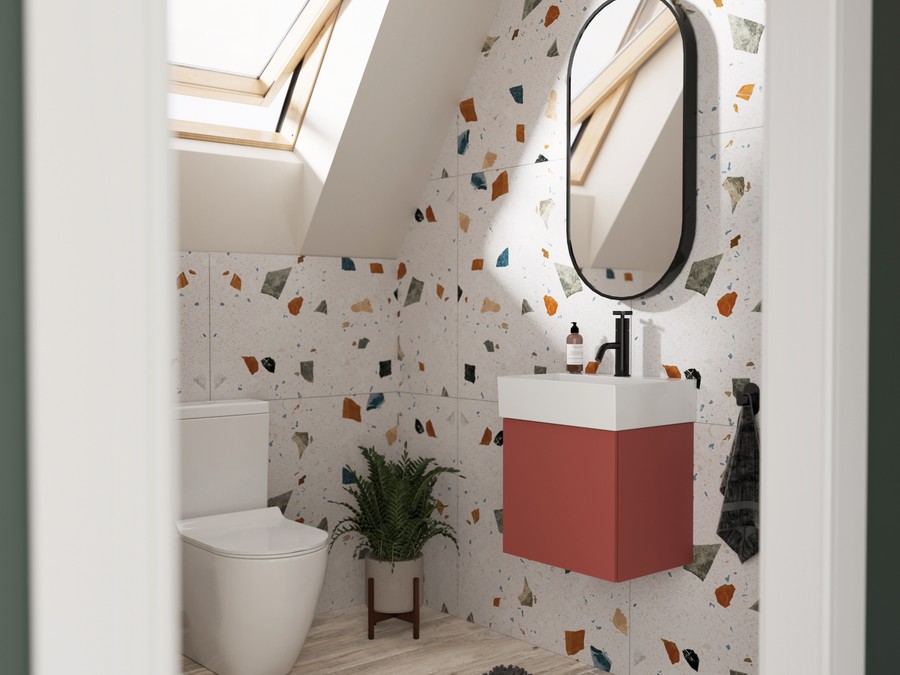
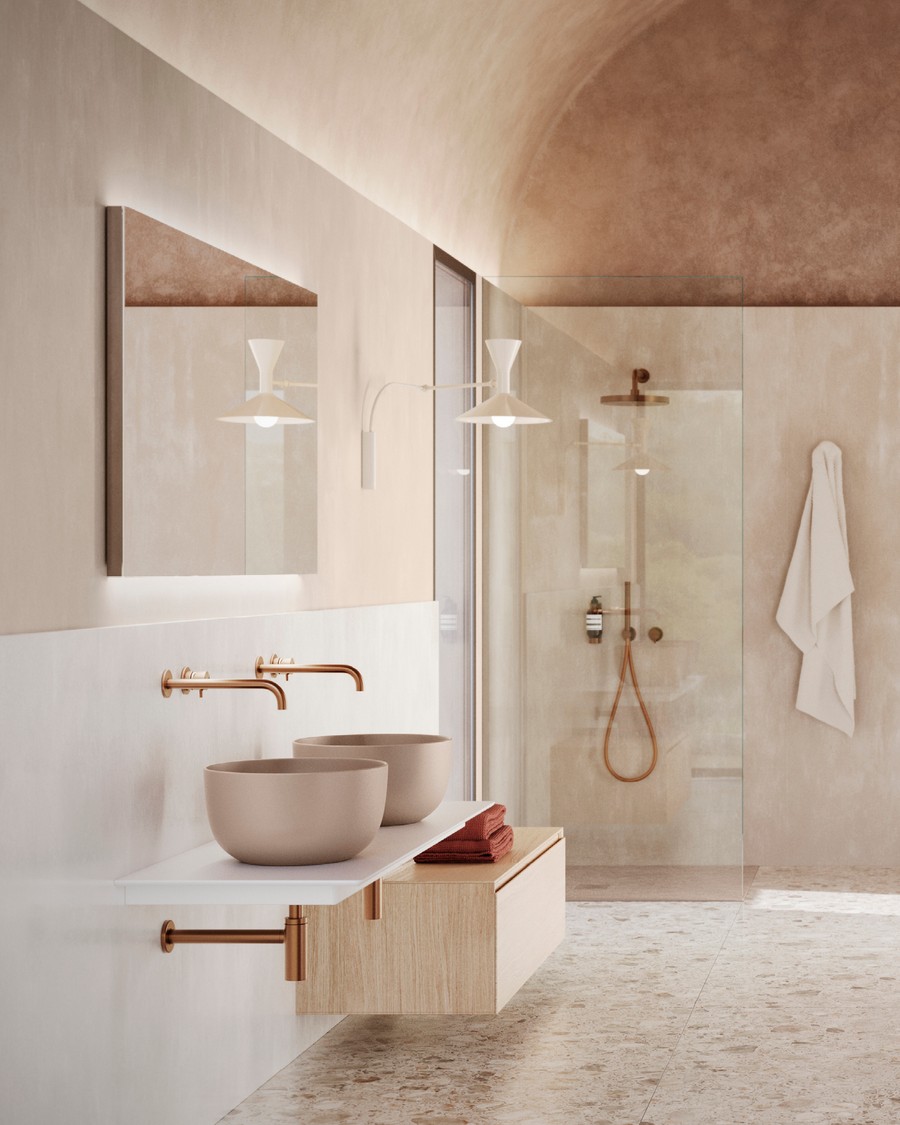
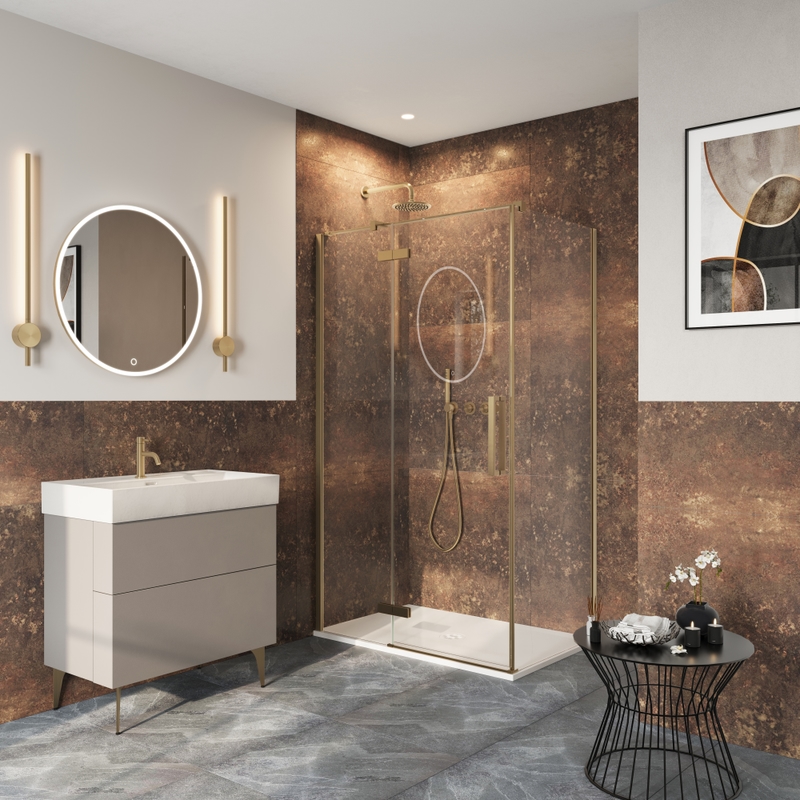
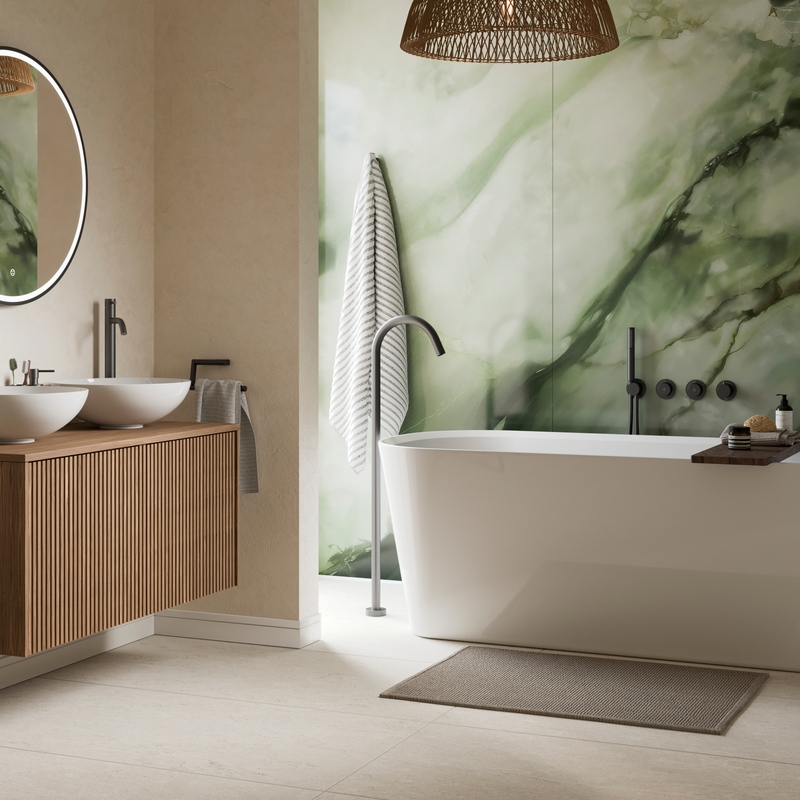
Any inspiration images you’ve saved. Pinterest boards, Instagram saves, magazine tear-outs, screenshots from other people’s renovations. You don’t need a curated mood board. Twelve random images you keep coming back to tell us more than a polished Pinterest board you assembled the night before. What we’re reading is the repeated visual language: fluted oak coming up four times, brushed brass across half the saves, a particular warmth in the lighting. We’re not after a list of products.
A rough idea of your water system. This is the bit of homework most homeowners don’t realise matters until they’re sitting in front of us. Combi boiler, vented (gravity-fed) cylinder with a cold tank in the loft, or unvented (mains-pressure) cylinder. The answer decides what brassware will work in your house. Monobloc taps need 1.0 bar minimum, and gravity systems often deliver 0.3 to 0.5 bar at upstairs taps, so that one fact rules about a third of the showroom floor in or out. If you don’t know, photograph the airing cupboard and the boiler. We can usually identify the system from that.
A budget range you’re honestly comfortable with. Not "as little as possible" and not "whatever it costs," but a real range. Something along the lines of "fifteen to twenty thousand for products plus install," or "I want to spend in the mid-twenties on the room overall," will do it. That number does more work than anything else in the appointment, because it decides which products we walk you towards. Telling a designer "I have no budget" isn’t freeing, it’s deflecting. You usually end up shown a tier you didn’t want to see. Our interactive product price guide is a good way to play with the numbers before you arrive.
What you don’t need: a finished spec, named products, a fitter already booked, an opinion on every brand, or any anxiety about turning up unprepared. The appointment is built to work with whatever you’ve got, including very little.