
Herringbone vs Chevron Tiles What’s the Difference? (UK Guide 2026)
Herringbone tiles are rectangular pieces laid at 90° angles to create a broken zigzag pattern. Chevron tiles are manufactured with angled ends so they form a continuous V shape when installed. The key differences lie in tile shape, visual line continuity, installation precision, waste percentage and labour complexity.
While herringbone and chevron appear similar at first glance, the geometry and execution create noticeably different results in bathrooms.
This guide compares both patterns in practical UK renovation terms so you can decide which works best for your bathroom layout, budget and design objective.
For a broader look at all available patterns, see the Tile Layout Ideas Guide. For herringbone-specific installation detail, visit the Herringbone Tiles Guide.
Quick Navigation
Quick Comparison: Herringbone vs Chevron
| Feature | Herringbone | Chevron |
|---|---|---|
| Tile Shape | Rectangular (90° ends) | Angled-cut ends forming V |
| Visual Line | Broken zigzag | Continuous sharp V |
| Installation Difficulty | High | Very High |
| Waste Percentage | 15–22% | 18–25% |
| Labour Uplift vs Grid | +20–30% | +30–40% |
| Forgiveness Level | Moderately forgiving | Low tolerance for error |
| Best Use in Bathrooms | Feature walls, showers | Statement floors, symmetrical rooms |
For per-m² UK pricing ranges, refer to the Bathroom Tiling Cost Guide.
At a Glance
Herringbone
- ▶ Design Feel: Textural, layered, classic-modern
- ▶ Budget Impact: Moderate uplift
- ▶ Installation Risk: Visible but manageable drift
- ▶ Best For: Compact rooms & feature walls
Chevron
- ▶ Design Feel: Sharp, directional, contemporary
- ▶ Budget Impact: Higher uplift
- ▶ Installation Risk: Drift immediately obvious
- ▶ Best For: Balanced, symmetrical spaces
The Structural Difference Explained
Herringbone
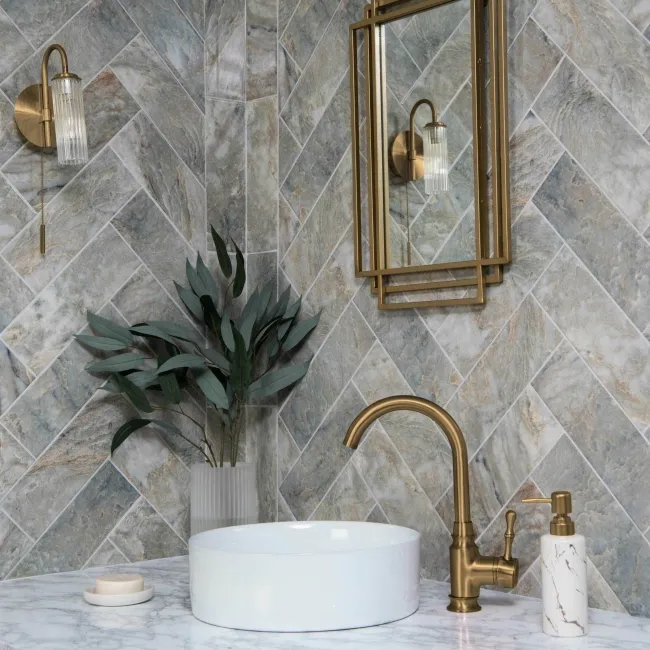
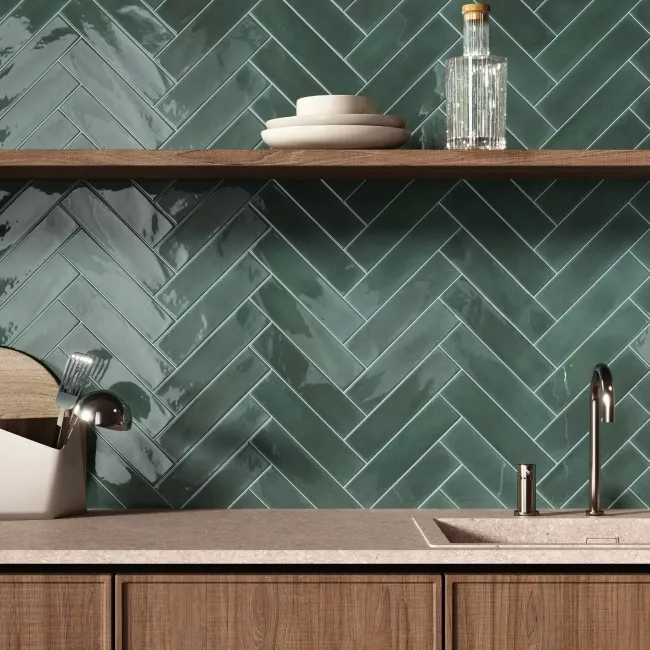
Herringbone uses standard rectangular tiles placed at right angles to one another. Each tile overlaps the end of the previous tile at 90°, forming a staggered zigzag.
Because the joints are offset, the pattern feels slightly softer and more textured.
Visual Character
- Rhythmic
- Textural
- Classic-modern
Chevron
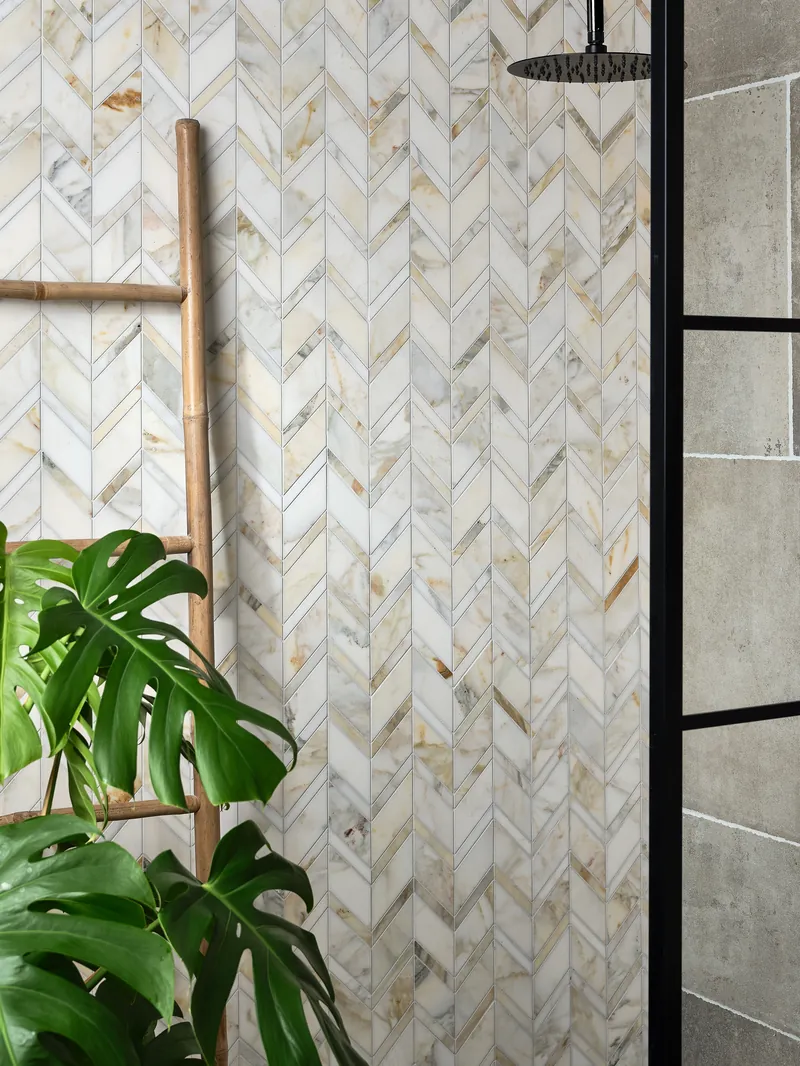
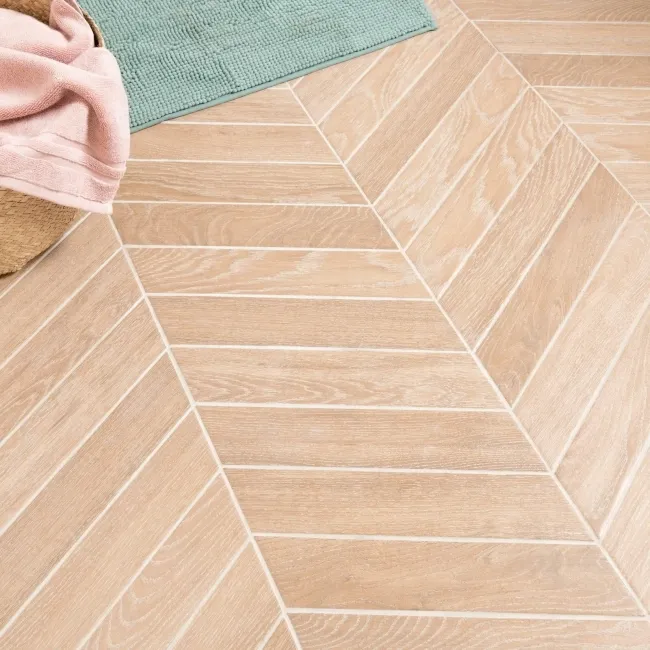
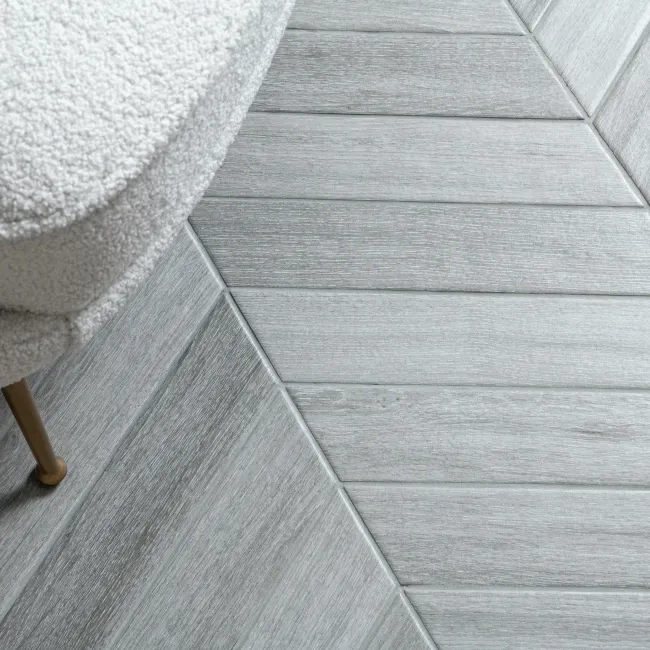
Chevron tiles are manufactured with angled ends (commonly 45°). When laid, the ends meet precisely to form a continuous V shape across the surface.
The pattern is sharper and more directional.
Visual Character
- Graphic
- Clean
- Strongly geometric
For detailed herringbone installation guidance including tile size, orientation and waste planning, see the Herringbone Tiles Guide.
Installation Complexity & Cost Differences
Is Chevron More Expensive Than Herringbone?
In most UK bathroom projects, chevron is typically more expensive than herringbone. This is due to:
- • Higher tile manufacturing cost (angled cuts)
- • Increased waste percentage
- • Greater alignment precision
- • Longer installation time per m²
Material Waste
Chevron typically generates more waste due to angled perimeter cuts, precision alignment requirements and limited ability to reuse trimmed pieces.
Labour Uplift vs Straight Grid
Both patterns are significantly more complex than straight grid layouts. Chevron requires longer installation time per m² due to zero tolerance for drift.
Herringbone Requires
- ✓ Accurate centre-line setting
- ✓ Consistent spacing
- ✓ Careful edge cutting
Chevron Requires
- ✓ Perfect substrate flatness
- ✓ Flawless centre-line symmetry
- ✓ Zero tolerance for drift
- ✓ More time per square metre
For broader context on costs, see the Bathroom Tiling Cost Guide and Tile Quantities & Waste Guide.
Which Pattern Works Better in Bathrooms?
Which Is Better for Small Bathrooms?
Herringbone is usually safer in compact spaces because the broken zigzag softens visual intensity and is slightly more forgiving visually.
Chevron can feel overpowering if used across multiple surfaces in smaller rooms.
Recommendation
Herringbone on a single feature wall. Limit chevron to rooms with balanced proportions.
Which Works in Symmetrical Bathrooms?
Chevron excels where vanity units are centred, baths sit on axis and architectural lines are balanced. It relies heavily on symmetry to look intentional.
Chevron Zone
Symmetrical rooms with centred fixtures amplify chevron’s directional quality.
Best Pattern for Feature Walls
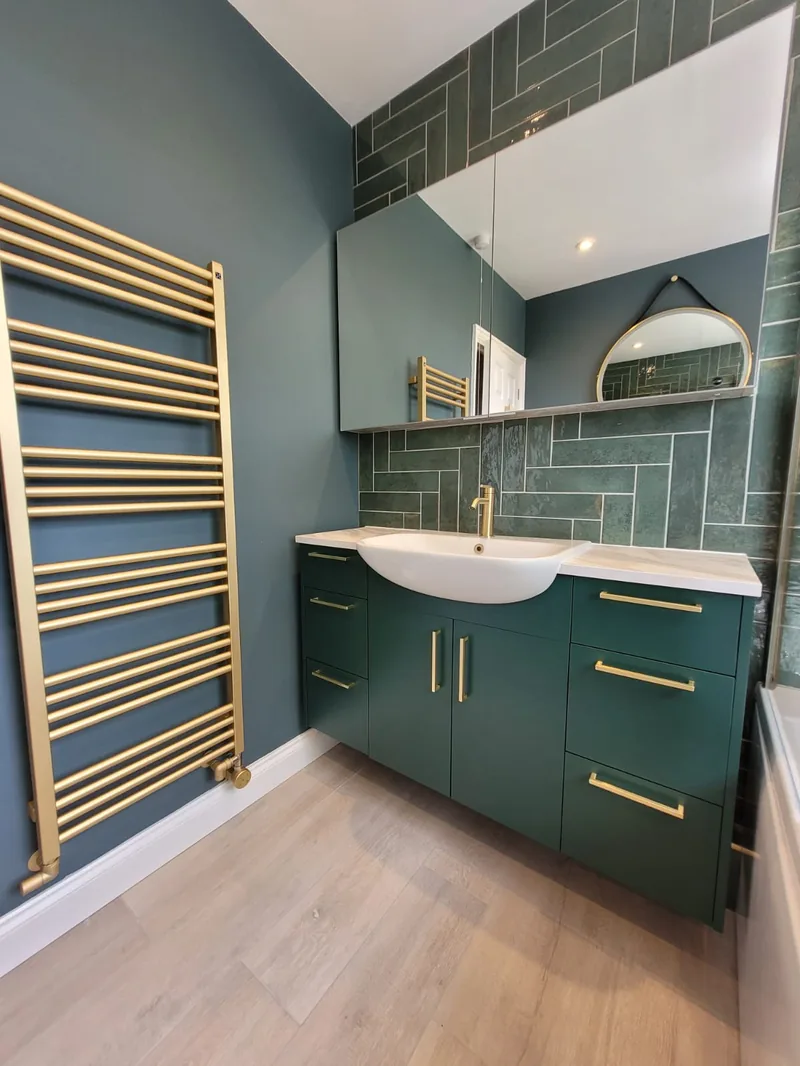
Herringbone performs particularly well behind vanity walls, shower enclosures and recessed niches. It adds movement without demanding perfect geometric balance.
Best Pattern for Floors & Wetrooms
Chevron floors can be striking but require accurate drain positioning, precise fall planning and flat substrates.
Herringbone floors are more forgiving in irregular spaces.
Tile Size Considerations
Herringbone
Works well with:
- • 100×200mm subway tiles
- • 60×20 planks
- • Narrow porcelain formats
More flexible across sizes.
Chevron
Requires:
- • Tiles manufactured specifically for chevron
- • Consistent angle precision
- • Uniform dimensions
Standard rectangular tiles cannot replicate true chevron geometry.
For ordering calculations and waste allowances by tile size, refer to the Tile Quantities & Waste Guide.
Grout Considerations
Does Grout Colour Change the Look of Herringbone or Chevron?
Yes — grout tone dramatically affects how both patterns are perceived.
Matching Grout
- ✓ More architectural
- ✓ Softer visual effect
- ✓ More timeless
Contrasting Grout
- ✓ Highlights geometry
- ✓ Increases visual activity
- ✓ Less forgiving in compact spaces
Designer note: In luxury bathrooms, matching grout often produces a more refined result for both herringbone and chevron installations.
Common Mistakes
Not setting a centre-line before starting
Using chevron in asymmetrical rooms
Attempting installation on uneven walls
Overusing patterned layouts on all surfaces
Combining two directional patterns in one small bathroom
Restraint improves longevity.
Decision Framework
Choose Herringbone If
- ✓ Your bathroom is compact or irregular
- ✓ You want texture without sharp geometry
- ✓ You prefer slightly more forgiving installation
Choose Chevron If
- ✓ The room is symmetrical
- ✓ You want a sharper, contemporary look
- ✓ You accept higher labour precision and cost
Final Thoughts
Choosing between herringbone and chevron is less about trend and more about proportion, symmetry and execution quality. Careful planning ensures the pattern enhances rather than dominates the space.
Both patterns reward precision. The right choice depends on your room geometry, budget tolerance and how much visual activity suits the design intent.
For a complete overview of all available patterns, visit the Tile Layout Ideas Guide. For detailed herringbone mechanics, see the Herringbone Tiles Guide.
Related Guides You May Find Useful
Tile Layout Ideas Guide
Complete UK guide to 10 bathroom tile layout patterns with waste, cost and spatial impact.
Herringbone Tiles Guide
Detailed herringbone installation guide covering orientation, tile size and waste calculations.
Bathroom Tiling Cost Guide
UK pricing breakdown for bathroom tiling by layout type, tile size and labour.
Tile Quantities & Waste Guide
How to calculate exact tile quantities and waste allowances for every layout type.
What Is Bathroom Tanking?
Essential waterproofing knowledge for any tiled bathroom or wetroom.
Best Tiles for Small Bathrooms
How to choose tile size, colour and layout to make compact UK bathrooms feel bigger.
Frequently Asked Questions
Common questions about herringbone vs chevron tile patterns
Have a question we haven’t covered? Get in touch — we’re happy to help.
Planning a Renovation?
Choosing between herringbone and chevron is less about trend and more about proportion, symmetry and execution quality. Our design consultations explore these decisions in detail.
Careful planning ensures the pattern enhances rather than dominates the space.