
Herringbone Tiles: The Complete UK Design & Installation Guide
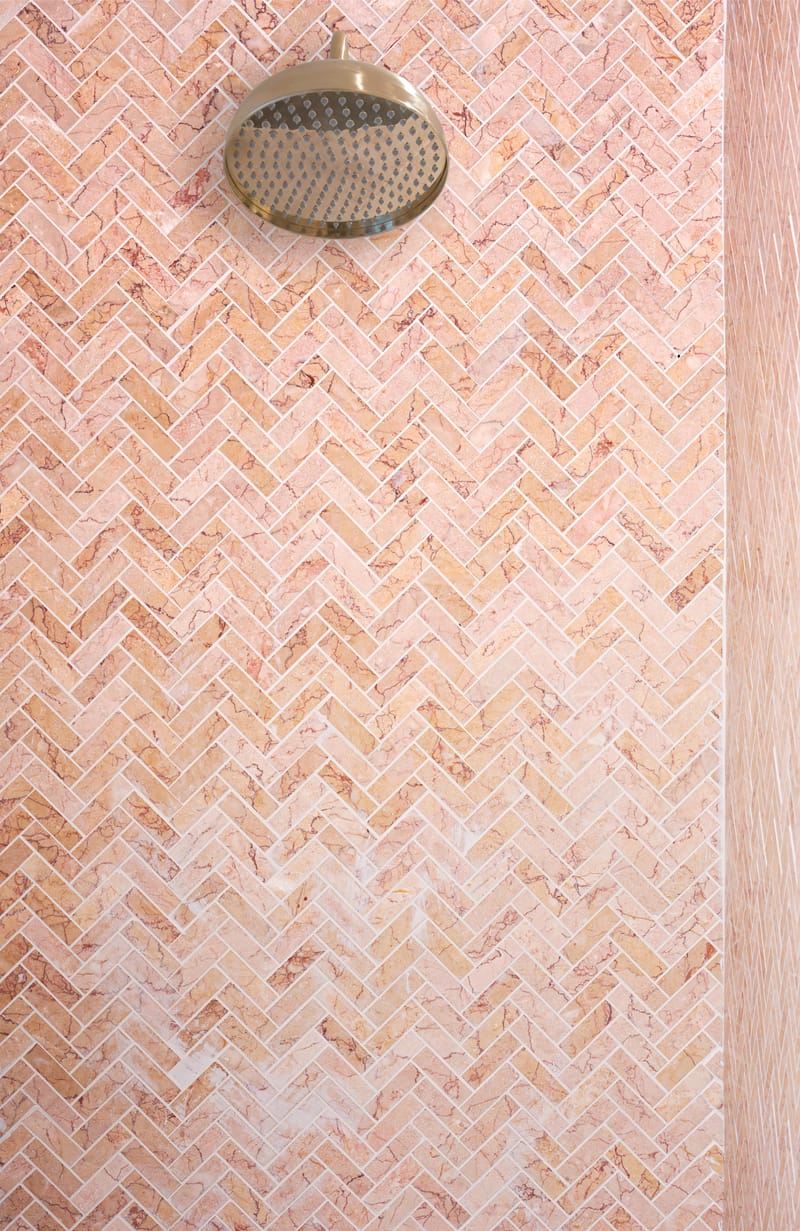
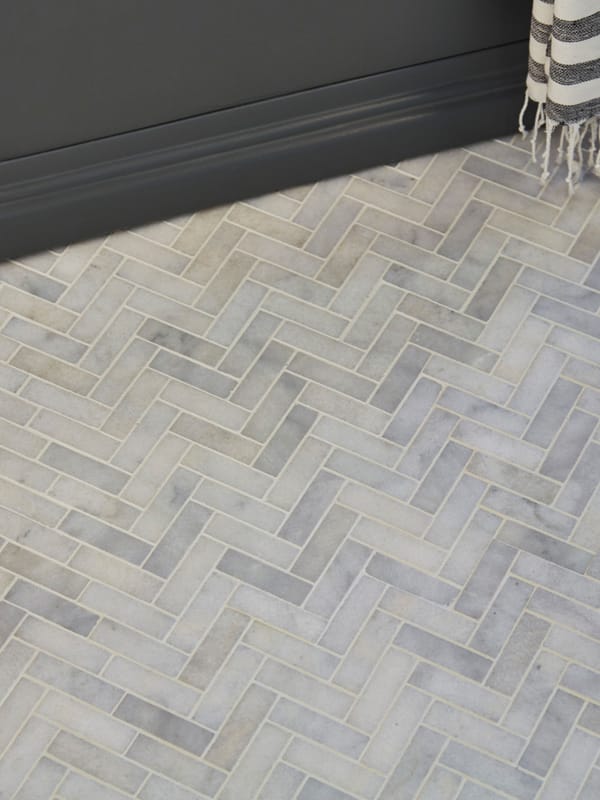
Herringbone tiles are rectangular tiles laid at 90-degree angles in a staggered zig-zag pattern. Unlike chevron tiles, which are cut diagonally to form a continuous V shape, herringbone tiles use straight ends to create a broken, interlocking design that adds depth, movement and architectural texture to walls and floors.
Herringbone tiles are one of the most searched tile layouts in the UK, particularly for bathrooms, kitchens and hallways. Homeowners researching herringbone bathroom tiles, how to lay herringbone tiles, or how much waste to allow for herringbone are usually trying to answer three core questions:
- Will it suit my space?
- How much extra will it cost?
- Is it difficult to install properly?
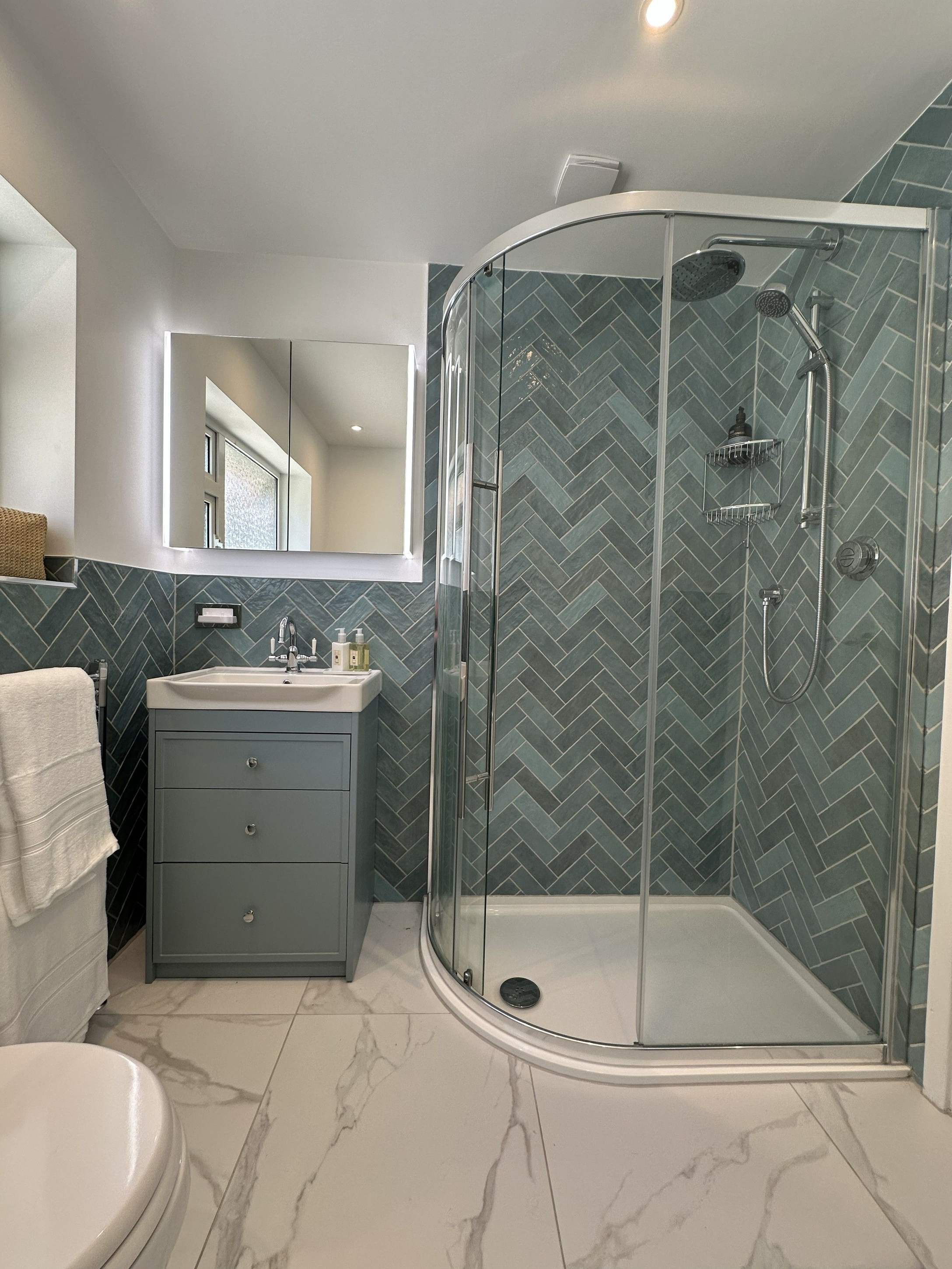
This guide answers all three — in detail. We cover design psychology, tile sizing, grout decisions, slip ratings for wetrooms, full installation logic, waste calculations, UK‑based cost modelling and real project execution — including our Brentwood CM13 family bathroom where herringbone was used to anchor the main vanity wall.
Quick Navigation
Quick Tile Quantity Formula
If you are calculating how many herringbone tiles you need, use this simple formula:
Room Area (m²) × Waste Percentage (15–22%) = Total Tile Quantity Required
Example: 12m² bathroom floor × 1.18 (18% waste) = 14.16m² tiles required
Herringbone requires more waste than straight lay patterns due to angled edge cuts. In small or complex rooms, plan closer to 20–22%.
What Are Herringbone Tiles?
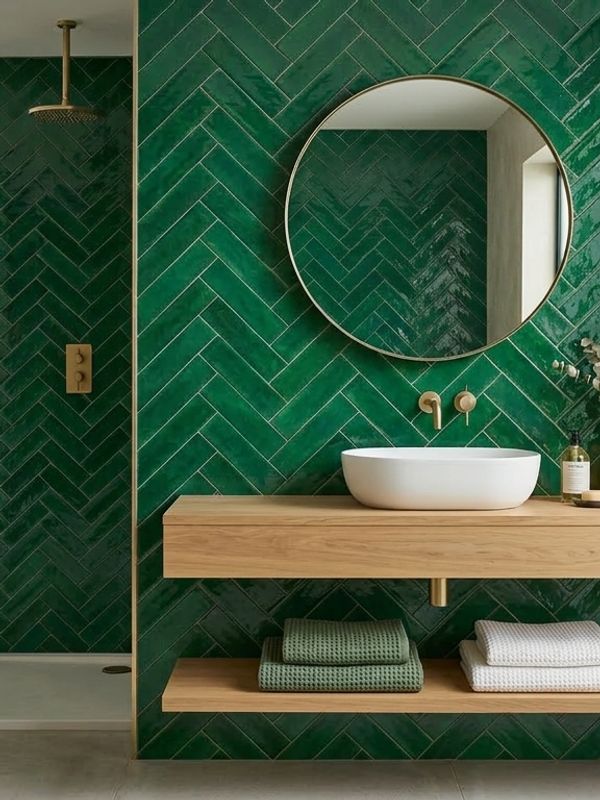
Herringbone tiles are rectangular tiles laid in a staggered zig‑zag formation at 90‑degree angles. Each tile is positioned so that the end of one meets the side of another, creating a repeating broken V‑shaped pattern. Unlike chevron tiles, which are cut at angles to form a continuous V, herringbone tiles retain straight ends, producing a more textured and dynamic appearance.
The pattern takes its name from the skeleton of a herring fish, and it has been used for centuries in everything from Roman road construction to parquet wood flooring in grand European homes. Today, herringbone has become one of the most requested tile layouts in bathrooms, kitchens and hallways across the UK.
But while the pattern looks deceptively simple, achieving a refined and architectural result requires thoughtful planning, correct tile sizing, careful installation and an understanding of how the layout interacts with the space.
Key Herringbone Benefits
- Adds visual movement without overwhelming the space
- Creates architectural depth from simple rectangular tiles
- Works in both traditional and modern settings
- Manipulates perception of room size and height
- Signals craftsmanship and premium installation quality
Why Herringbone Tiles Are So Popular
There are several reasons why herringbone continues to dominate interior design:
- It adds movement without overwhelming a space
- It elevates simple rectangular tiles into something architectural
- It works in both traditional and modern settings
- It creates visual texture without requiring bold colours
Unlike large-format plain tiles, which can feel minimal or flat, herringbone introduces rhythm and direction. The human eye naturally follows the zig-zag pattern, which gives the illusion of depth and flow.
In compact bathrooms, this can subtly elongate walls or widen floors. In larger spaces, it adds sophistication and detail without clutter.
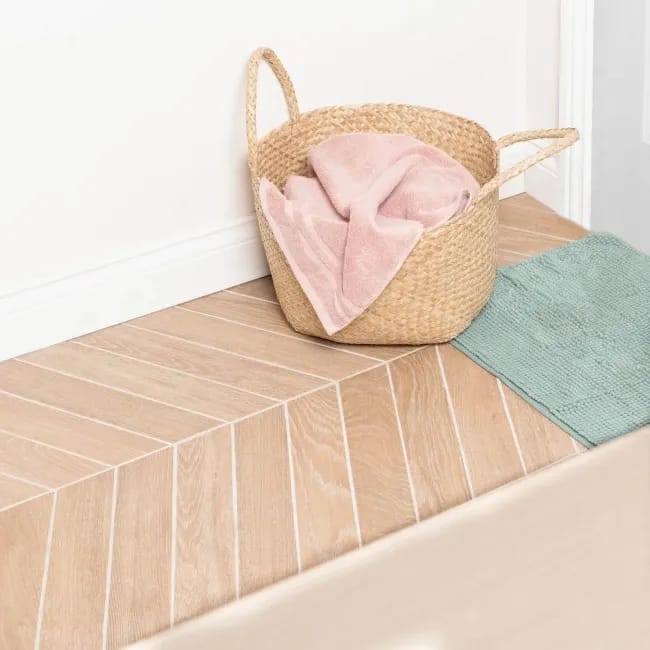
Herringbone vs Chevron: Understanding the Difference
One of the most common points of confusion is the difference between herringbone and chevron layouts.
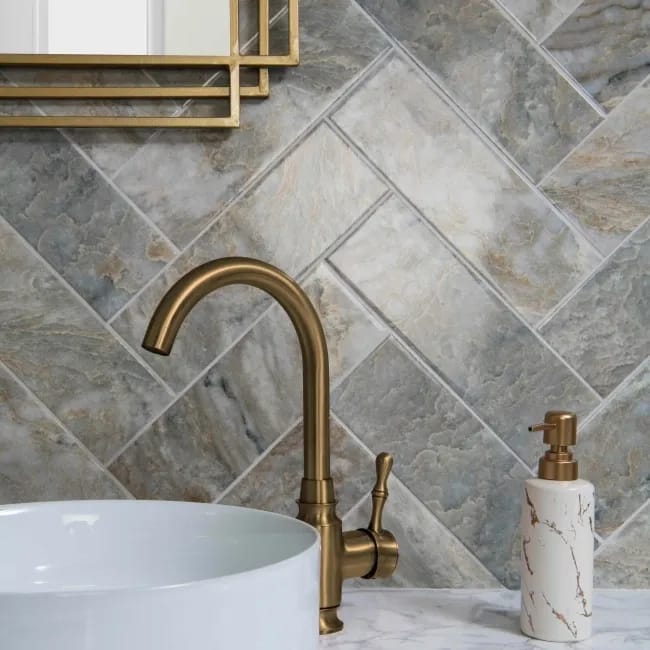
Herringbone
- •Uses rectangular tiles with straight ends
- •Tiles meet at right angles (90 degrees)
- •Creates a broken zig-zag pattern
- •Feels slightly more traditional and textured
Chevron
- •Tiles are cut at an angle (usually 45 degrees)
- •Forms a continuous, seamless V shape
- •Requires more precise manufacturing and installation
- •Feels sharper and more modern
Designer’s Insight
If you prefer subtle texture and timeless appeal, herringbone is usually the better choice. If you want crisp symmetry and strong geometry, chevron may suit better. Most of our clients choose herringbone for its warmth and versatility.
Where Herringbone Tiles Work Best
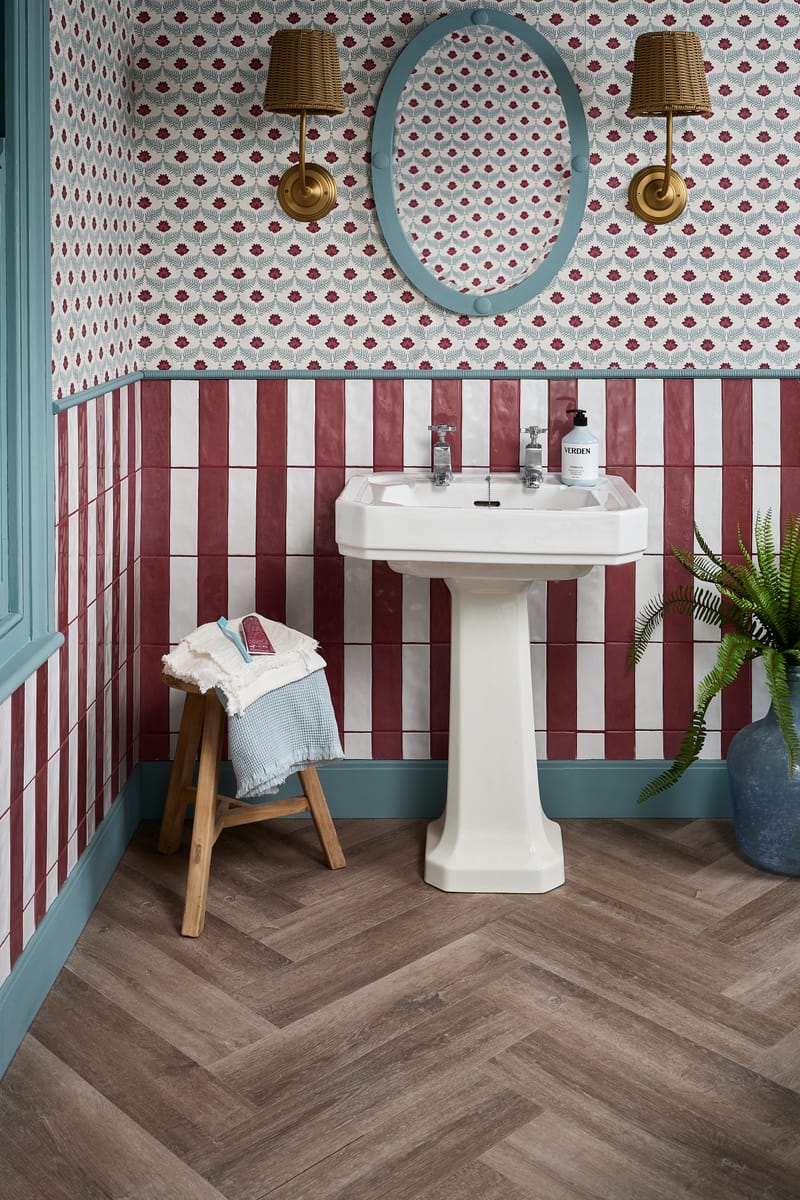
Bathrooms
Herringbone is particularly effective in bathrooms because it adds interest without overwhelming small spaces. Common applications include:
- •Shower feature walls
- •Wetroom floors
- •Tile niches
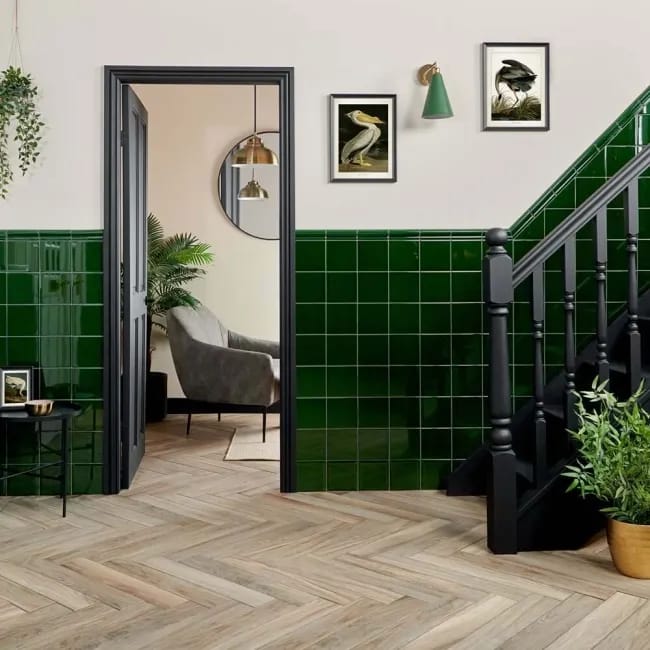
- •Half-height wall panelling
- •Full-height statement walls behind baths
In family bathrooms, it often works beautifully on floors, especially when paired with calm, neutral wall tiles. In smaller en-suites, traditional herringbone layouts can visually lift ceiling height.
Kitchens
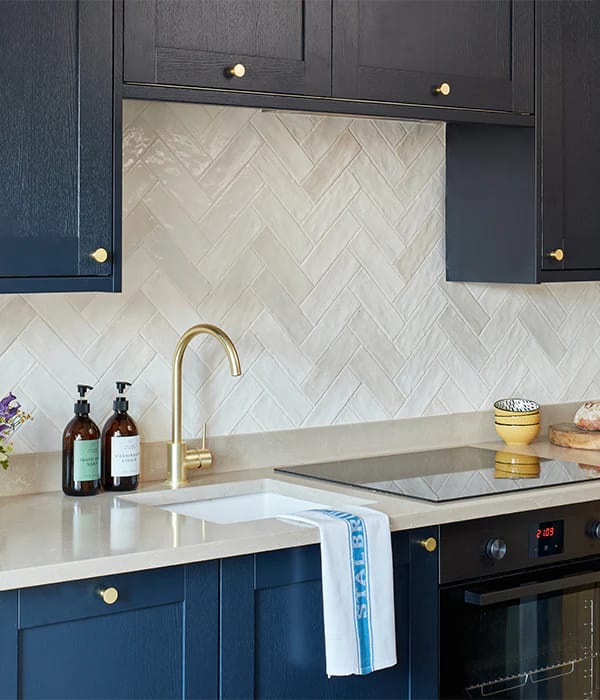
Herringbone is most commonly used as a splashback pattern in kitchens. Classic metro tiles laid in herringbone can transform an otherwise simple kitchen into something refined and considered.
Hallways & Entrances
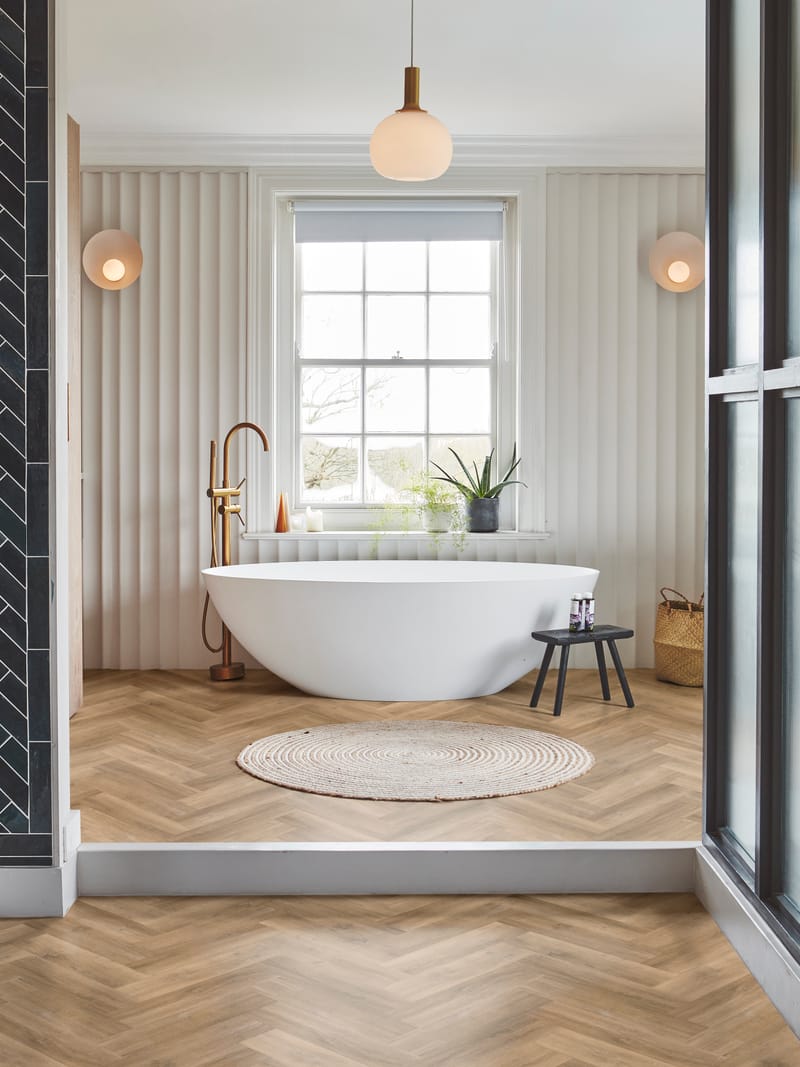
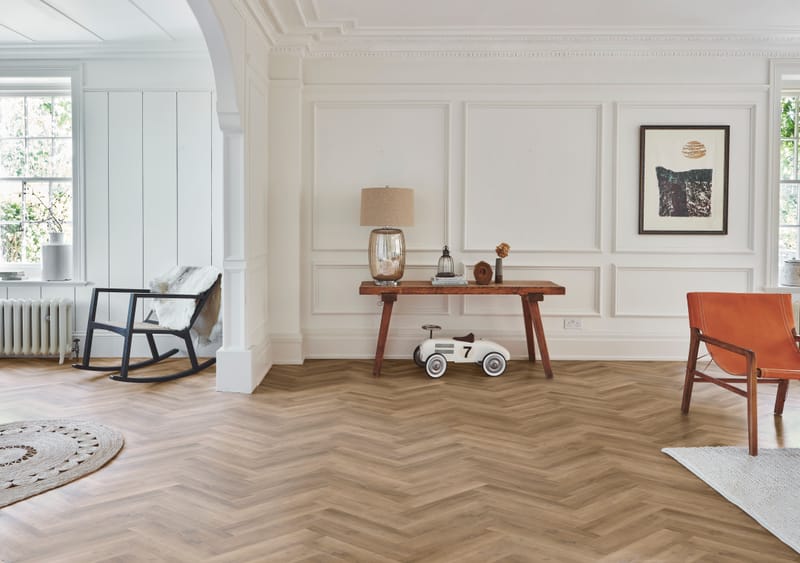
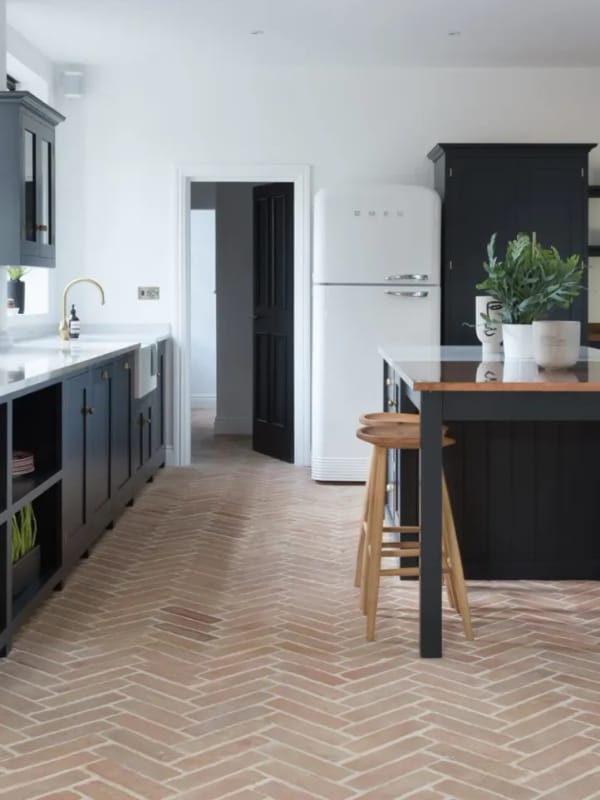
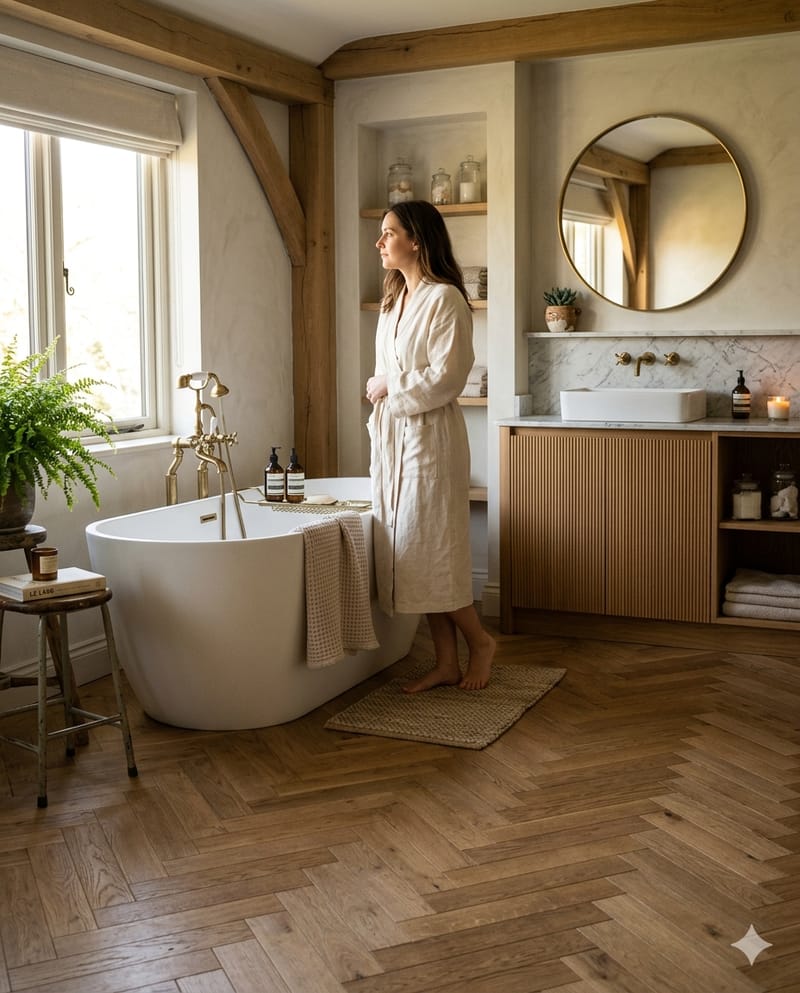
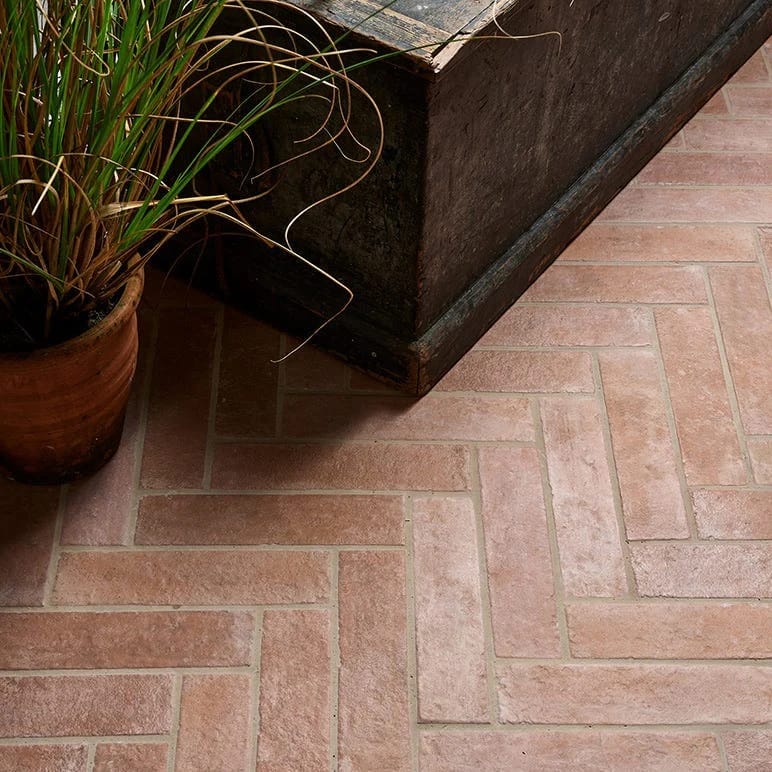
Historically inspired by parquet flooring, herringbone layouts work exceptionally well in entrance halls and transitional spaces. The pattern guides movement through the home and creates a strong first impression.
Choosing the Right Tile Size
Tile size dramatically influences the overall effect of a herringbone layout.
Small Format (75 × 300 mm)
Classic metro aesthetic. More detailed and intricate. Works well in compact bathrooms.
Medium Format (100 × 200 mm)
Balanced and versatile. Suitable for most spaces.
Slim Rectangles (50 × 250 mm)
Elegant and refined. Creates a tighter pattern rhythm.
Larger Formats (150 × 600 mm)
Stronger visual impact. Best suited to floors and larger rooms.
Worth knowing: Smaller tiles emphasise the pattern; larger tiles emphasise scale and architecture. Selecting tile size should be influenced by room dimensions, ceiling height and how bold you want the pattern to feel.
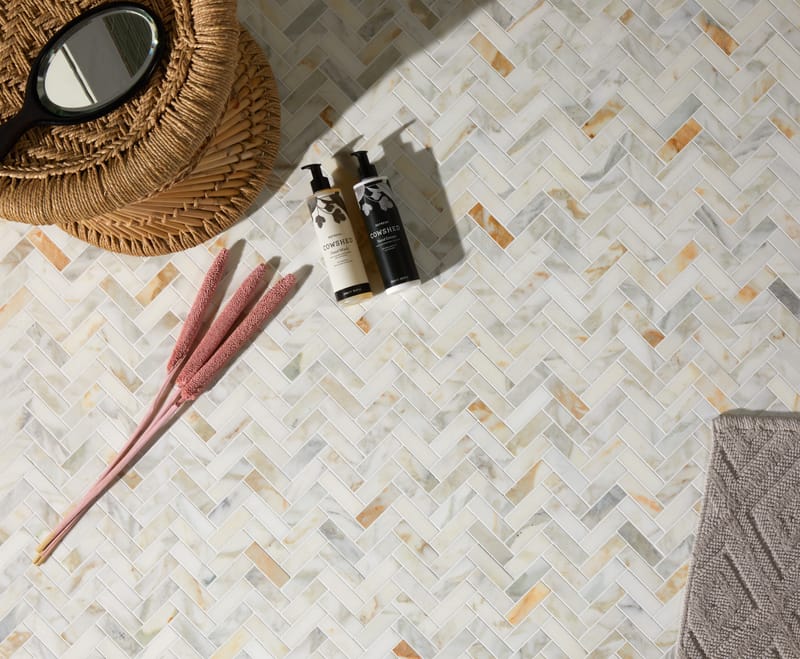
Grout Colour: The Most Underrated Decision
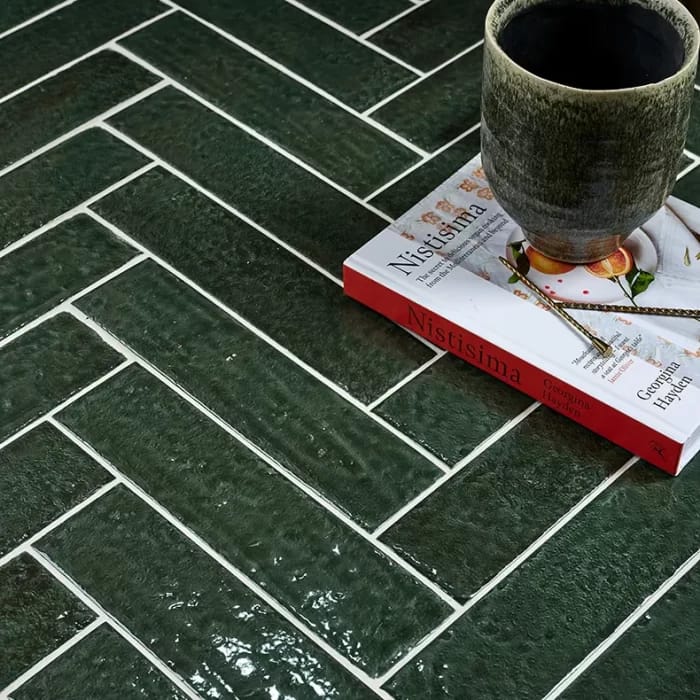
Grout colour significantly affects how herringbone reads visually.
Matching Grout
Softens the pattern. Feels calm and seamless. Ideal for high-end, understated bathrooms.
Contrasting Grout
Highlights the zig-zag. Creates a bold, graphic look. Works well in kitchens and statement walls.
Mid-Tone Grout
Offers balance. Reduces harsh contrast while maintaining pattern visibility.
In most luxury settings, subtle grout choices allow the pattern to enhance the design without dominating it.
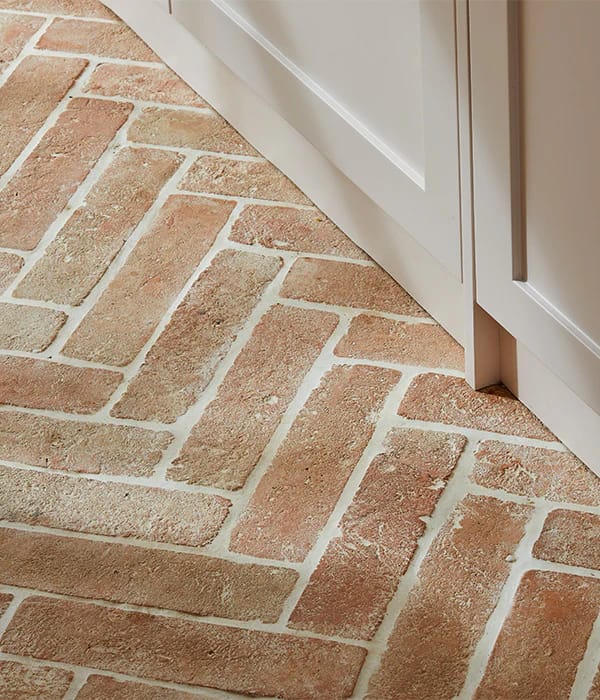
Layout Direction and Visual Illusion
Herringbone can be manipulated to influence how a room feels.
Horizontal
Widens the space visually. Works well in narrow bathrooms or hallways.
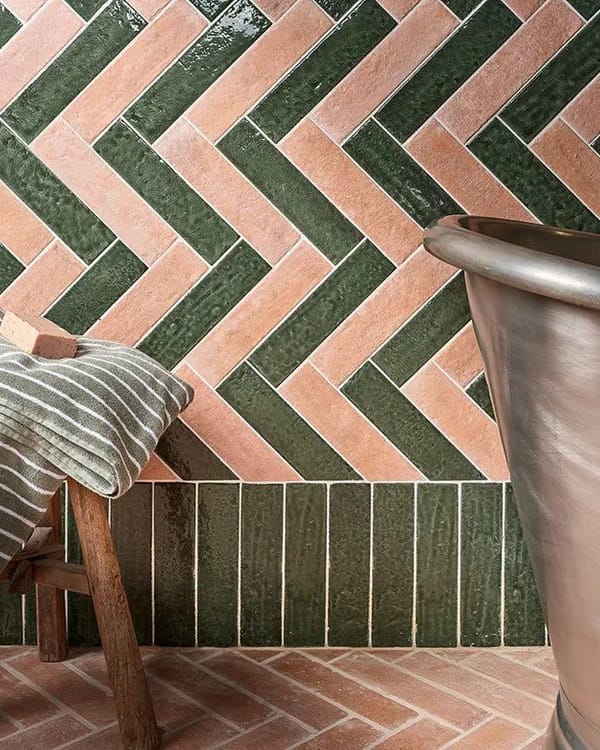
Traditional
The classic V-shape running up and down. Draws the eye upward, creating the perception of higher ceilings.
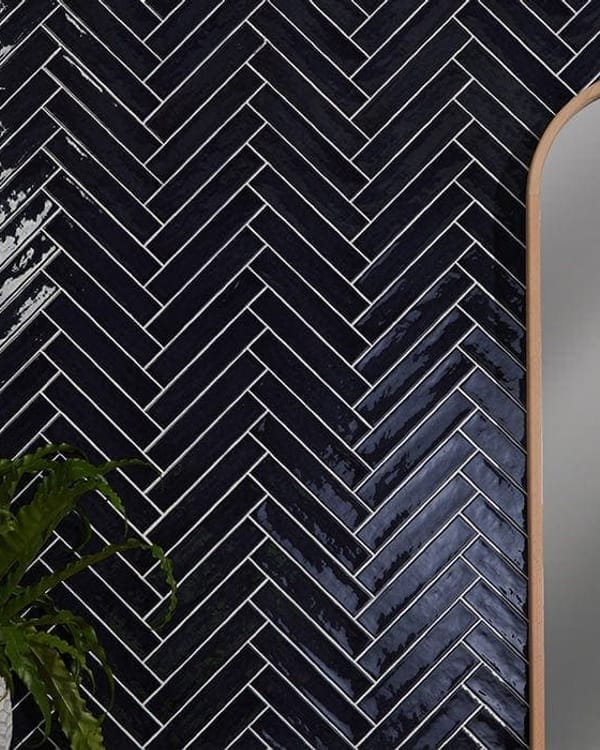
Straight
Tiles run parallel and perpendicular to the walls. A modern, structured look often used in contemporary flooring.
Designer’s Insight
Choosing direction intentionally can transform how a room is perceived. Consider the main sightline when entering the room — that’s where the pattern will have the most impact.
Design Psychology: Why Herringbone Feels Expensive
There is a psychological reason herringbone often feels more “premium” than straight lay tiles.
Pattern Density Signals Craftsmanship
Humans associate complexity with effort. Because herringbone requires more cuts, alignment and labour precision, it subconsciously signals higher craftsmanship.
Directional Movement Guides the Eye
The zig‑zag rhythm creates motion. This makes walls feel dynamic and floors feel intentional rather than flat.
Repetition Creates Visual Texture
Even when colour is neutral, repetition creates richness. This is why simple white metro tiles laid in herringbone feel dramatically more considered than stacked brick.
Scale Determines Sophistication
Small tiles = high pattern density = intricate feel. Large tiles = bold geometry = architectural feel. Luxury interiors often use medium formats with subtle grout to achieve balance.
Room-by-Room Specification Matrix
This matrix allows homeowners to make decisions quickly and confidently.
| Room Type | Ideal Tile Size | Slip Rating | Grout Tone | Waste % | Notes |
|---|---|---|---|---|---|
| Cloakroom Floor | 75×300 or 100×200 | R9–R10 | Matching | 15–18% | Smaller scale enhances detail |
| Family Bathroom Floor | 100×200 or 150×600 | R10 | Mid-tone | 18–20% | Balance pattern with calm walls |
| Wetroom Floor | 100×200 textured | R11+ | Matching | 18–22% | Prioritise slip rating |
| Shower Wall | 75×300 | N/A | Matching | 15–18% | Traditional layout can lift height |
| Kitchen Splashback | 75×300 | N/A | Contrast optional | 15–18% | Classic metro effect |
| Hallway Floor | 150×600 plank | R10 | Matching | 18–22% | Works beautifully in period homes |
Slip Ratings, Wet Areas & Bathroom Suitability
One of the most overlooked considerations when specifying herringbone tiles for bathrooms is slip resistance. The pattern itself does not determine slip — the surface finish of the tile does.
Important: Never rely on grout alone for slip resistance. Always check manufacturer slip ratings before specifying floor tiles in wet zones.
In UK bathrooms and wetrooms, you should consider:
- R9–R10 rating: Suitable for most bathroom floors with standard shower trays.
- R11+ rating: Recommended for wetrooms or level-access showers where water exposure is continuous.
Smaller format tiles can sometimes improve grip due to increased grout lines. In shower walls, slip rating is irrelevant — instead focus on tile weight, substrate suitability and waterproofing preparation.
Substrate & Preparation Considerations
Herringbone exposes imperfections more than straight lay patterns. Substrate preparation is therefore critical.
Before installation, ensure:
- Floors are level within acceptable tolerances
- Tile backer boards are used on timber floors
- Surfaces are primed appropriately before adhesive application
- Underfloor heating compatibility is confirmed where relevant
Warning: Movement in floors or walls can cause grout cracking, which becomes highly visible in patterned layouts.
Installation Reality: What Most Guides Don’t Tell You
Herringbone takes longer to install than straight-lay tile patterns. Expect:
The Importance of a Centre Line
Installation should begin from a clearly marked centre reference line. Starting from a wall often leads to asymmetry and visible imbalance once cuts reach the edges.
Dry Laying
Dry laying several rows before applying adhesive helps confirm spacing, symmetry and pattern flow.
Adhesive and Substrate Considerations
Flexible adhesive should be used on timber or movement-prone floors. Substrates must be level — uneven bases become far more obvious in patterned layouts.
Step-by-Step Installation (Wall Version)
Establish Your Centre Line
Mark a perfectly vertical centre line using a spirit level or laser. This ensures symmetry.
Dry Lay Several Rows
Lay tiles without adhesive to confirm pattern spacing and identify potential cut sizes at edges.
Begin at the Centre
Place the first tile at 45 degrees along your centre line.
Work Outward Evenly
Build left and right alternately to maintain symmetry.
Cut Edge Tiles
Measure and cut edge pieces precisely. Keep consistent grout gaps.
Allow Adhesive to Cure
Follow manufacturer guidance (typically 24 hours).
Grout Carefully
Apply grout evenly and clean residue promptly to avoid haze.
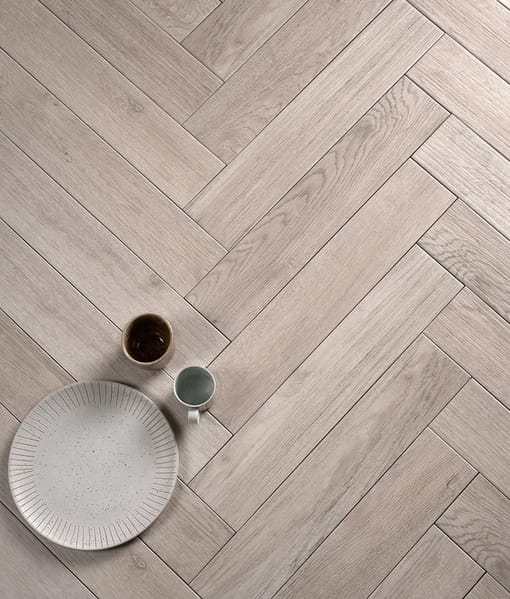
Step-by-Step Installation (Floor Version)
Floor installations require additional care due to load and movement.
Confirm substrate rigidity.
Snap chalk lines to establish centre axes.
Dry lay full pattern grid.
Use flexible adhesive suitable for floor load.
Maintain consistent pressure when bedding tiles.
Avoid walking on newly set tiles for recommended curing time.
Herringbone Tile Waste Percentage (UK Guide)
Herringbone patterns require more material than straight layouts due to diagonal cuts at boundaries.
Quick Spec: Waste Allowance at a Glance
15%
Standard rooms
20%
Small / awkward
25%
Complex / alcoves
Under-ordering can delay projects and risk batch variation. It is always safer to slightly over-order.
Waste Calculation Explained in Detail
Straight lay patterns typically require 5–10% overage. Herringbone requires more due to diagonal cuts at boundaries.
Standard Rectangular Room
1.15–1.18×
Multiply room area
Small or Awkward Room
1.18–1.20×
Multiply room area
Large Plank Format
1.20–1.22×
Multiply room area
Complex shapes, alcoves and niches increase waste further. Ordering slightly more prevents batch variation issues and avoids project delays.
Advanced Waste Scenarios
Waste increases when:
- The room has multiple alcoves
- Tile planks are long relative to room width
- You rotate pattern direction mid‑space
- There are curved walls
In complex bathrooms, planning 20–25% waste is sometimes appropriate.
Cost Considerations (UK 2026)
Costs vary based on tile selection and labour. Typical ranges:
| Category | Price Range |
|---|---|
| Standard porcelain tiles | £30–£70 per m² |
| Premium porcelain | £70–£120 per m² |
| Natural stone | £100+ per m² |
| Labour uplift vs straight lay | £15–£30 per m² additional |
Complex spaces, trims, and detailed cutting increase installation time and cost.
Detailed Cost Modelling Example
Imagine a 10m² bathroom floor using premium porcelain at £85/m².
Tile cost: 10m² × 1.18 waste = 11.8m² — 11.8 × £85 = £1,003
Labour uplift (additional £20/m²): 10m² × £20 = £200
Total herringbone uplift vs straight lay: approximately £200–£300 additional labour plus increased material quantity.
This explains why herringbone is often described as more expensive — it requires more time and more material.
Material Comparison: Porcelain vs Stone vs LVT
Porcelain
- Durable
- Water resistant
- Ideal for bathrooms
Natural Stone
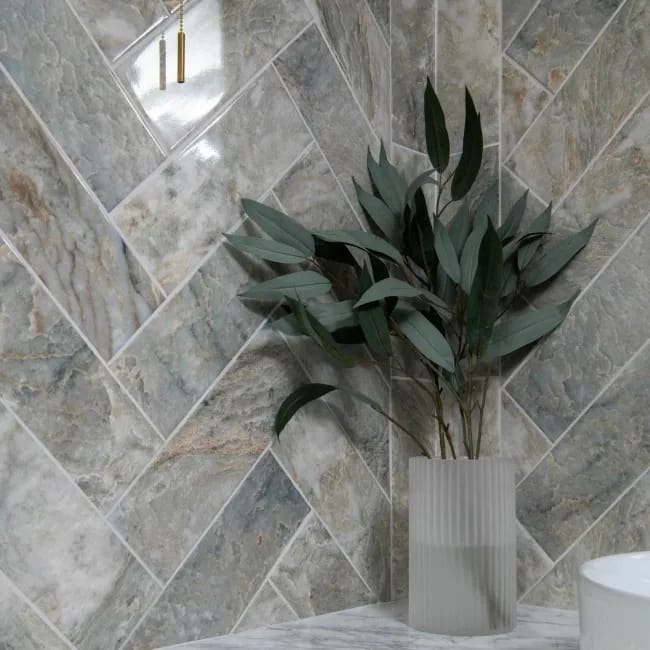
- Luxurious feel
- Requires sealing
- Often higher waste
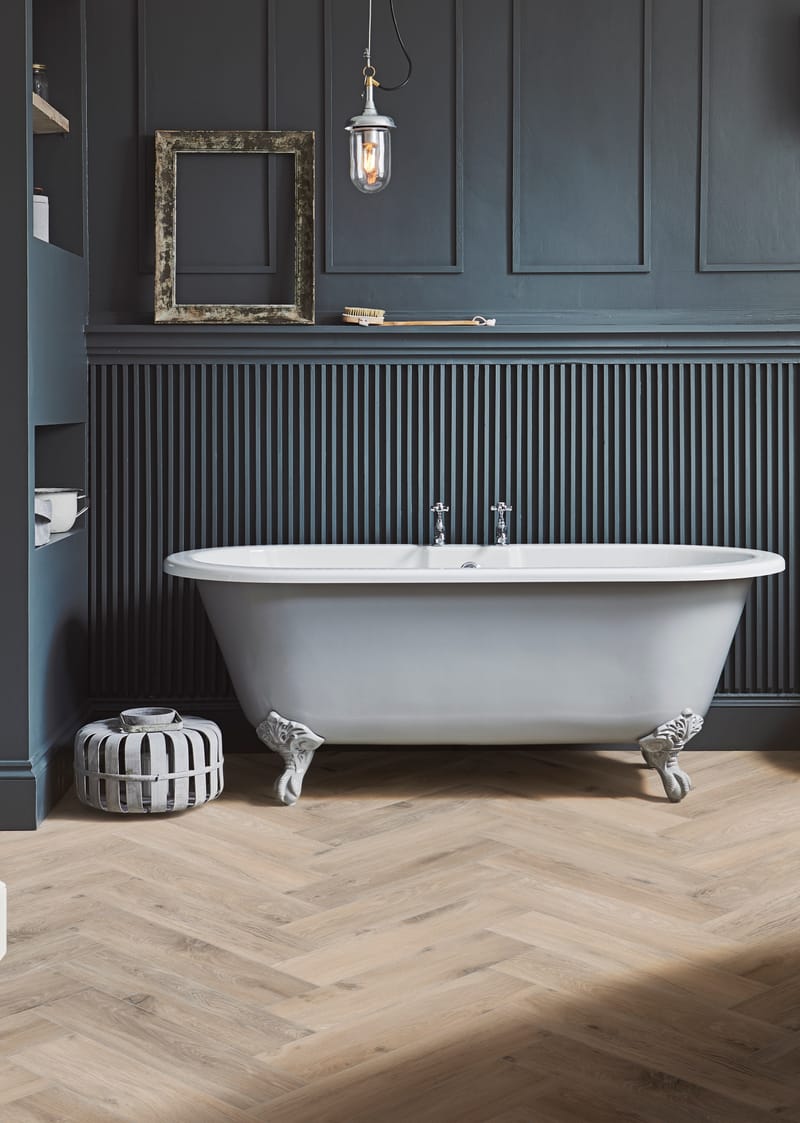
LVT (Luxury Vinyl)
- Easier installation
- Lower waste in some systems
- Softer underfoot
Material choice affects installation time, slip rating and long‑term maintenance.
Common Mistakes to Avoid
Starting from one side instead of centre
Leads to asymmetric cuts and an unbalanced finish across the room.
Failing to allow sufficient waste
Under-ordering causes delays and batch variation when reordering tiles.
Choosing grout too contrasting for the scale
High contrast on small tiles can create visual noise rather than elegance.
Ignoring slip ratings in wet areas
Pattern does not determine grip — always check the tile’s surface rating.
Installing on uneven substrates
Herringbone amplifies imperfections — proper substrate prep is non-negotiable.
Key Takeaway: Attention to these details separates a refined finish from an average one.
Visual Planning & Layout Strategy
Centreline Symmetry
Always align the pattern with the room’s main focal point — often a basin, bath, or doorway.
Focal Point Alignment (Brentwood Example)
In our Brentwood CM13 family bathroom, the herringbone wall tiling was centred precisely on the primary vanity wall to maintain visual balance as you enter the room. Starting from a side edge would have created uneven cuts and visual imbalance across the key sightline.
Border Framing
In larger rooms, consider framing herringbone with a straight border tile to “contain” the pattern.
Threshold Transitions
Plan doorway transitions carefully — misaligned herringbone into adjacent rooms can look accidental.
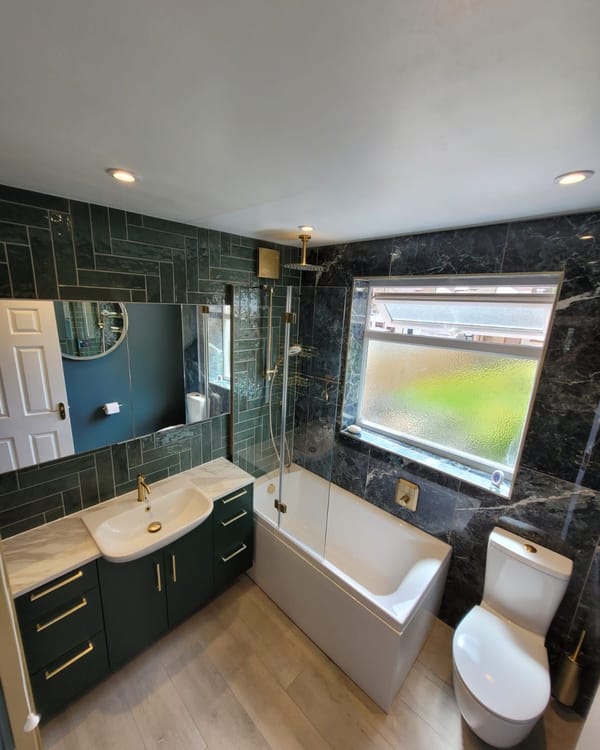
Real Herringbone Bathroom Example — UK
Brentwood CM13 Family Bathroom Case Study
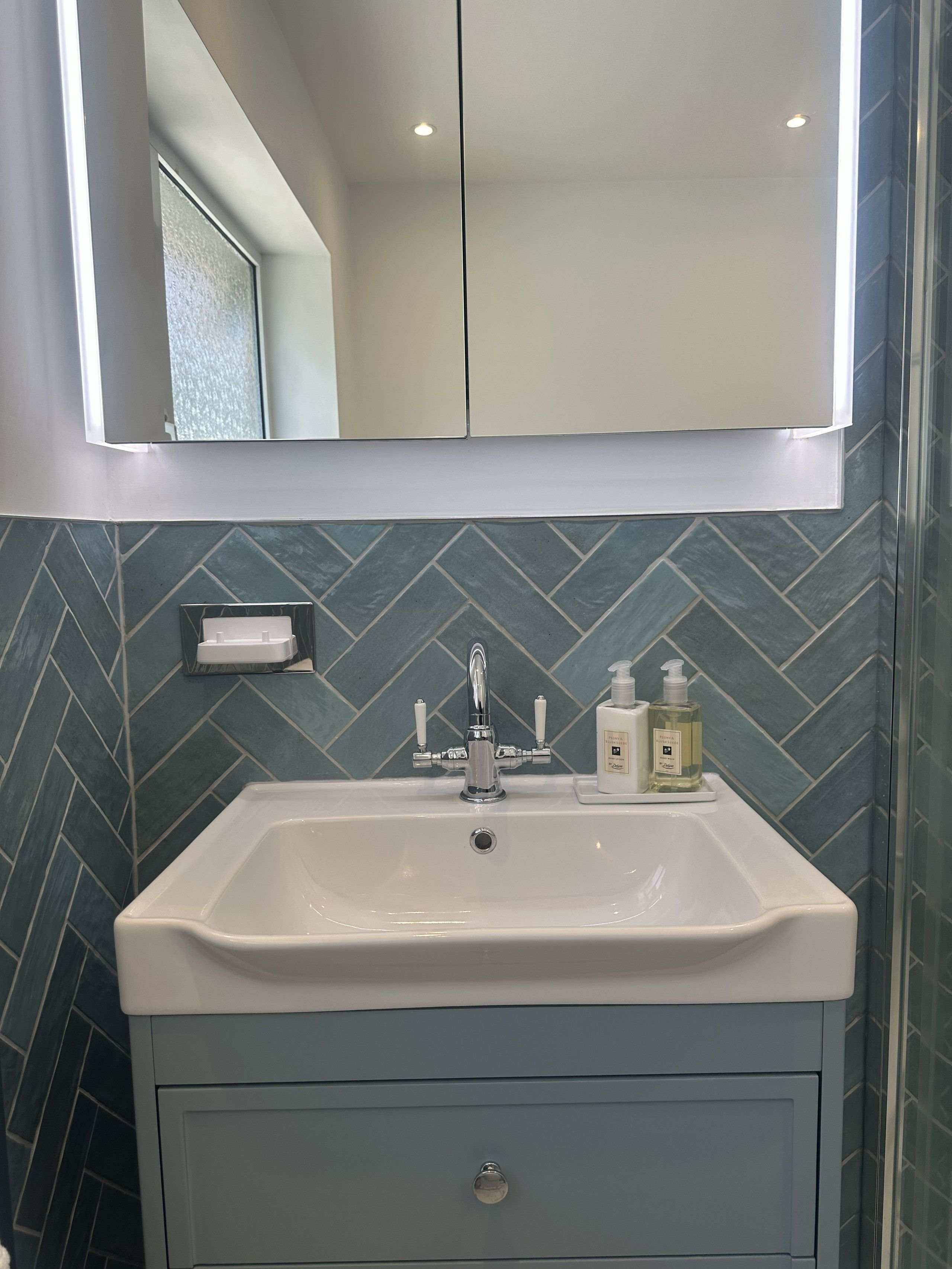
In our Brentwood CM13 family bathroom project, herringbone was used on the walls, not the floor — a deliberate design decision to introduce texture without overwhelming the space.
Tile Specification
- •Wall Tiles: Oasis Aqua Gloss ceramic tiles laid in classic herringbone
- •Floor Tiles: Ca’ Pietra Kensington 60×60 porcelain in calm square format
Why Herringbone on the Walls
- Adds visual rhythm behind vanity and bath
- Enhances light reflection with gloss finish
- Keeps floor grounded and practical
Layout Strategy Used
- •Pattern centred on the primary vanity wall sightline
- •Careful dry‑lay planning to avoid awkward edge slivers
- •Subtle grout tone selected to soften contrast and prevent visual noise
Design Outcome
By pairing patterned walls with restrained 60×60 porcelain flooring, the bathroom achieves balance — movement above, calm below. This is a practical example of how herringbone bathroom tiles can feel refined rather than busy when scaled correctly.
Herringbone Bathroom Floor Tiles: What to Know
When using herringbone on a bathroom floor, consider:
Herringbone bathroom floor tiles create strong directional movement. In narrow rooms, horizontal orientation can visually widen the space.
How to Lay Herringbone Tiles (Quick Overview)
Laying tiles in a herringbone pattern requires precise setup:
Establish centre reference lines.
Dry lay full pattern before adhesive.
Begin from the centre, not a side wall.
Work symmetrically outward.
Allow for 15–22% waste.
Is Herringbone Right for You?
Choose herringbone if you want:
- Visual texture and movement
- A timeless yet distinctive look
- A feature focal point without bold colour
Consider alternatives if:
- You prefer ultra-minimal plain surfaces
- Budget and installation time are extremely tight
Frequently Asked Questions
Common questions about herringbone tile patterns and installation
Final Thoughts
Herringbone tiles remain one of the most versatile and enduring layout choices in modern interiors. Their ability to add architectural depth, guide the eye and elevate simple materials makes them uniquely powerful.
However, the pattern rewards precision. Correct tile size, grout tone, waste allowance and installation method determine whether the result feels intentional and refined — or uneven and busy.
When approached thoughtfully, herringbone delivers a finish that feels considered, timeless and architecturally grounded.
Combined with real‑world execution — such as our Brentwood CM13 family bathroom project — the pattern proves that timeless layouts can feel both contemporary and enduring when specified correctly.
Related Guides You May Find Useful
What Is Bathroom Tanking?
Essential waterproofing knowledge for any tiled bathroom or wetroom.
Brentwood CM13 Project
See herringbone tiles in action in this completed family bathroom.
Our Design Process
Learn how we plan, design and deliver luxury bathroom installations.
Herringbone vs Chevron
Side-by-side comparison of cost, waste, visual style and installation complexity.
Best Tiles for Small Bathrooms
How to choose tile size, colour and layout to make compact UK bathrooms feel bigger.
Have a question we haven’t covered? Get in touch — we’re happy to help.
Planning a Herringbone Bathroom?
We can help you choose tile format, scale, and layout so the final result looks intentional, not busy.